
Fayette County public hearing draws sharp criticism over budget transparency; board hears tax-rate proposal
Get AI-powered insights, summaries, and transcripts
Subscribe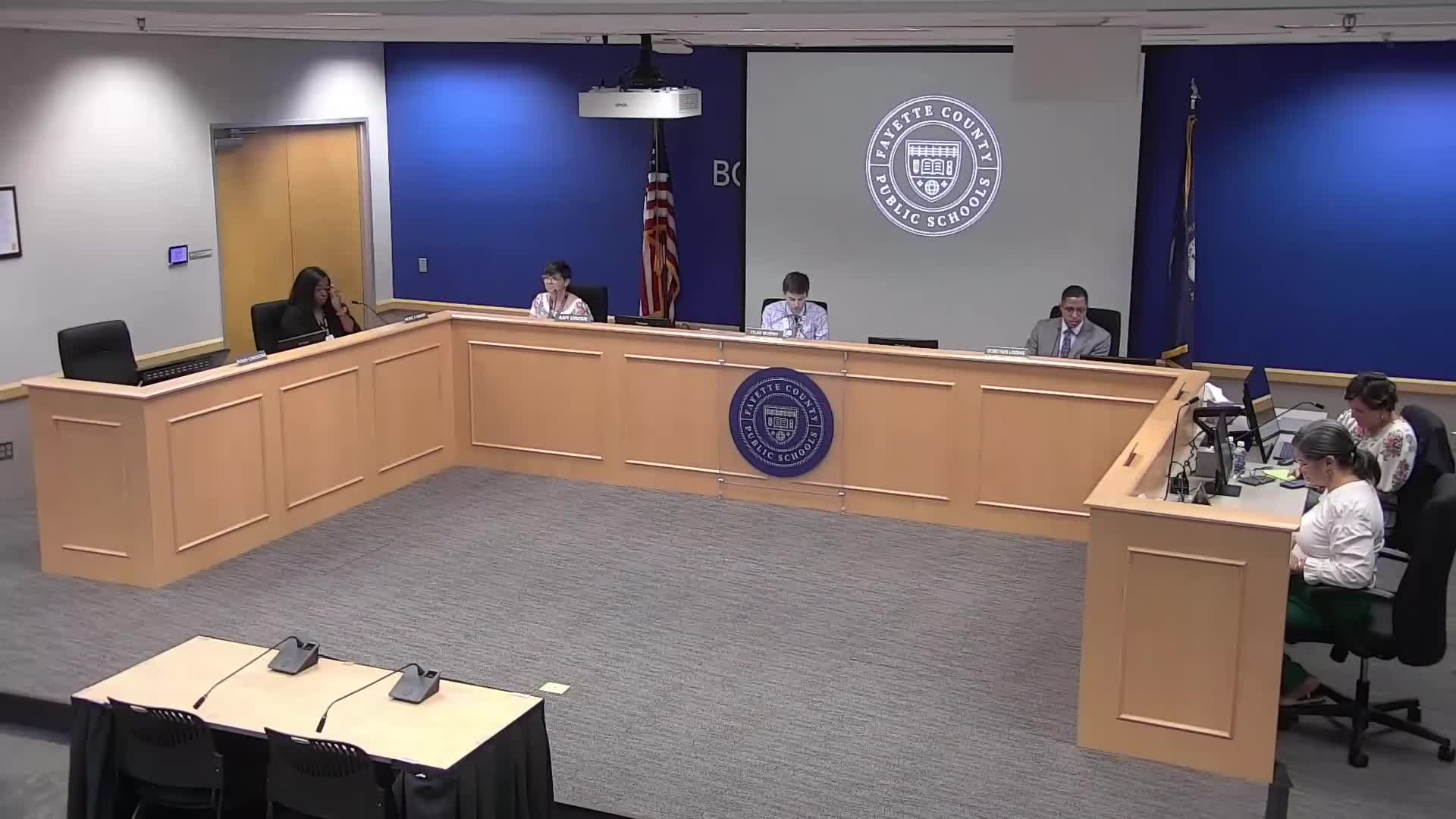
Summary
At a special Fayette County Board of Education public hearing Aug. 28, residents urged transparency after officials disclosed a district budget shortfall and proposed a 4% real-estate tax rate; the board heard multiple callers demand a forensic review and clearer accounting of contingency spending.
Chair Tyler Murphy called a special meeting of the Fayette County Board of Education to order Aug. 28 for a public hearing on the proposed tax rates and the district's budget situation.
The board heard a recommendation to set the 2025–26 tax rates at 79.8 cents per $100 assessed value for real estate, 83 cents per $100 for tangible personal property and 59.2 cents per $100 for motor vehicles — a proposed decrease of 1.1 cents for real property compared with the 2025 rate. Superintendent Demetrius Liggins explained the statutory timeline for adopting rates and cited Kentucky statutory requirements for local boards, saying the Department of Revenue and the Kentucky Department of Education certified valuation reports on July 29 and that state law allows 45 days for districts not adopting above a 4% rate to establish a final rate.
The meeting was a public-comment hearing only; no final tax-rate vote or other budget action was taken. Eleven members of the public spoke during the three-minute comment period. Many urged greater transparency and an independent review after members of the public, media and board members raised questions about transfers from the district contingency fund and an apparent budget shortfall.
Multiple speakers pointed to specific financial figures. Deborah Girth, a retired educator, said, “we are currently spending in excess of $78,724,000 on salaries and benefits for non instructional, non transportation staff.” Matthew Veidt told the board the district’s contingency fund “has been plundered to the tune of $16,000,000,” and urged more aggressive board oversight. Another commenter, Larry Moore, presented multi-year comparisons of tentative versus actual spending and said the district has repeatedly overspent its working budgets in recent years.
Critics at the microphone cited administrative pay, travel and catering costs as examples of spending that should be curtailed in favor of classroom resources. Dr. Mark Russell, a retired teacher, told the board the loss of public trust stems from actions in central office and listed a series of controversies raised by speakers. He said, “it is the Fayette County Public School administration, not the schools themselves, that is losing the public's trust.” Several speakers called for a forensic, independent investigation to determine how contingency funds were used and who is responsible.
Superintendent Liggins responded to questions on staffing and program funding. He said the district identified four teachers affected by the change in “held harmless” staffing and that 55 non‑campus positions have not been filled, representing approximately $3,789,000 in savings from attrition and hiring freezes. On the question of an investigation into contingency spending, Liggins said the inquiry is preliminary and that the district would not comment publicly at this time due to personnel considerations, but added, “I hear you,” and pledged to get to the bottom of how the district arrived at its current financial position.
Board members said next steps include a presentation of the working budget at a planning work session on Sept. 8 and an action meeting on Sept. 22. Chair Murphy closed the hearing by reminding the public that the session was for comment and that the board would continue engaging the community as it reviews the working budget.
The only formal action recorded at the end of the meeting was a procedural motion to adjourn, which passed 3–0.