Get Full Government Meeting Transcripts, Videos, & Alerts Forever!
Get email alerts on the Community Services Education topic
No spam. Unsubscribe anytime.
Cornell Cooperative Extension outlines programs, SNAP‑Ed funding gap and timeline for education center
Summary
The Executive Director of Cornell Cooperative Extension told county officials the agency is expanding youth and SNAP‑Ed programs but faces federal SNAP‑Ed funding cuts; the organization outlined a proposed education center project with a design and construction timeline and said it will seek county and other funding to complete the build.
Lucy Joyce, executive director of Cornell Cooperative Extension in Orange County, briefed county officials on July 17 about the organization’s programming, the potential loss of SNAP‑Ed funding and progress on a planned education center at the Forest Park site in Otisville.
Joyce described cooperative extension as a partnership among federal (USDA), state (Cornell University) and local government, with programs spanning agriculture, youth 4‑H, nutrition, community resilience and master‑gardener volunteer efforts. “SNAP‑Ed is our largest one,” Joyce said, and she warned the group that the program’s future funding is uncertain.
Why it matters: Cornell Cooperative Extension runs countywide programs that serve food‑insecure residents, provide school and farm partnerships, operate youth camps and manage large volunteer networks. Funding gaps for SNAP‑Ed would affect nutrition education and Market Sprouts, a program that pairs classroom nutrition lessons with a small farmers’ market experience for children.
SNAP‑Ed funding and budget requests
Joyce said Cornell Cooperative Extension is facing a reduction in SNAP‑Ed support from USDA and that the organization submitted a request to the county executive for an additional $100,000 to help transition and sustain programming. She also said the agency had a five‑year SNAP‑Ed grant approved last year that totaled about $2,700,000 and that not all of that funding has been expended.
“SNAP‑Ed is … a huge, huge, huge hit for us,” Joyce said, describing the program’s importance to regional nutrition and education efforts. Erica Dell, a SNAP educator who joined the presentation, and volunteers help run Market Sprouts, a classroom‑to‑market activity that gives children practice shopping for donated produce and teaches food‑resource management.
Education center project and timeline
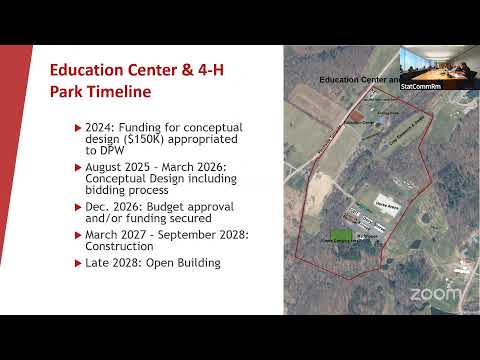
Joyce described the site the extension owns at Forest Park in Otisville and said the county previously appropriated $150,000 for design work. She said Orange County Department of Public Works staffer Ryan McGuire expects the design and bidding work to be completed by March (design year specified as part of the DPW timeline) and that construction could begin around March 2027 with a possible opening in late 2028.
Joyce noted that county legal review and land‑ownership arrangements must be completed before county construction funds would be spent. She also said the project team is evaluating water and sewer options: there is no sewer connection on the site and water distribution may require use of an existing town well or tapping municipal lines near Otis Elementary School.
HUD grant, Archtruce Barn and food hub plans
Joyce said the extension has an approved contract for approximately $1 million in HUD funding that will support site design and requires a federal environmental (NEPA) review. She described the nearby Archtruce Barn — a town‑owned structure that the extension would like to convert into a food‑distribution hub — and said the town is preparing a bid for a new roof and may relinquish its easement so the extension can reuse the barn for storage and distribution of donated food.
Fair, Market Sprouts and community programming
Joyce invited officials to the county fair, described master‑gardener and 4‑H activities and said the extension will run a day camp at the education center. She said Market Sprouts — which places donated produce into a classroom context, gives children “Market Sprouts Bucks” and lets them shop at a supervised mini‑market — is intended to increase children’s willingness to try new produce and teach food‑resource skills.
Board treasurer Tom Anse, who accompanied Joyce, thanked the county for appropriations and described volunteer and board oversight of the extension’s finances. “The amount of things that get done with, she makes the money stretch, and so your money is well spent,” Anse said.
What the board did
Officials did not take formal votes during the briefing. Joyce said the extension had submitted its budget request for county consideration and will continue design and permitting work with DPW and the county law department.
Ending
Joyce closed by reminding officials about the county fair and the extension’s volunteer opportunities. She said she will continue coordinating design, legal and funding steps toward building the education center.