Get Full Government Meeting Transcripts, Videos, & Alerts Forever!
Orange County outlines design, regulatory steps and odor mitigation for Harriman wastewater upgrade
Summary
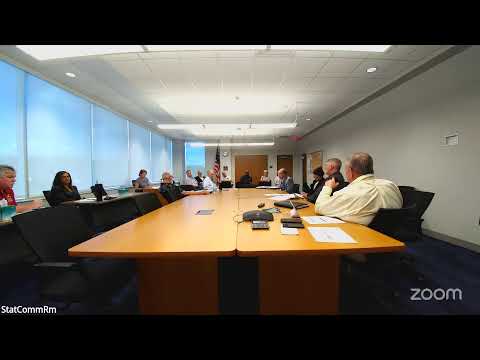
County engineers told the Sewer Committee on July 22 that design work is on schedule, regulatory review with the state DEC is advancing (but a variance remains incomplete), financing applications are pending and community odor concerns will be monitored and mitigated during construction.
Orange County officials and engineers told the county Sewer Committee on July 22 that design work on the Harriman wastewater treatment plant upgrade is on schedule, regulatory review with the New York State Department of Environmental Conservation (DEC) is advancing but key variance materials remain incomplete, and the county will pursue state and federal financing while addressing local odor concerns.
The county’s engineering consultant, Mary Beth Biencony of Delaware Engineering, said the project is at the 60% design stage with a target of Sept. 30 to complete that milestone and that teams are refining sludge-handling, screening/grease removal and control-system approaches. “We are moving along on that, and it's very positive,” Biencony said after summarizing recent technical work and a multi‑agency meeting with DEC staff.
Why this matters: the project would expand and modernize the plant’s treatment capacity and alter how solids (sludge) and odorous flows are handled. The plant’s discharge limits and a requested variance for total dissolved solids (TDS) and chloride must clear state technical review before construction can proceed in later phases; financing commitments are also needed to cover capital costs.
Regulatory status and next steps - The county submitted an application in March seeking design limits for a proposed larger treatment capacity (referenced in the meeting as a 9,000,000‑gallon‑per‑day application) and is responding to a Notice of Incomplete Application (NOIA 3) for a current 6,000,000‑gpd variance. - County staff met in person with DEC Region 3 staff and DEC central office permit reviewers. Biencony said the meeting included detailed exchanges on: the county’s total development plan, control strategies for TDS and chloride, human‑health and environmental risk comparisons with water‑quality‑based effluent limits (WQBELS), wetlands and toxicity testing, and precedent review (DEC’s…
Already have an account? Log in
Subscribe to keep reading
Unlock the rest of this article — and every article on Citizen Portal.
- Unlimited articles
- AI-powered breakdowns of topics, speakers, decisions, and budgets
- Instant alerts when your location has a new meeting
- Follow topics and more locations
- 1,000 AI Insights / month, plus AI Chat