Get Full Government Meeting Transcripts, Videos, & Alerts Forever!
Get email alerts on the Wastewater Treatment Plant Upgrade topic
No spam. Unsubscribe anytime.
Orange County outlines design, regulatory steps and odor mitigation for Harriman wastewater upgrade
Summary
County engineers told the Sewer Committee on July 22 that design work is on schedule, regulatory review with the state DEC is advancing (but a variance remains incomplete), financing applications are pending and community odor concerns will be monitored and mitigated during construction.
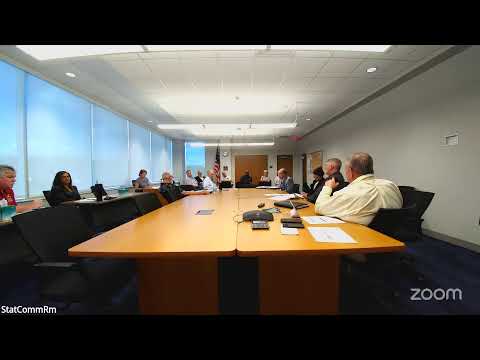
Orange County officials and engineers told the county Sewer Committee on July 22 that design work on the Harriman wastewater treatment plant upgrade is on schedule, regulatory review with the New York State Department of Environmental Conservation (DEC) is advancing but key variance materials remain incomplete, and the county will pursue state and federal financing while addressing local odor concerns.
The county’s engineering consultant, Mary Beth Biencony of Delaware Engineering, said the project is at the 60% design stage with a target of Sept. 30 to complete that milestone and that teams are refining sludge-handling, screening/grease removal and control-system approaches. “We are moving along on that, and it's very positive,” Biencony said after summarizing recent technical work and a multi‑agency meeting with DEC staff.
Why this matters: the project would expand and modernize the plant’s treatment capacity and alter how solids (sludge) and odorous flows are handled. The plant’s discharge limits and a requested variance for total dissolved solids (TDS) and chloride must clear state technical review before construction can proceed in later phases; financing commitments are also needed to cover capital costs.
Regulatory status and next steps - The county submitted an application in March seeking design limits for a proposed larger treatment capacity (referenced in the meeting as a 9,000,000‑gallon‑per‑day application) and is responding to a Notice of Incomplete Application (NOIA 3) for a current 6,000,000‑gpd variance. - County staff met in person with DEC Region 3 staff and DEC central office permit reviewers. Biencony said the meeting included detailed exchanges on: the county’s total development plan, control strategies for TDS and chloride, human‑health and environmental risk comparisons with water‑quality‑based effluent limits (WQBELS), wetlands and toxicity testing, and precedent review (DEC’s prior variance work on mercury). - The county left the DEC meeting with multiple “homework” assignments to document the internal process and technical analyses that led to its TDS minimization plan; DEC took several follow‑up tasks as well. Biencony said the county will share updated documentation by the end of next week and expects a virtual follow‑up meeting with DEC and, if available, New York State Department of Health (DOH) representatives in early August.
Design and construction issues - Sludge handling: Delaware Engineering has narrowed sludge disposition options to two concepts: a single‑level building with a conveyor to load end‑dump trailers, or a two‑story building with a large live‑bottom hopper enabling distribution among multiple trailers. The team may include multiple options in contract documents so bidders can propose compatible technologies under performance standards. - Headworks and odor control: the planned new headworks will be enclosed and operate under negative pressure with filtration to limit open‑air exposure of influent flows. Biencony said that change should reduce odors once the new headworks is online. - Geotechnical and dewatering work: a geotechnical contract has been executed and on‑site drilling is scheduled to begin in mid‑August; on‑site work is expected to take about two weeks with a written report roughly a month after the work. Engineers highlighted the need for temporary shoring where new excavations abut existing partially buried tanks, and the team is preparing dewatering plans that will evaluate groundwater quantity and quality and include DEC submittals where needed.
Financing and legislative steps - County staff listed four primary financing sources under consideration: the Clean Water State Revolving Fund (CWSRF) and Bipartisan Infrastructure Law (discussed as a combined package), the Water Quality Improvement Program (WQIP), and the Water Infrastructure Improvement Act. The county filed an in‑progress CWSRF/BIL application in May and is coordinating with the Environmental Facilities Corporation (EFC). - The county reported a WQIP application draft is under internal grant review with a July 31 application deadline; a larger CWSRF/BIL financing application is targeted for the Sept. 12 deadline. - Separately, legislative requests are circulating to amend Local Law No. 4 of 2008 (amendment language was described as adjusting the assessment schedule/method used to apportion project costs). County staff explained the change is to standardize the schedule used to assess properties by land use.
Public notice, household cost figure and public hearing - Committee members and staff discussed the re‑notice for a rehearing after an earlier hearing notice omitted required detail under county law (cited in the meeting as section 2‑68). The hearing notice lists the estimated annual cost for a typical single‑family household in the sewer district as $1,063.26 (staff said that figure is the total charge and includes the existing roughly $500 charge). Committee discussion clarified that the public notice figure represents total typical cost, and committee members said the net increase to most households would be materially less than the full figure shown in the notice. - The committee announced a public hearing to receive comments on the proposed increase and improvements at 2:30 p.m. on July 23, 2025; the hearing will be livestreamed and recorded to the county’s YouTube channel. Staff said comments and written submissions from the earlier hearing will carry forward into the rehearing record.
Community odor concerns and planned mitigation - Several local officials and residents raised recurring hydrogen sulfide (odor) complaints tied to the plant and local conveyance points (participants described intermittent strong odors at park events, at a drop manhole on Mill Pond Parkway and along local roads). One resident said, “It’s horrible.” - County staff and the consultant described steps to monitor and mitigate odors: additional ambient monitoring equipment has been ordered, the new headworks will be enclosed and under negative pressure with filtration, the county will coordinate construction activities around major community events, and short‑term site fixes (for example, enclosing or filtering small odor sources) will be used when practical. Staff cautioned that some short‑term odor exposures are likely during sludge‑handling work but said they will provide advance notice and try to minimize community impacts.
Intermunicipal relationships and capacity management - Committee members discussed capacity allocation and intermunicipal agreements with “moving communities” (mobile‑home parks and other municipal customers were discussed). Staff said the county is negotiating with municipalities and will update municipal agreements as the plant’s expanded capacity becomes available.
What was decided or directed - The committee did not take formal votes on project approvals at this meeting. Actions described in the meeting are procedural: staff will finalize DEC response documents, submit revised variance documentation, schedule a DEC/DOH follow‑up in early August, complete geotechnical fieldwork in mid‑August and pursue the stated financing applications on the noted schedules. The public hearing on July 23 remains the formal forum for public comment.
Ending: next steps and timing - County and consultant teams said the project now has several short‑term tasks (responding to NOIA 3, completing geotechnical and dewatering reports, and submitting grant and SRF materials) and that design will continue toward the Sept. 30 60% milestone. Biencony said the team will share updated materials with DEC next week and expects a virtual follow‑up in early August to advance the variance review.