
SUNY Orange asks Orange County for 6% funding boost in $69.24 million 2025–26 operating budget
Get AI-powered insights, summaries, and transcripts
Subscribe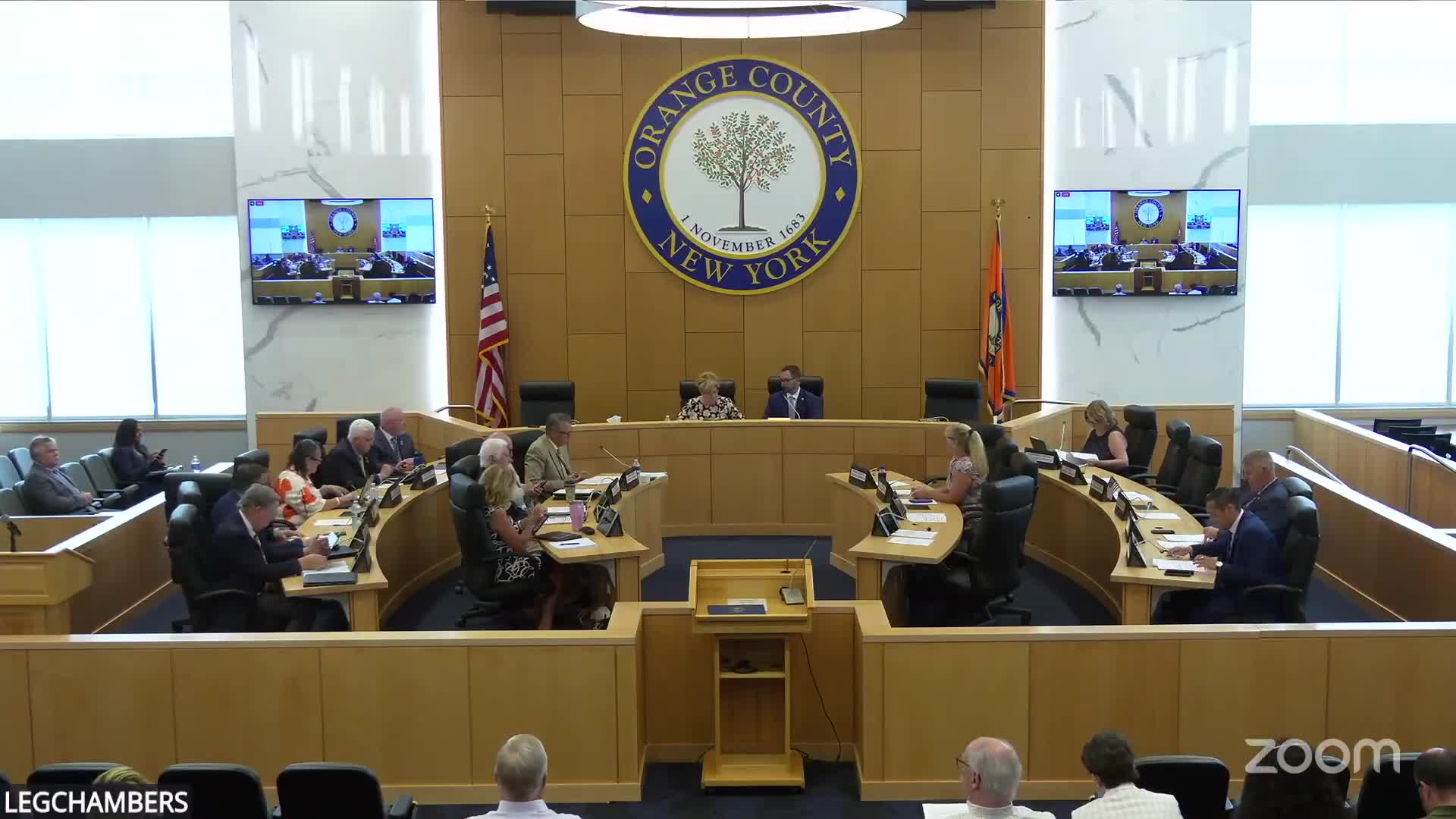
Summary
SUNY Orange President Christine Young and Vice President Paul Martland presented a $69,242,062 2025–26 operating budget to the Orange County Legislature, requesting a 6% increase in county support and outlining enrollment gains, workforce programs and planned use of fund balance.
SUNY Orange President Christine Young and Paul Martland, vice president for administration and finance, presented the college's proposed $69,242,062 2025–26 operating budget to the Orange County Legislature on Aug. 1, 2025, and asked the county for a 6% increase in support.
The budget request matters because county support covers roughly one-third of the college's operating costs; Martland told legislators that the requested 6% increase translates to $1,300,000 and would represent 33.44% of the proposed budget.
"SUNY Orange is thriving," President Christine Young told the legislature, saying the college has seen sustained enrollment growth and expansion of noncredit workforce programs. Young said the college has recorded ten straight academic sessions of enrollment growth, including a 6.5% spring increase and more than a 15% rise in credit enrollment for the summer semester.
Martland said the $69,242,062 budget assumes a 5% enrollment increase and a 3% tuition increase, which would raise full‑time tuition from $5,808 to $5,988 per year and part‑time tuition from $242 to $249.50 per credit hour. He described the proposal as "I think it is a a fair budget. I think it is an attainable budget." The presenters told the legislature that state operating aid remains essentially flat; restricted state funds of about $500,000 were received but are earmarked for specific purposes and do not affect the general operating statement.
The college said it will use $500,000 of its fund balance to help balance the coming year. Martland emphasized that salaries and benefits account for roughly 83.5% of the college's cost structure and that recent collective bargaining agreements are a primary driver of the request: CSEA members would receive 4.5%, the faculty association 4%, and staff/management 2.75% under the assumptions in the budget. The budget also assumes an 8% increase in health insurance costs.
Administrators highlighted growth in SUNY Orange Plus, the college's noncredit and workforce development arm, which the presenters said has increased nearly 400% in the last two years. Martland told the legislature that SUNY Orange Plus revenue is budgeted to double from $700,000 to $1.4 million in anticipated revenue; he said actual results for the current year came in at about $1,000,200.
The presentation included economic-impact figures: Young said SUNY Orange contributed $192 million to the Orange County economy in 2022–23 and cited benefit ratios the college uses to describe return on investment, saying "for every dollar the public invests in the college, taxpayers receive a dollar 20 back in public savings and added revenue, and our students gain $3.40 in lifetime earnings for every dollar spent on their education." (Those ratios were presented by college officials during the hearing.)
College leadership told the legislature they are actively managing vacancy levels and reviewing fee structures. Martland said administration and trustees will not rely on fund balance to balance the 2026–27 budget and that work is underway to reevaluate fees; he said weekly senior‑leadership meetings include vacancy management as a standard agenda item.
Chair Manuda thanked the presenters for their transparency and engagement with the legislature, saying, "the transparency in which you presented this, the meetings that we've had, with the legislature, your openness to this has been excellent, and obviously makes it easy for all of us to understand what it is that you need." The public hearing on the college budget drew no speakers, and the chair closed the hearing.
There were no formal motions or votes recorded during the presentation; the request was presented for the legislature's consideration and follow‑up in committee.