
Orange County officials warn federal eligibility and funding changes could shift millions to county
Get AI-powered insights, summaries, and transcripts
Subscribe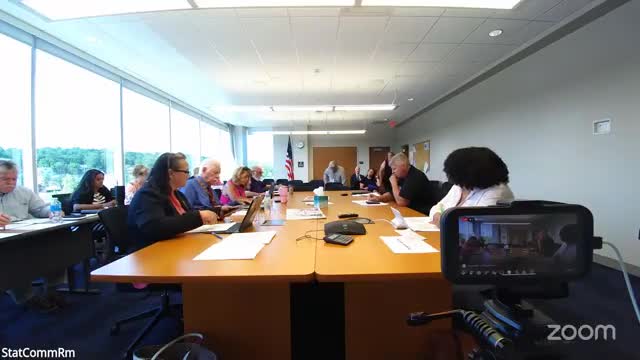
Summary
Commissioner Lacey Trimble and staff from the Orange County Department of Social Services told the Human Services Committee that recent federal changes to SNAP and Medicaid eligibility and funding could shift costs and workload to the county.
Commissioner Lacey Trimble and staff from the Orange County Department of Social Services told the county Human Services Committee on July 1 that recent federal legislation and regulatory changes will require local planning and could shift substantial costs and workload to the county.
The department outlined a multi-year timeline of changes affecting SNAP, Medicaid and related programs and said some details are still unknown because state guidance has not yet been released. Committee members and staff discussed possible county budget and staffing impacts and asked the department to return with regular updates.
Why it matters: The changes affect benefits eligibility, documentation and how much of the administrative cost the federal government will cover. County officials said those changes could increase local staffing needs, create new outreach duties, and, depending on state implementation choices, shift millions of dollars in costs to Orange County.
Department summary and numbers DSS staff summarized routine monthly caseload data and highlighted early indicators of program impact. The presenter reported that locally managed Medicaid cases numbered about 20,496 in June and that Medicaid caseloads continue a “slow downward trend” though 2025 statewide data had not been received. Child support staff served 9,411 cases in June and collected more than $3.2 million that month, for about $21.3 million collected and dispersed so far this year. The presenter also said foster-care placements in June were about 134–136 children, the lowest level the department has seen in the available multi‑year data.
Planned and potential federal changes DSS staff walked the committee through a timeline the department assembled to help planning. Key items reported (as described to the committee): - Immediate to mid‑2025: the department is tracking possible state budget changes tied to a proposed tax on managed care organizations that is now under legal or regulatory review; the county is monitoring which programs could be affected. - SNAP: new or expanded work requirements are planned; federal administrative support for SNAP would move from 50% to 25%, shifting more of the administrative cost to states and potentially to counties. The presenter said a preliminary county estimate of the SNAP administrative cost shift is about $2,100,000 if the full amount is passed to the county. - Family First and child‑welfare practices: the department said Family First–era emphasis on prevention and placing children with family has reduced foster‑care counts compared with prior decades. - Medicaid work and documentation requirements: beginning December 2026, certain adults without dependents may need to meet work or approved activity thresholds to qualify; the presenter said current federal rules still require a waiver in many cases and New York had not broadly adopted such waivers. - Redeterminations: the department reported that eligibility renewals are expected to move from annual to every six months for many populations, with effective redeterminations scheduled to begin for reviews on or after Dec. 31, 2026. - Retroactive eligibility: the presenter said the current 90‑day retroactive coverage window for Medicaid applications is planned to be reduced to 60 days for Medicaid and to 30 days for the state “essentials” population starting in 2027. - Error‑rate penalties: staff said a change scheduled to take effect in October 2027 would tie county financial exposure to measured error rates; using 2024 data and the bill’s penalty bands, the department estimated a worst‑case hit to Orange County of about $15,000,000 if error‑rate penalties were applied at the highest bracket and fully charged to the county. The presenter emphasized the county does not yet have the state’s definition or calculation method for the error rate and is working to obtain it.
Unknowns and county planning Multiple committee members asked whether the state will supply details that counties need to calculate liability and redesign operations. The presenter said state guidance has not arrived and that county staff are asking for the calculation method and other criteria so they can estimate local exposure and identify process improvements.
On workload and staffing, the department said switching to six‑month renewals and new documentation requirements would be a major workload increase and that some planning will depend on other state decisions (for example, whether HEAP funding is restored). The presenter said the department is exploring whether funding tied to programs that might be cut could be reallocated temporarily to cover new administrative needs, but cautioned that those are contingent choices.
Committee directions and next steps Committee members asked the department to provide monthly updates as new state or federal guidance arrives and to prepare cost and staffing scenarios once the state provides the error‑rate definition. The committee noted outreach and beneficiary notification will be required if new community‑engagement or work‑reporting rules take effect.
What the department said about beneficiaries The presenter told the committee that some populations currently exempt from work requirements — including veterans, people experiencing homelessness and youth aging out of foster care — may lose exemptions under the pending federal changes and that some lawfully present noncitizens could lose eligibility for the state “essentials” plan as immigration‑related restrictions phase in. The department said certain humanitarian categories (refugees, asylees, trafficking victims, people with temporary protected status) should remain eligible, but that more state guidance is needed to confirm specifics.
Reporting and transparency Committee members asked the department to return as details are finalized and to include budget offices in scenario planning. The department agreed to continue briefing the committee and to try to calculate local error rates once the state provides methodology.
Limitations The department repeatedly cautioned that many items hinge on state implementation and guidance; the article reports only the items the department presented to the committee and the estimates it provided.