Get Full Government Meeting Transcripts, Videos, & Alerts Forever!
Get email alerts on the Treatment Courts topic
No spam. Unsubscribe anytime.
Becker County treatment-court leaders report recent graduates, seek continued county support
Summary
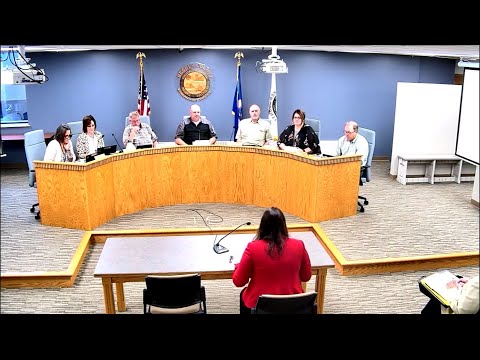
Crystal Cadrey, treatment-court coordinator for Becker County’s drug court and veterans court, told the county board that the county’s treatment-court programs had two drug-court graduates and two veterans-court graduates this year, and that graduates had secured employment, driver’s licenses and stable housing.
Crystal Cadrey, treatment-court coordinator for Becker County’s drug court and veterans court, told the county board that the county’s treatment-court programs had two drug-court graduates and two veterans-court graduates this year, and that graduates had secured employment, driver’s licenses and stable housing.
Cadrey, who also serves as the Seventh District supervisor for treatment-court coordinators, said the programs are updating handbooks and practices to align with national best practices and that a free operational tune-up from the national conference All Rise is scheduled for this fall.
The coordinator summarized program changes intended to reduce recidivism, including evidence-based incentives and service adjustments, more frequent testing early in the program and a multidisciplinary team model that includes judges, probation and treatment providers. “Every single participant that we have, maybe not at their commencement, but at some point, they say this has changed my life,” Cadrey said.
Judge Talmoni, participating by Zoom, and other presenters described anecdotal follow-ups from former participants who returned to say they were doing well after completing treatment court. Cadrey said statewide, the Judicial Council has approved a strategic plan to expand access to treatment courts and that updates to the funding formula and statewide performance measures are in progress.
Commissioners asked how treatment courts differ from standard probation. Cadrey and Judge Talmoni said treatment courts combine higher-frequency judicial review, drug testing and coordinated treatment supports for people identified as high-risk and high-need; participants typically meet the judge every two weeks early in the program and receive case-specific treatment and supervision beyond standard probation.
During the meeting a commissioner asked for a motion to “provide support for $15,000.” County discussion then concluded that the funding question would be handled during budget deliberations and that a formal motion at that time was not necessary; commissioners expressed informal support for the program during the meeting but no binding appropriation or vote on that amount was recorded.
Cadrey and Judge Talmoni asked the board to continue supporting the programs’ operations, citing reduced incarceration costs and improved participant stability as program outcomes. Cadrey said past research indicated county savings of roughly $4,000 per participant in avoided jail costs in a cited study from 2014, but she emphasized that many long-term savings (employment, family stability) are difficult to quantify.
The presenters noted Becker County’s veterans court currently has no active participants and that staff continue outreach with veteran service officers to restart referrals.
Commissioners and presenters said they would continue coordination with state staff working on treatment-court training, grants and data collection; Cadrey said she would provide more complete performance data when statewide metrics are adopted.
The presentation was informational; commissioners did not adopt a new policy or appropriation during the public portion of this meeting.