Get Full Government Meeting Transcripts, Videos, & Alerts Forever!
Get email alerts on the Social Services 211 topic
No spam. Unsubscribe anytime.
North Carolina 211 fields 800–1,000 calls daily, shifts to disaster line during emergencies
Summary
United Way officials described how North Carolina's 2-1-1 information-and-referral service verifies resources year-round, handles about 800'to'1,000 inbound calls per day, activates a separate disaster line during state emergencies and placed 540 people in 14-day Airbnb stays during Hurricane Helene.
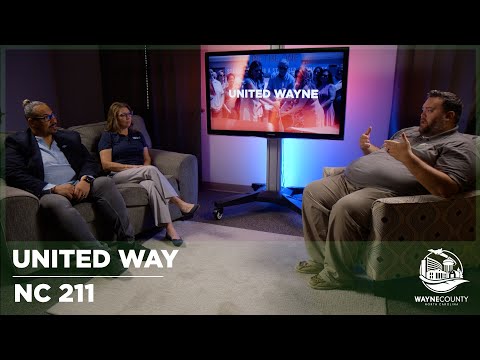
United Way of North Carolina's 2-1-1 helpline fields about 800 to 1,000 inbound calls statewide on a typical day and switches to a dedicated disaster line when the state activates emergency operations, David Mercado, senior director of operations for United Way of North Carolina, said on Wayne TV.
The statewide 2-1-1 system acts as an information-and-referral service that connects callers to local and statewide resources, verifies service availability annually and, during disasters, vets resources daily and places staff inside the state emergency operations center to coordinate response, Mercado said.
Mercado said the helpline'which his office consolidated under a single organization with in-state contact centers'aims to take callers'time and follow up. "We don't rush any calls," Mercado said. He added that regular specialists typically answer 30 to 40 calls a day, and the program conducts a 30-day follow-up to see whether referred resources helped.
On a day-to-day basis, Mercado said United Way assigns resource coordinators to counties by quadrant and vets resource providers by phone at least once a year so the referral database reflects active services rather than outdated listings. "So anything that we give our consumers, they're up to date," he said.
When the state'which Mercado described as activating 2-1-1 as part of state emergency management'declares an emergency, 2-1-1 opens a separate disaster line with a shortened menu that routes callers to the first available specialist and uses real-time resource updates. During Hurricane Helene, Mercado said 2-1-1 staffed the state emergency operations center and worked with other states' 2-1-1 centers, volunteers, FEMA and nonprofit partners to handle large call volumes.
Mercado said the service handled inquiries about roughly 15,000 people during Helene, including calls from overseas asking about relatives in western North Carolina. He also said 2-1-1 partnered with Airbnb to place 540 people in 14-day stays during the storm.
Sherry Archibald of United Way of Wayne County praised the partnership between local United Ways and the state 2-1-1 system. "If she doesn't know, she'll find somebody who knows," host Joel Gilly said of Archibald's role at the local United Way on-air, underscoring the local-state coordination that Mercado described.
Mercado said 2-1-1 provides bilingual in-house staff for Spanish and uses a language line for other languages so callers can be connected regardless of language. He also pointed viewers to the self-service website, nc211.org, and described a new online tool that lets users input household details to see short-term and long-term resources.
Other operational details Mercado gave: average inbound volume of 800 to 1,000 calls per day, consolidated contact centers to streamline training and information, and a current average wait time of less than 15 seconds. He said 2-1-1 runs outbound campaigns in addition to inbound service.
How to access: callers can dial 2-1-1 from within North Carolina or visit nc211.org to search resources online, Mercado said. The service does not provide direct cash assistance but aims to connect residents to appropriate short-term and long-term programs, he said.
This interview was a general overview of the 2-1-1 service and its disaster response role; no formal policy or budget actions were proposed or decided on in the broadcast.