Get Full Government Meeting Transcripts, Videos, & Alerts Forever!
Get email alerts on the Housing topic
No spam. Unsubscribe anytime.
Housing advocates urge Metro Human Relations Commission to monitor unified housing strategy and join coalition
Summary
Presenters at the commission meeting asked the Metropolitan Human Relations Commission to use newly hired research analysts to create a scorecard tracking the city's Unified Housing Strategy and invited the commission to join a coalition called Housing for All of Us to push for implementation, land use changes and increased subsidized housing.
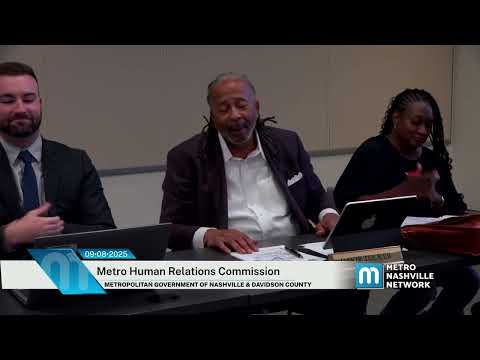
Housing advocates asked the Metropolitan Human Relations Commission on a recent fall day to hold the city accountable for implementing its Unified Housing Strategy and to join a new coalition called Housing for All of Us. Erwin Bennett, convenor of the coalition, said he and other presenters want the commission's research capacity used to produce a public scorecard and to provide one commission member and one staff member to sit with the coalition.
The request matters, Bennett said, because he and fellow presenters believe Metro's published plans must be tracked and enforced if they are to produce more housing for workers and lower-income residents. "We would like the commission to take on that same responsibility with respect to putting together a scorecard," Bennett told commissioners, referring to the housing and infrastructure study and the Unified Housing Strategy.
Advocates framed the problem as a shortage of land, rising construction costs and waning federal subsidy. Eddie Latimer of Affordable Housing Resources described post-pandemic supply and land-price pressures and said HUD funding cuts and financing structures make production costly. "Our needs are basically simple. We need land," Latimer said. He added that different funding sources define "affordable" differently and that many workers who form the backbone of the city's workforce earn too much to qualify for HUD-subsidized programs but too little to afford market housing.
Tom Negri, a longtime local organizer, urged building a broad coalition across business, faith and higher-education sectors to pressure elected officials and said a combined public'private effort is needed to overcome political obstacles. "If we don't build a coalition to move forward, nothing will be done in this city on affordable housing over the next 5 years," Negri said.
Advocates proposed a timeline and near-term priorities: a public-facing scorecard maintained by the commission using its research analysts; one commission member and one staffer to join the Housing for All of Us coalition; and a public advocacy campaign to marshal business and civic partners. Bennett said the coalition hopes to organize substantive planning work over 18 to 24 months, with longer-term production goals extending beyond that.
Speakers also raised technical and policy concerns for commissioners to monitor, including the distinction between project-based public housing and voucher-based approaches, control of publicly owned land by the Metro Development and Housing Agency (MDHA), and whether subsidy levels and funding streams will sustain low-income production. One presenter noted the Barnes Fund's local funding had been reduced, saying it went "from $50,000,000 to $15,000,000," and urged the commission to track public dollars.
Several commissioners and attendees pressed advocates on how to pair advocacy with immediate production. Commissioner Tyler McKinney asked about the status of public-housing subsidy and how the strategy would help the most vulnerable now; presenters replied that the coalition intends both to push for long-term policy and to seek "nuggets" of actionable projects that can show immediate progress, citing small co-op projects and conversions as examples.
The presenters asked the commission to use its newly hired research analysts to produce the scorecard and to publish implementation metrics so Metro agencies and the public can see progress. They also offered to invite a commission member and staff to participate in the Housing for All of Us coalition and to brief the commission further about specific components they have drafted.
No formal vote or binding action was taken during the meeting; presenters asked the commission to consider the request and return with next steps. Director Tucker thanked the presenters and said staff would follow up about how the commission could engage.
The advocates left commissioners with a central message: pairing direct production strategies with public accountability mechanisms will be necessary to move from repeated studies to measurable housing outcomes.