
Council authorizes four Helene recovery boards and temporary advisory-board structure, agrees to pilot limited regular meetings
Get AI-powered insights, summaries, and transcripts
Subscribe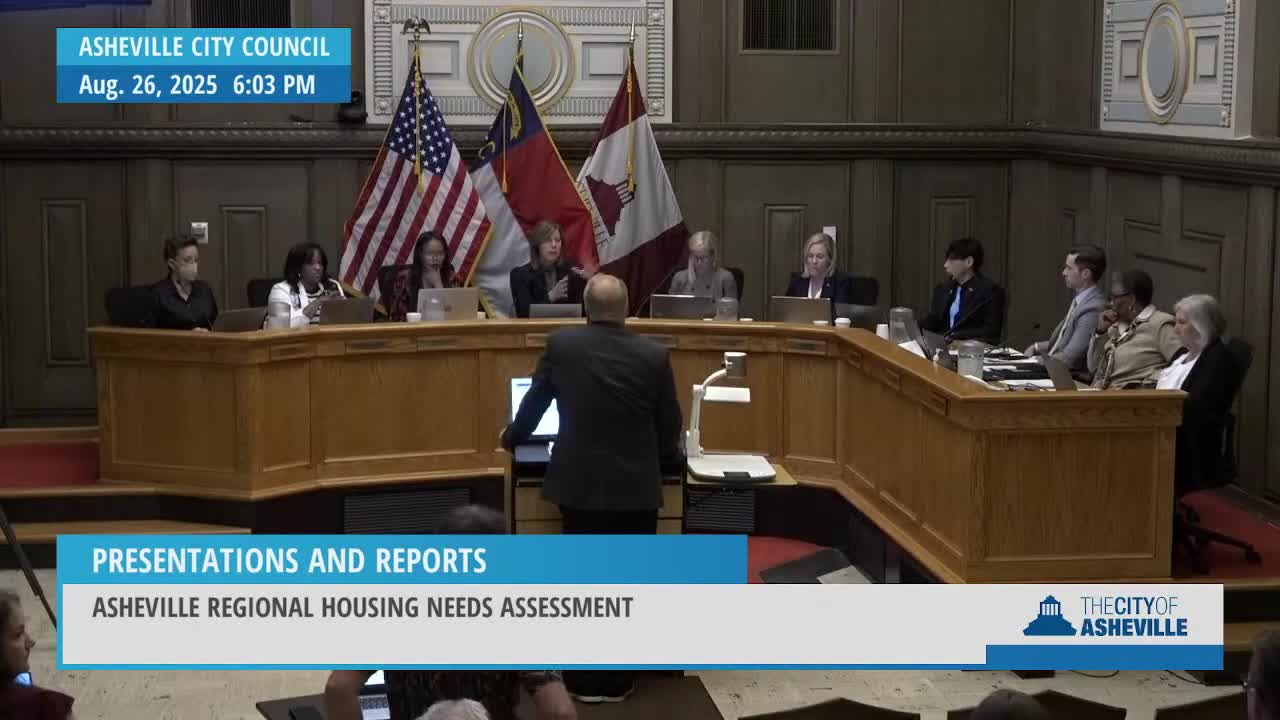
Summary
Council adopted a resolution establishing four recovery boards to advise on post‑Helene priorities and approved a temporary structure for existing advisory boards; the Realignment Working Group offered to help staff and some council members successfully pushed to allow certain advisory boards to request limited regular meetings with RWG support.
Asheville City Council voted Aug. 26 to establish four temporary “Helene Recovery Boards” aligned to council priorities and to adopt a temporary operational structure for the city’s advisory boards and commissions as staff reorganizes civic engagement in the wake of Hurricane Helene.
What council adopted: The resolution creates four recovery boards tied to council priorities for the Helene response (economic recovery and business, infrastructure and public works, housing and social services, and community resilience/recovery priorities). Each board will have up to 11 members and will draw up to two representatives from existing advisory boards, with the remaining slots filled through an open application process. The recovery boards will be staffed by city departments and will meet online, publicly and on a regular cadence to advise council and coordinate implementation of recovery projects and spending.
Advisory boards: Council also adopted a temporary operational model for 13 city advisory boards, pausing regular scheduled meetings in favor of task-driven activations tied to council or department requests. Council required a one‑year review of the temporary approach and emphasized arrangements to preserve board capacity. The Realignment Working Group (RWG), a volunteer organization that studied how boards and commissions function, offered to support boards that want to hold regular meetings and assist with logistics and training.
Public input and adjustments: Members of the RWG, several board chairs and resident advocates spoke in favor of retaining regular meeting opportunities for advisory boards; staff and council accepted an amendment to allow boards to request regular meetings or special meetings if they can demonstrate purpose and workload, using RWG support where practical. Council directed staff to post scopes for each recovery board and to coordinate with department directors and advisory board chairs to nominate members and define scopes.
Why it matters: The move aims to concentrate volunteer and staff attention on the storm recovery while preserving pathways for ongoing civic participation. Council members said recovery boards will help prioritize projects funded by recovery dollars and that a limited pilot allowing some advisory boards to meet regularly would help maintain institutional knowledge and representation.
Ending: Staff will begin appointment and application processes and work with RWG and departmental chairs; council asked for a one‑year review of the temporary structure and to ensure meetings remain accessible and compliant with open‑meetings law.