
School board approves general-fund budget extension as safeguard against shortfalls
Get AI-powered insights, summaries, and transcripts
Subscribe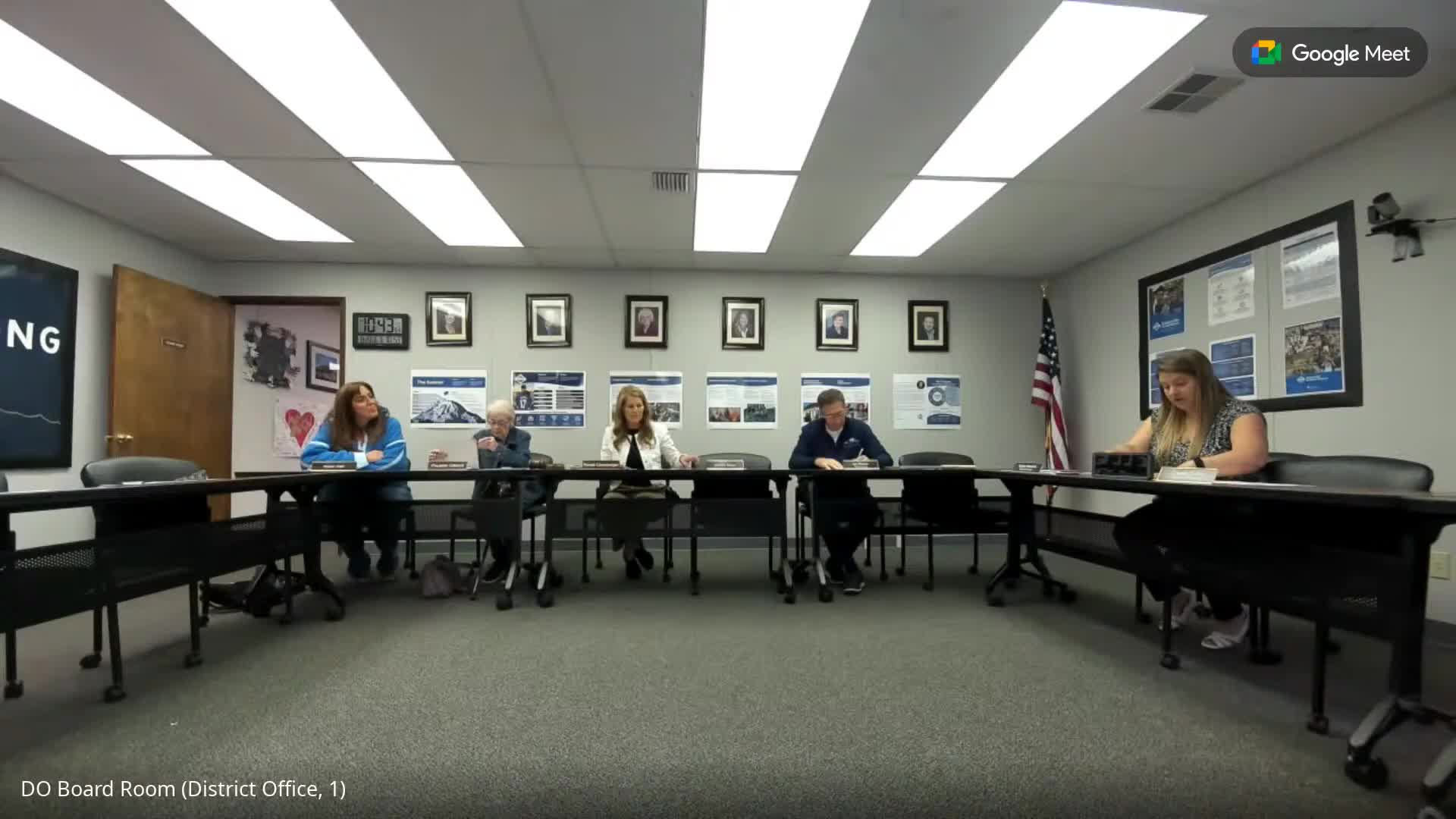
Summary
At a special meeting, the school board approved a resolution to extend the district’s legal spending authority for the 2024–25 general fund after finance staff warned the district risks exceeding its original budget; the extension was described as a safeguard and the vote was unanimous.
The school board voted unanimously to approve Resolution 752, a budget extension that raises the district’s legal spending authority for the 2024–25 general fund so the district can process August payroll and other payments if expenses exceed the original appropriation, board members were told. Krista, a district finance staff member presenting the budget status report, told the board the district’s current legal spending authority is $36,144,440 and that, through July, year-to‑date expenditures totaled about $33,304,220. With encumbrances the district is running a projected shortfall — in one scenario about $849,000 — and accruals for bills paid later could increase that gap. Why it matters: Finance staff warned that exceeding the adopted appropriation even by a small amount can trigger audit findings and violate state requirements, which in turn can jeopardize timely payroll and vendor payments. Krista said the extension is intended only as a safeguard to cover timing and unpredictable costs while staff continue close monitoring. During the presentation, Krista explained encumbrances and scenarios the district ran: a simple projection based on 11 months of spending produced a possible deficit of roughly $1.87 million if August spending matched the recent monthly average, while accruals for bills posted in September (for August services) could raise the exposure to about $2.5 million. By contrast, the district’s Forecast5 projection, which uses five years of monthly spending trends, showed the district ending the year favorable by about $88,409. Krista said she preferred to request the extension rather than risk a technical violation. Krista identified the main drivers of the variance as higher substitute-teacher costs and increased employer health‑insurance contributions for employees who newly qualified for benefits (she cited employer contributions on the order of $1,200–$1,300 per month), higher contracted special‑services costs, increased transportation wages and fuel as the department restored driver staffing, and higher food‑service costs tied to greater student participation. She also said the district received larger-than-expected tutoring stipends and related benefits that increase both revenues and expenditures and therefore must be budgeted. “If we go even over by a dollar, it signals improper monthly budget monitoring and may result in an audit finding,” Krista said. She added that the extension is not a license to spend more: “The additional budget capacity ... is intended as a safeguard only. It is not intended as a green light to spend additional $500,000.” The resolution authorizes the district to use a combination of state and local funds if needed, as required under state law, and applies to the current 2024–25 school year (the presenter emphasized it is not an increase for the next school year). Board members thanked staff for close monitoring and fiscal stewardship; one board member said, “Our community should feel confident that you are really trying to make sure that you’re a good steward on our community funds.” After brief discussion and acknowledgment of the risks and the Forecast5 outlook, a motion to adopt Resolution 752 was moved and seconded and carried by voice vote with no opposition. The board adjourned the special meeting at 11:05 a.m. The district said it will continue close budget monitoring through 08/31/2025 and beyond with the goal of ending 2024–25 within the original adopted budget if possible.