Get Full Government Meeting Transcripts, Videos, & Alerts Forever!
Get email alerts on the Municipal Energy Plan topic
No spam. Unsubscribe anytime.
Consultant presents draft municipal energy plan aiming for deep building-emissions cuts by 2035
Summary
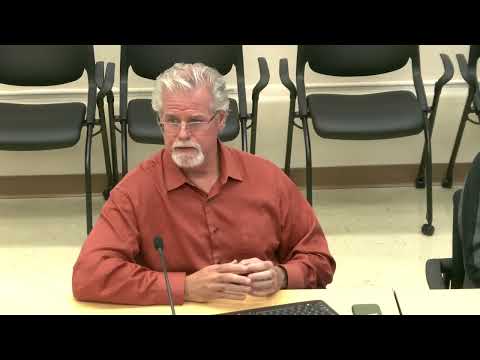
Consultant Ted Redmond of Pale Blue Dot presented a draft comprehensive energy plan to the City of Oshkosh Sustainability Advisory Board on Thursday, Sept. 4, outlining energy-benchmarking, solar feasibility work and a five-part roadmap the consultant says could cut municipal building greenhouse gas emissions roughly 62 percent by 2035.
Consultant Ted Redmond of Pale Blue Dot presented a draft comprehensive energy plan to the City of Oshkosh Sustainability Advisory Board on Thursday, Sept. 4, outlining energy-benchmarking, solar feasibility work and a five-part roadmap the consultant says could cut municipal building greenhouse gas emissions roughly 62 percent by 2035.
The plan matters because it combines audited utility data, technology options and financial modeling to give the city a menu of actions that staff can sequence into capital planning and operations decisions.
Redmond told the board the plan team collected facility energy data from the city and utility WPS, created Energy Star Portfolio Manager accounts for major properties, and benchmarked key buildings to flag outliers and prioritize deeper audits. "We prioritized 33 specific sites and buildings to do a detailed solar feasibility assessment," Redmond said. He said the firm modeled example arrays, produced order-of-magnitude project budgets, and generated 30-year return‑on‑investment projections for those sites.
The draft includes five strategic goals for city operations: improve building energy use intensity, increase adoption of high‑performance construction (including net‑zero and net‑zero‑ready buildings), implement fuel switching from on‑site fossil combustion, achieve 50 percent renewable electricity by 2035 (and a longer‑term vision of 100 percent), and maintain funding to implement the plan. Redmond summarized sector targets in both hard numbers and percentages: the draft lists current electricity use at 18.9 gigawatt‑hours and proposes a target of about 16.6 GWh by 2035 and roughly 15 GWh by 2040; municipal building emissions are estimated at 15,000 metric tons annually in the draft, with a 2035 goal of about 5,600 metric tons and a longer‑term aim of net zero.
Board members pressed for more granular baselines and clarity about scope. Jacob Claymeier asked whether the report shows specific facility baselines and per‑building ROI. "I would be curious if any of those solar evaluations for any of those buildings could be represented in an ROI basis," Claymeier said. Redmond replied that the detailed consumption data and spreadsheets exist and that the consultants can expose a baseline view for each building on request.
Paul Trader asked whether other technologies besides solar were considered, including small wind, geothermal and nuclear at utility scale. Redmond said distributed technologies were considered where feasible and that site‑specific wind would require dedicated wind‑resource testing outside the current project scope; geothermal was described as a heat‑harvesting strategy in many buildings rather than an on‑site electricity generator in most local cases.
Redmond explained renewable energy certificates (RECs) and their role in accounting for renewable generation: "Producers of renewable energy, when they send it into the grid, record it; whoever owns the REC gets the right to say they are using the green attributes from that renewable electricity," he said, cautioning the board that project contracts should specify whether REC ownership transfers to the city.
The draft also includes modeled impacts and order‑of‑magnitude savings, which Redmond described as estimates for planning: modeled annual savings tied to the strategy set include roughly 2,200,000 kilowatt‑hours avoided, 172,000 therms reduced and about $300,000 in annualized cost savings (the consultant noted that the annualized figure depends on project timing and amortization and provided an appendix with methodology). Redmond stressed the draft nature of the numbers and asked the board for comments to refine assumptions.
City staff asked members to send comments to Emma by Sept. 22 so the consultant could return a final draft the week before the board’s next meeting; staff said they expect to ask the board to recommend the plan to the council at the next meeting. Redmond said the plan is intended as a 10‑year implementation roadmap with periodic updates.
The presentation prompted technical follow‑up questions about metrics and implementation sequencing rather than any formal action; no motions or votes were taken on the plan at the Sept. 4 meeting.
The board’s next steps are a two‑week comment period on the draft, a final consultant submission to staff before the next board meeting, and a potential board recommendation to the common council at a subsequent meeting.