
Board hears complaints about delayed property tax appeals, refunds and e‑filing; assessors, advocates press for fixes
Get AI-powered insights, summaries, and transcripts
Subscribe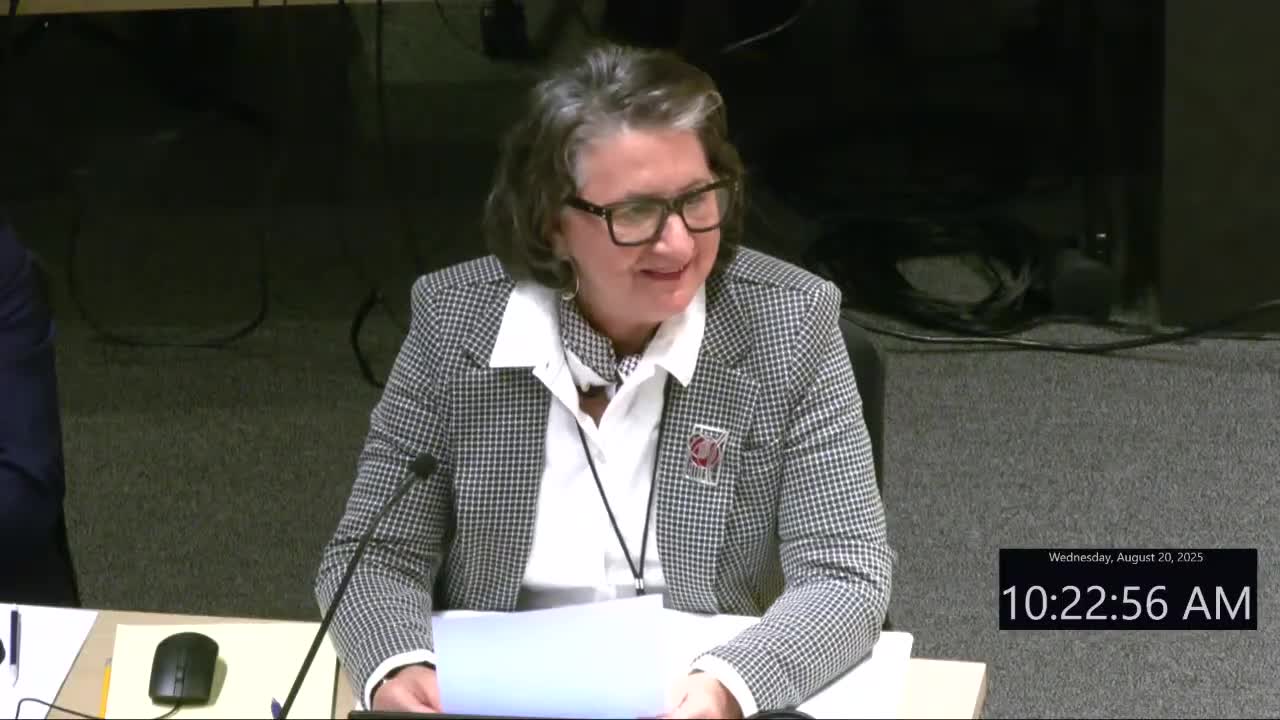
Summary
Tax officials, taxpayer advocates and consultants told the State Board of Equalization on Aug. 20 that delays in processing assessment appeals and issuing refunds are causing financial harm and administrative headaches for taxpayers and counties.
Tax officials, taxpayer advocates and consultants told the State Board of Equalization on Aug. 20 that delays in processing assessment appeals and issuing refunds are causing financial harm and administrative headaches for taxpayers and counties.
The Taxpayer Rights Advocate, Lisa Thompson, opened the hearing with a briefing on her office's annual report. “The annual report is fiscal year 2324, and it can be accessed on our agency's website as well as a link through the memo that is attached to the public agenda notice for this meeting,” Thompson said as she summarized casework and educational materials her office provides.
Advocates said the state must reduce backlogs in assessment appeals, speed refunds and standardize electronic filing and signature rules across counties. “In too many counties, complex property appeals that should take days are instead taking years,” Jennifer Rowe of the California Alliance of Taxpayer Advocates told the board. She urged stricter adherence to Property Tax Rule 323, better training of appeals board members and adoption of docketing systems like Los Angeles County’s.
County assessors defended recent steps on education and disaster relief guidance. Jeff Prang, Los Angeles County assessor and president of the California Assessors Association, praised the Taxpayer Rights Advocate Office’s information sheets, including an information guide for disaster relief released in August 2024. “These materials are written in plain language, help people to navigate the complex property tax topics, clearly, serving as, essential resource for, property owners as well as our offices,” Prang said.
Tax practitioners and counties described operational fixes that they said would reduce taxpayer hardship. Gina Rodriguez of Ryan LLC, a tax and advisory firm, said a Los Angeles property tax task force she helped facilitate cut an appeals backlog by 75% and recommended statewide forms, clearer guidance on accepting electronic signatures and a deadline for counties to correct rolls and issue refunds. “The backlog now has been reduced by 75%,” Rodriguez said, describing LA County’s work.
Speakers also pressed for consistent appeal deadlines. Greg Gibney (on the phone) said 47 counties use a Nov. 30 deadline for filing assessment appeals while 11 use Sept. 15, and urged one uniform date, noting that inconsistent deadlines confuse taxpayers who move between counties.
Several taxpayers described personal harms. Dr. Brett Nelson of Benicia explained he missed applying an earlier base‑year transfer window before Proposition 19 took effect and said his property tax doubled after he downsized; staff explained the qualification dates are statutory and changes would require constitutional action. In a written comment read into the record, Tanya Barnes described a four‑year fight to obtain a $5,253.50 refund from Los Angeles County and urged creation of a unified refund tracking system and a dedicated ombuds role; Board staff confirmed the refund was eventually issued to the escrow company and distributed to the trust after TRA intervention.
Board and staff responses and next steps: staff said an assessor’s letter and a statewide agent‑authorization form are being finalized for presentation to the board, and a county assessor letter addressing electronic signatures will issue soon. Multiple speakers suggested a BOE‑level liaison and a “shot clock” for assessors to process exemption and exemption‑related applications, and urged the board to compile best practices and examples so counties and developers could adopt them.
Why it matters: appeals and refunds affect taxpayers’ cash flow and counties’ accounting; prolonged delays create interest costs and litigation risk. Separately, the TRA annual report — the basis for the hearing — showed the TRA completed work on 329 cases in FY 23‑24, with 75% in valuation and the largest valuation category being reassessment exclusions. The board welcomed the public input and staff said it will continue outreach with assessors and local officials.
No formal board action was taken at the hearing; members said they will examine options to improve county processing and information sharing and will continue follow‑up with assessors and advocacy groups.