
Board members praise modular housing hearing, ask staff for follow-up report and recommendations
Get AI-powered insights, summaries, and transcripts
Sign Up Free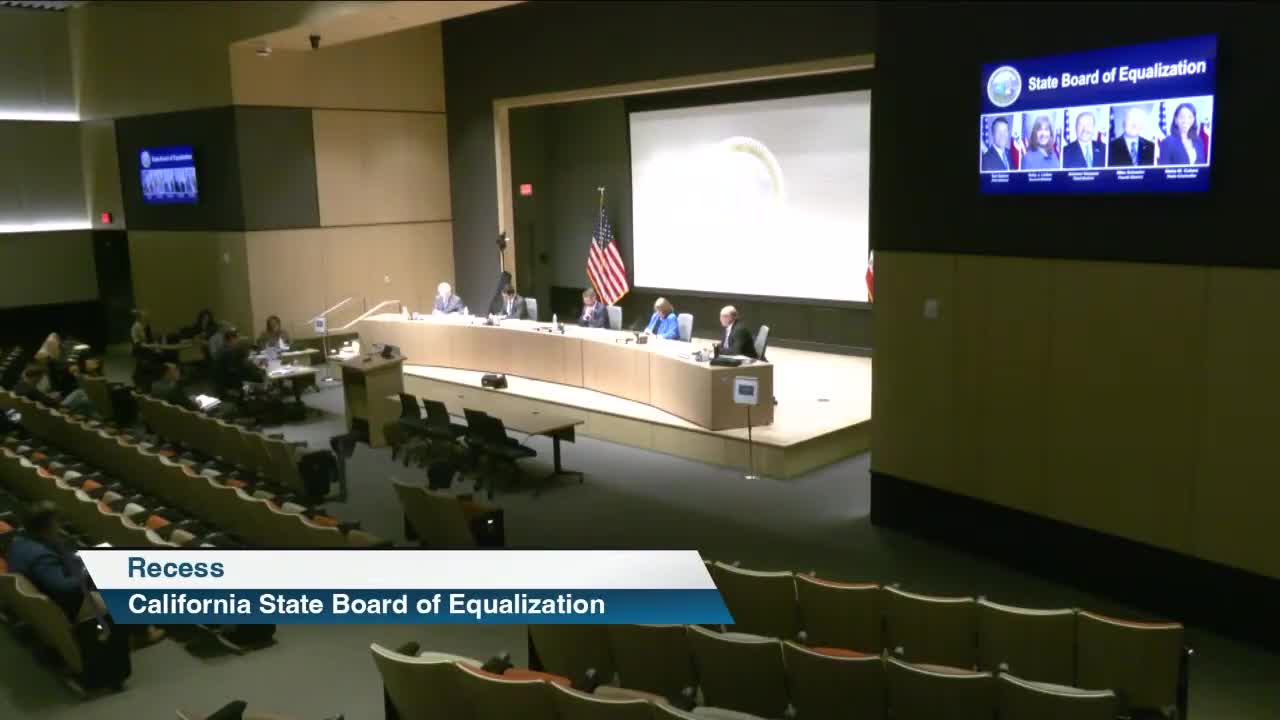
Summary
After an informational hearing on modular housing and factory-built construction, board members thanked the presenters, discussed insurance and financing barriers, and directed staff to prepare a report and a list of recommendations for a future meeting; Vice Chair Lieber and Member Vasquez also discussed a planned factory visit.
Board members on the California State Board of Equalization on July 23 thanked speakers at an informational hearing on modular housing and asked staff to prepare a report and a recommendations list to present at the board's next meeting.
The hearing focused on modular housing's potential to address wildfire risk and long‑standing affordability problems. Member Vasquez, who organized the hearing, said he would keep in touch with the presenters and that the board office would produce a report on the testimony for the next meeting. "I plan to keep in touch with each of the speakers about these issues, and we will prepare a report about this informational hearing to share with the board at our next meeting," Member Vasquez said.
Why it matters: Board members framed modular housing as one tool among many to increase housing supply and resilience where demand and wildfire risk overlap. Vice Chair Lieber emphasized accessory dwelling units (ADUs) as a promising housing type and asked staff to return information on funding sources such as CalHFA programs. Members also raised insurance industry recognition of modular construction as a barrier to wider adoption.
Discussion and direction: Board members pressed several operational and financing questions. Vice Chair Lieber said ADUs "have a lot of promise" but have underperformed in California and asked staff to compile existing funding streams for ADUs and to brief the board on CalHFA availability. Member Vasquez and Chair Gaines discussed the state's pension funds and investment policies; Vasquez suggested increasing CalPERS/CalSTRS investment in California housing projects.
Insurance concerns drew repeated comment. Chair Gaines and Vice Chair Lieber noted that some insurers appear to treat modern modular homes as if they were mobile homes, producing higher premiums or denials. Members asked whether a state‑approved construction standard could help insurers offer normal homeowners rates for modular homes.
Members also directed staff to consolidate next steps. Member Vasquez said he would follow up with presenters and requested that the board office and his staff prepare a written set of recommendations or options for future action. Vice Chair Lieber and Member Vasquez discussed arranging a fact‑finding visit to a full‑stack modular factory in Carson, California, to examine factory processes and labor standards in person.
No formal board policy or vote was taken during the hearing; members described the item as informational and requested staff follow up.