Get Full Government Meeting Transcripts, Videos, & Alerts Forever!
Get email alerts on the School District Budget topic
No spam. Unsubscribe anytime.
Prosser board reviews $1.8 million in cuts after district forecasts sub‑policy fund balance
Summary
District staff presented about $1.8 million in proposed reductions and options — including a possible declaration of financial emergency and a budget extension — after projecting an ending fund balance below the district policy target.
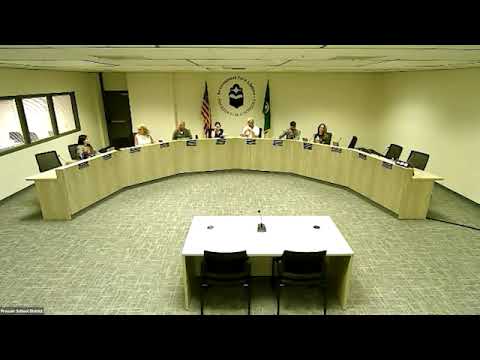
Prosser School District officials on Aug. 27 told the school board they expect a tighter fiscal year than in recent years and outlined roughly $1.8 million in reductions to avoid deeper shortfalls. District finance staff said, absent changes, the district could end the year about $630,000 in the red and that the projected ending fund balance would be roughly 3.1 percent of the budget, below the district policy target of 4 to 5 percent.
The budget presentation, prepared by Delise (finance staff) and delivered at the board meeting, detailed cuts across salaries, overtime and supplies and described revenue adjustments that narrowed the gap. "When we're budgeting within the system, especially when it comes to different bargaining groups ... we have separate budget plans," Delise said, explaining why some benefit and administrator tabs appeared grouped in the exported presentation. Delise said the board-directed cuts were reduced from about $2.02 million to about $1.8 million to leave a modest spending cushion.
Why it matters: The district's fund balance guides its cash reserves and borrowing capacity and is used by state auditors and bonding agencies to judge fiscal health. Sitting below policy levels can trigger formal steps, including declaring a financial emergency or making budget extensions, and can affect services, staffing and the timing of a future levy.
Most of the proposed reductions are in personnel-related and operating accounts. Delise said the administration trimmed roughly $750,000 from salary-related lines: including reductions from substitute budgets and overtime. Specifically, the presentation listed roughly $200,000 removed from one $500,000 certificated-substitute bucket, $200,000 from a $500,000 classified-substitute bucket, $250,000 cut from a $400,000 overtime allocation and $100,000 cut from approximately $260,000 in extra certificated time above contract and supplemental agreements. District staff reported an expected $718,000 reduction in MSOC (materials, supplies, operating costs) spending because salary overruns in the current year reduced capacity in those lines.
The board discussed leaving a contingency for overtime because collective bargaining agreements (CBAs) limit how the district can treat overtime and related pay. "We're getting a lot of pushback from the unions by overtime," Delise said. "I don't want to run into a situation where we are made to pay something that we're not budgeting for." Several board members signaled they preferred a conservative approach that retains a smaller overtime bucket rather than risk a legal or contractual obligation the district could not meet.
The presentation also described building-level reductions and tighter controls on discretionary purchases. The administration said it reduced aggregate building budgets and standardized allocations to about $30,000 per building, down from a prior total allocation of about $335,000. Supplies and other MSOC buckets were trimmed by roughly $470,000. Staff said those steps — combined with closer monitoring of purchase orders and approvals — were intended to limit nonessential spending while protecting student-facing programs.
On revenue, staff reported several modest positive changes that reduced the overall adjustment need: kindergarten enrollment increased from 140 to 149, which staff estimated would bring roughly $90,000 in additional revenue; an updated OSPI (Office of the Superintendent of Public Instruction) federal grants report showed Title I funding about $100,000 higher than previously projected; and an OSPI school improvement grant (SIG) reopening could create an opportunity to apply for additional funds tied to a PLC contract the district had recently pursued.
Insurance payments were also discussed as a near-term cash‑flow concern. The district's liability insurer, USIP (Universal School Insurance Provider), through program administrator ClearRisk, offered a no‑interest payment option that spreads the premium into seven monthly payments with a balloon payment in April when levy receipts arrive. The district noted the plan does not change the total liability but eases cash‑flow pressure in September and October when large insurance premiums are due.
Board members asked about the legal and procedural steps if the district remains below policy. Delise said staff have asked the ESD (Educational Service District) and OSPI about the order of operations and that she expected guidance before next week's public hearing and the scheduled budget adoption meeting. "I have to determine if we do the financial emergency in the agenda order prior to the approval of the budget or after the approval of the budget," Delise said; staff later confirmed an email request for formal guidance was in process.
Several board members and staff framed the situation as a multi‑year recovery task rather than a single year fix. One board member said that, if the board pursues two years of belt‑tightening, the district could return to the 4–5 percent fund balance target in roughly two years, assuming no major unanticipated costs or loss of revenue. The board scheduled a public budget hearing for the next regular meeting and a special meeting on Aug. 28 for an ASB (Associated Student Body) budget extension that staff said is needed for FY24–25 accounting issues.
No formal budget adoption vote occurred at the meeting. Aside from an initial motion to approve the meeting agenda, which passed by voice vote, the items described were presented as proposed reductions and directions for staff to refine for upcoming hearings and votes.
Looking ahead, staff said they will continue negotiating with union representatives, monitor enrollment and grant notifications from OSPI, and prepare both a public hearing and the formal budget adoption packet that will include the finalized F‑195 (state budget) submission to OSPI for approval.