Get Full Government Meeting Transcripts, Videos, & Alerts Forever!
Get email alerts on the Opioid Settlement Funding Rfps topic
No spam. Unsubscribe anytime.
Board approves two opioid‑settlement grants, debates allocation priorities and calls for committee review
Summary
After lengthy discussion, the board approved two opioid settlement RFP awards (to Court Services and Kokito Volunteer Ambulance Service) but several commissioners urged a review of the opioid advisory council’s priorities and requested more commissioner participation and a workgroup to guide future allocations.
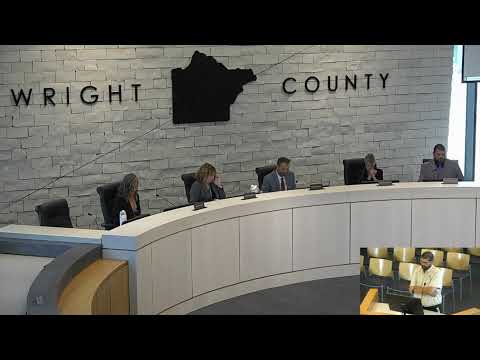
The Wright County Board on Aug. 19 voted to move forward two recommended opioid settlement proposals (items 4 and 5 in the packet) after an extended discussion about funding priorities and governance of the opioid settlement advisory council.
Jamie, who presented the RFP recommendations, said five RFPs were vetted by the opioid settlement advisory council. Jamie and facilitators Becky and Sarah explained the council’s community assessment prioritized treatment and recovery needs; Becky said housing and transportation repeatedly surfaced as high needs in county discussions. Jamie told the board she would welcome more direction from the commissioners on allocation priorities.
Several commissioners questioned the council’s emphasis on funding housing and recovery supports rather than prevention, EMS and immediate life‑saving resources. Commissioner Moyna and others expressed concern about using settlement dollars for rental or purchase of sober‑living homes and for paying peer recovery positions. Moyna said she preferred more funding for victims, children and emergency response resources such as naloxone for EMS. Chad (and other board members) noted that one RFP (item 5) addressed a volunteer ambulance service with operational needs.
Court services staff explained their proposal links to alternatives to incarceration and drug court models and focuses on barriers such as housing and transportation that staff said are proven to reduce recidivism and support recovery. The board debated whether peer recovery funding should be paid positions or volunteer roles; staff noted other funding streams for peer recovery exist.
Commissioner Shane moved and Commissioner Holland seconded a motion to approve only items 4 and 5 (Court Services and Kokito Volunteer Ambulance Service). The motion passed unanimously. Commissioners and staff agreed to pursue further work: several commissioners asked to form a small workgroup including public health, court services, sheriff's office, the county attorney and one or two commissioners to propose refinements to council composition, solicitation practices and funding priorities and then bring proposals to a Committee of the Whole or a workshop.