Get Full Government Meeting Transcripts, Videos, & Alerts Forever!
Get email alerts on the Criminal Justice topic
No spam. Unsubscribe anytime.
Probation faces roughly $30,000 shortfall after state grant cuts; county staff reductions, reassignments proposed
Summary
Howard County probation officials told the council state grant reductions and mandatory longevity raises left a roughly $220,000 gap for 2026; the department plans to eliminate a vacant probation officer position and delay refilling to reduce the shortfall to about $30,000 and will seek to use non-general-fund sources where possible.
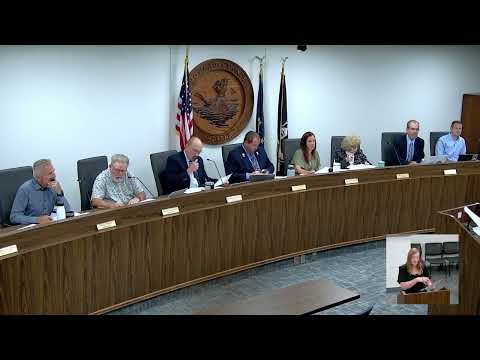
Probation administrators told the council that state-funded grant reductions and state-mandated longevity raises created a projected $220,000 shortfall for 2026, and described a plan of personnel restructuring and reallocation to reduce that gap to roughly $30,000. Judge Mark Tate and Purdue Extension and probation staff outlined the changes. Probation said the state reduced certain grant funding by roughly 10% across the board; at the same time, state law requires probation departments to grant automatic longevity increases to eligible probation officers. Those two forces combined produced the budget gap, Tate said. The probation department plans to close most of the deficit with staffing changes. The department will eliminate one probation officer position left vacant in April and not re-fill that role; hiring of a new director (Stephanie Cole) at a lower salary than the prior director also lowers costs. Judge Tate said not filling the vacant probation officer position will save roughly $58,000 in base salary and that savings plus the director salary differential and unused salary months in 2025 reduce the projected shortfall to about $30,000. Tate also urged the council to consider better using non-general-fund revenues that under the department's control, such as user fees, community-transition program funds and project-income allocations, to cover state-mandated salary increases instead of shifting the entire burden to the county general fund. Why it matters: Probation deals with public safety and recidivism reduction programs; state grant reductions combined with statutory pay requirements put upward pressure on county budgets. The department's approach uses attrition and internal restructuring to limit new requests to the county general fund, but the council will need to track whether transfers or additions are required. Discussion points: State grant reductions (roughly 10%); mandated longevity pay increases for probation officers; department's plan to eliminate a vacancy and hire a lower-salaried director to reduce costs; greater use of non-general fund revenue streams to cover personnel costs. Directions/assignments: Probation and county staff will continue to explore realignments of grant and fee revenue to support mandated salary increases and will present follow-up budget adjustments if needed. Decisions: No final appropriation recorded for 2026 during the session; probation presented a plan to reduce the shortfall by staff reassignments and leaving one officer's post vacant.