
District reports summer programs: ESY served ~70 students; Power Scholars enrolled 111
Get AI-powered insights, summaries, and transcripts
Subscribe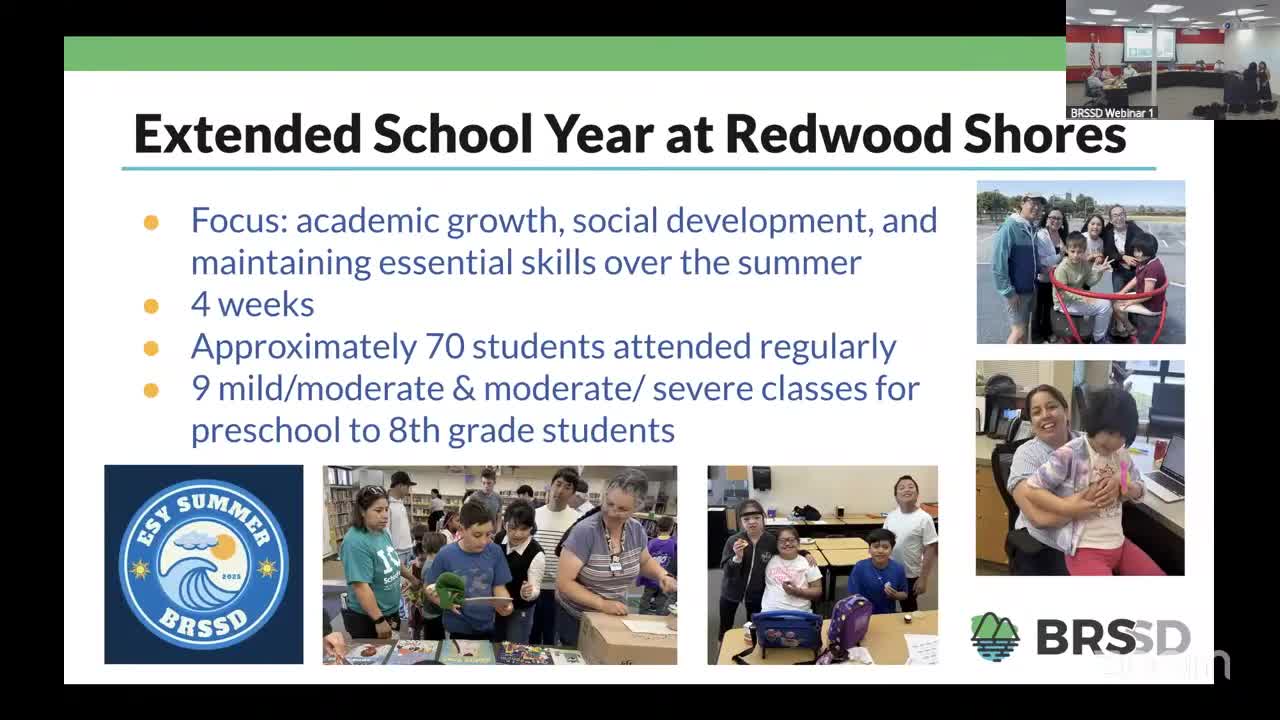
Summary
Administrators reported on summer services: the Extended School Year (ESY) program ran four weeks and served about 70 regular attendees across special‑education classes; Power Scholars Academy (PSA), run with the YMCA at Central, enrolled 111 of 463 invited students.
Assistant Superintendent (presenting educational services) and staff reported on the district’s summer offerings, including Extended School Year (ESY) for students with IEPs and the Power Scholars Academy (PSA).
Caroline Bolinato, who served as ESY principal for the summer and is a Sandpiper seventh‑grade teacher, said ESY ran four weeks and had about 70 students attending regularly across nine special‑education classes ranging from preschool through eighth grade. Bolinato praised staff relationships, PTA support for high‑visibility shirts and a field trip to a Woodside park funded by the Town of Woodside; she said those elements supported social and language development and contributed to meaningful gains for participating students. “We saw students make incredible strides as they worked in developing confidence and social interactions with their peers,” Bolinato said.
The district also reported that Power Scholars Academy at Central invited 463 students, of whom 111 enrolled and participated. The district said the YMCA ran the program and that staffing demand exceeded available spots: seven teachers from the district participated and counselors helped staff daily operations.
Administrators said they hosted pre‑school training for M‑Class reading assessments for 15 early teachers and planned the remainder of kindergarten‑through‑grade‑2 training for a September learning day. Staff emphasized that summer programming both served students and bolstered recruitment for the school year by hiring some temporary summer paraeducators into regular‑year roles.