
County to present courthouse space study; funding options and procurement methods are under review
Get AI-powered insights, summaries, and transcripts
Subscribe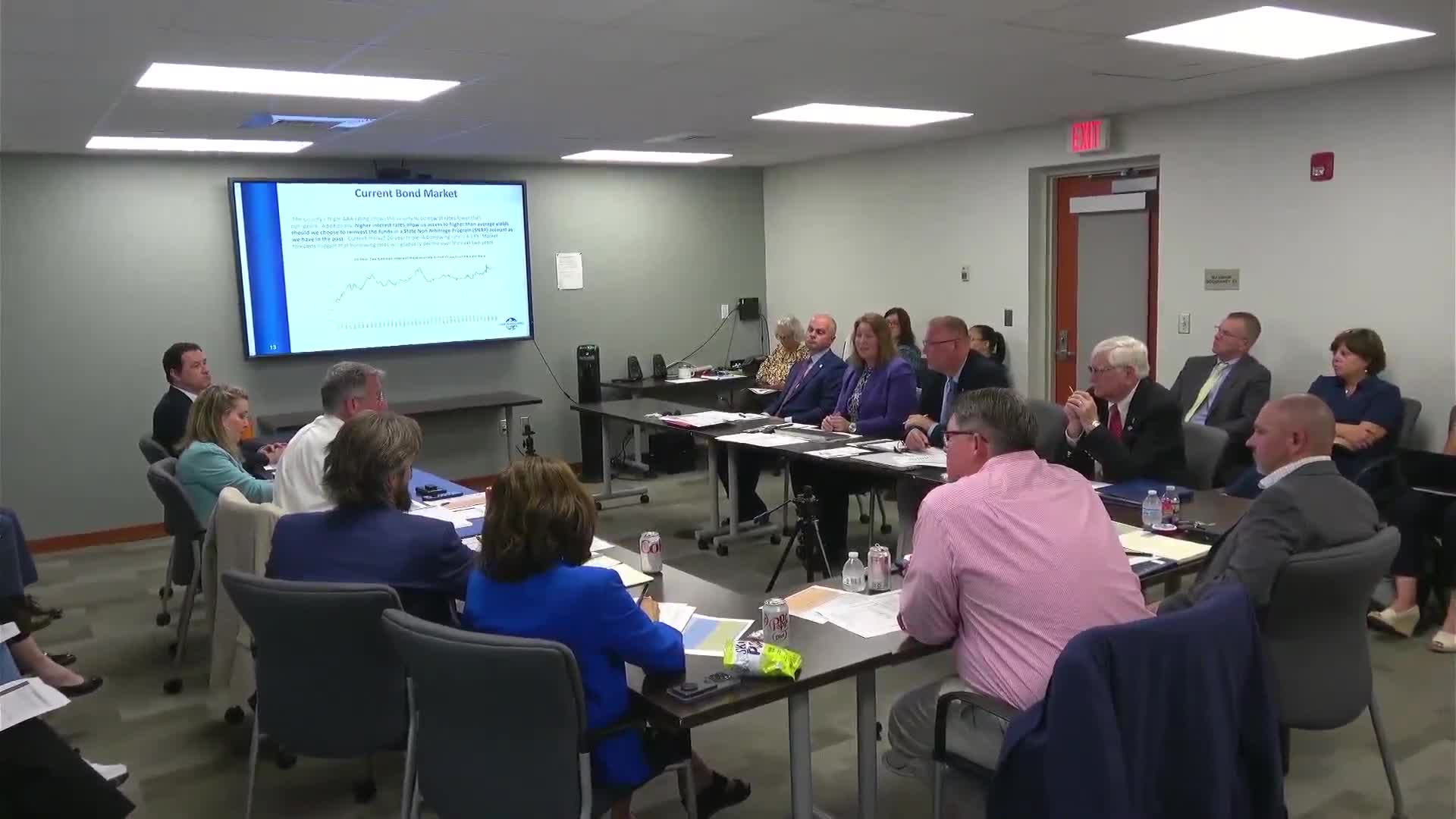
Summary
County staff told the Board a preliminary space‑needs study for a new courthouse will be presented in October; procurement approaches and funding options will be discussed in November and during the budget process.
County staff told the Board they will present a completed space‑needs assessment and options for procurement on a proposed new courthouse in October, and that staff will return in November with procurement alternatives and recommendations for next steps. The Board discussed cost‑planning, phasing and how a new courthouse should fit into the county’s courthouse‑village aesthetics.
Why it matters: The existing courthouse is historic and the Board has broadly endorsed replacement planning; however, construction scope, security and long‑term square‑footage needs drive cost. How the county buys the project — traditional design–bid–build, design‑build, or other approaches — will affect cost, schedule, and risk.
Staff said there is roughly $27.8 million of bond authorization remaining specifically tied to courthouse work from an earlier referendum; finance staff reminded the Board that authorization is not cash on hand but borrowing capacity that would add debt service once drawn. Staff said the space study is at an early draft stage, that constitutional officers and court staff will be engaged in the next phase, and that the county’s procurement consultant will review options for traditional design–bid–build versus alternatives such as design–build or other delivery methods. The goal staff stated was to have the architect and consultant before the Board in October for an in‑person presentation and then to return with procurement options in November.
Board members and constitutional officers who appeared at the session urged staff to visit recently completed courthouses in neighboring jurisdictions to identify lessons learned and to ask the Board whether the county should consider phased construction if that would reduce short‑term cost pressure. Board members also stressed the courthouse sits at the county’s central “village” entry point and asked for architectural approaches that balance community character, longevity and long‑term maintenance costs.
Discussion‑only items: No formal procurement or funding decisions were made. Several supervisors asked staff to consider phasing and to prioritize security and functional adjacencies in the space study. One supervisor reminded the Board that borrowed funds will increase annual debt service immediately after closing and that borrowing choices should be viewed in the context of other CIP priorities.
Next steps: staff will finalize the space‑needs study, host an architect/consultant presentation to the Board in October, and present procurement and funding options (including bond issuance, pay‑as‑you‑go, Virginia Resources Authority financing, or other instruments) for Board consideration later in the fall and during budget season.