Get Full Government Meeting Transcripts, Videos, & Alerts Forever!
Get email alerts on the Parking Policy topic
No spam. Unsubscribe anytime.
Council approves first reading amendment to municipal code to restart residential parking permit program
Summary
The council approved changes to Chapter 90 (Traffic and Vehicles) on first reading to modernize parking meter authority and to reestablish a requalified residential parking permit program; staff will draft administrative program rules and begin a requalification and new‑zone petition process.
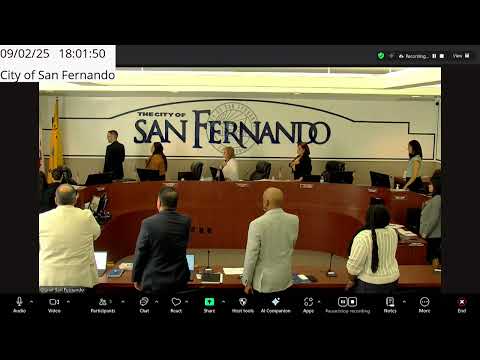
The San Fernando City Council opened and closed a public hearing Sept. 2 and approved amendments to Chapter 90 of the San Fernando Municipal Code on first reading to reestablish a residential parking permit program and modernize meter language. Why it matters: The residential parking permit program lets neighborhoods petition to create limited residential parking zones where non‑residential or commuter parking displaces residents. Council’s action restarts a city program to requalify previously established zones and to enable creation of new zones under updated administrative guidelines. What the ordinance and staff presentation covered: Public Works Director Wendell Johnson said staff and consultant Dixon Resources Unlimited had drafted program updates since earlier this year. The revisions would allow the city manager (or designee) to set parking rates in increments (25¢ increments, up to a 50¢ annual increase without council approval; increases above 50¢ would require council approval), modernize payment device standards to allow credit card and digital payments and establish program implementation guidelines that staff will take to the Transportation and Safety Commission for review. Existing residential permit zones must be requalified; new zones will require resident petitions (staff noted a flexible guideline such as a typical zone about four blocks or roughly 1,500 feet, with a petition threshold discussed at about 50% plus one household in some cases). Public comment: The public hearing drew comments from residents and community stakeholders. Miguel Montanez (resident) and others supported the program as a step forward but noted it will not resolve all neighborhood parking pressures, particularly where accessory dwelling units and border issues with adjacent Los Angeles neighborhoods create cross‑border parking demand. Councilmembers noted outreach burdens on residents to collect petitions and suggested that additional city support or state intervention could be needed to increase program feasibility. Next steps: Staff will prepare implementation guidelines and begin a requalification process after the second reading; the program would take effect ~30 days after adoption and staff expects implementation work to begin in the fall/winter pending adoption.