Get Full Government Meeting Transcripts, Videos, & Alerts Forever!
Get email alerts on the Education topic
No spam. Unsubscribe anytime.
LAUSD leaders tell San Fernando council district schools improved but federal cuts threaten key supports
Summary
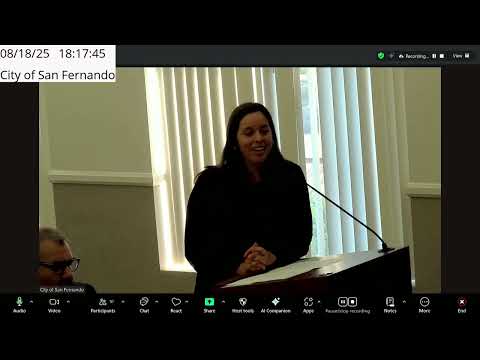
Los Angeles Unified Superintendent Alberto Carvalho and Board Member Kelly Gomez updated the San Fernando City Council on academic gains, facilities projects funded by Measure US and programs to protect immigrant students — and warned of recent and possible federal funding reductions that could affect Title I and special-education services.
Los Angeles Unified School District Superintendent Alberto Carvalho and Board Member Kelly Gomez told the San Fernando City Council that the district has reversed pandemic learning losses and is pursuing local partnerships to expand safety, adult education and career pathways while warning of federal funding cuts that could reduce services for local schools. Carvalho said last year’s results showed “double digits” improvement in the district’s reduction of distance from standard, with gains across grade levels and subjects and a graduation rate of 87 percent. “We improved in all disciplines,” he said, and noted Measure US — the $9 billion bond approved by voters — is being targeted to older schools and Valley campuses, including nine schools in the San Fernando area. The update described several San Fernando–specific projects funded by Measure US: a near‑complete greening project at O’Melveny Elementary; a nature explorer outdoor classroom at San Fernando Early Education Center slated for completion in 2026; new privacy fences and shade structures at San Fernando Elementary; Chromebooks for incoming 9th‑graders; and a planned $15 million athletics upgrade at San Fernando High School to add field lights, bleachers, restrooms and concessions. Gomez stressed district efforts to protect immigrant families and maintain attendance, saying, “We are a sanctuary district. We do not collect information on immigration status, and we do not cooperate with immigration enforcement unless there is a judicial warrant.” The board member described enhanced staff trainings, family outreach and expanded options such as a virtual academy and transportation help for students who cannot travel safely. Carvalho and Gomez also described operational changes: a new enrollment office and enrollment navigators, work to simplify online choice and magnet applications, and digital transparency tools for school budgets and spending. Carvalho said adult‑education enrollment has doubled in two years and the district expects to serve about 100,000 adult learners. In questions from council members, district officials warned of concrete federal funding reductions already seen and additional threats. Carvalho said reductions have affected Medicaid‑related funds and some nutrition/grant programs and said Los Angeles Unified currently receives roughly $1.2 billion annually from federal sources, much of it from IDEA (special education) and Title I (poverty‑related support). “Those are programs that…are going to be either reduced or modified,” he said, and staff said they have activated advocacy partners and are considering legal avenues to protect programs. Council members pressed the district on school safety and local traffic crossing problems near San Fernando Middle School; LAUSD officials said they will coordinate with the city and promised introductions to district intergovernmental staff and regional leaders. Council members also raised local program requests — for fee waivers to allow a long‑running nonprofit wrestling program to use school facilities and for more local family‑facing meetings — and district staff said they will follow up through established liaisons. No formal action was taken by the council on district items; staff and board members agreed to continue coordination on safety, enrollment navigation and facilities work. The council heard the presentation and asked staff to help connect LAUSD with local nonprofit partners and city programs that could support school safety and family outreach.