Get Full Government Meeting Transcripts, Videos, & Alerts Forever!
Get email alerts on the Zoning Shared Driveways topic
No spam. Unsubscribe anytime.
Morgan Township trustees, zoning members reopen draft limiting shared driveways to two homes
Summary
Trustees and zoning representatives discussed a proposed zoning resolution that would limit shared-driveway access to no more than two lots and require variances for exceptions; members emphasized sight-distance and road-frontage hardships as the primary justifications and asked staff to rework the language for BZA review.
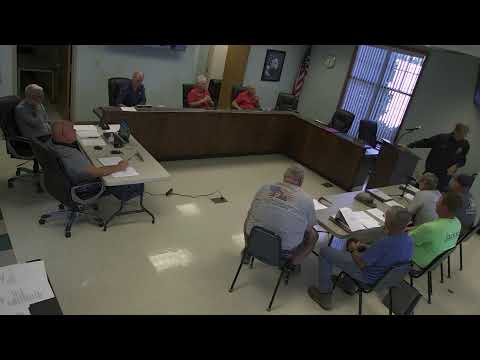
Morgan Township trustees and members of the township zoning panel met Aug. 25 to revisit a proposed zoning resolution that would limit the number of homes sharing a single driveway to two and to clarify how exceptions would be handled. Trustees said they want clearer language before formally adopting the measure and directed staff to return with revised wording for review.
The proposal would define “shared driveway” and set a practical limit — two residential lots per shared access — while preserving a path for exceptions through the Board of Zoning Appeals (BZA) when an applicant demonstrates a valid hardship. The discussion centered on when a shared drive becomes effectively a private lane and what sorts of hardships — most often sight distance and inadequate road frontage — would justify a variance.
Daniel Morrissey, zoning commission member, said the commission settled on two because “if you go above 2, we're going back to the, private lane, private drive, situation,” and because multiple users of a shared access can lead to disputes as ownership changes. He added that the commission “fought pretty hard to get rid of that, you know, situation in Morgan Township.”
Trustees and zoning members repeatedly referenced a 200-foot road-frontage standard. One trustee observed that in many cases the county’s frontage rules mean owners with long frontage could instead place individual drives or build a short county-standard road and cul-de-sac so each lot has a public access point. As a zoning-solution example, a zoning member suggested a small cul-de-sac “50 feet with a cul de sac” to reduce required frontage per lot.
Jeff Griffiths, who identified himself as “the vice chair,” urged that the BZA should receive applications and determine whether a hardship exists. “We should be able to determine it ourselves,” Griffiths said, adding that the BZA has refused some variances in the past when applicants could not show a true hardship under the Ohio Revised Code (ORC).
Several speakers emphasized common maintenance and deed issues with private lanes and shared drives: residents generally share maintenance costs, but deed-based obligations can fail to transfer to new owners and leave roads unrepaired. One participant described Chapel Ridge as an example of a shared-drive situation that repeatedly required township attention because of washouts and disputes over responsibility.
There was no formal ordinance vote at the meeting. Trustees agreed on next steps: zoning staff will revise the draft resolution’s wording, include the definition of a shared driveway, and clarify that shared driveways generally are disfavored and allowed only as a BZA-granted exception for proven hardship (for example, sight-distance limitations or frontage shortfalls). Several trustees said they would prefer language that sets a default prohibition with a defined BZA variance cap (no more than two lots) rather than a free-standing allowance.
The meeting closed with a motion to adjourn that passed on roll call — Mister Kolb, Mister Huff, and Miss Brucker recorded “yes” votes — and trustees asked staff to return with a revised draft for formal consideration.
Why it matters: The zoning language will affect how landowners may subdivide rural parcels, whether family compounds or multiple-house developments can use a single access, and how future private-lane maintenance and disputes are handled. The trustees stressed that narrow, well-documented rules will make decisions more defensible if ever challenged in court.