Get Full Government Meeting Transcripts, Videos, & Alerts Forever!
Get email alerts on the K12 Strategic Plan Student Achievement topic
No spam. Unsubscribe anytime.
Granite district outlines boost-school supports, new teacher data tool to track cohort achievement
Summary
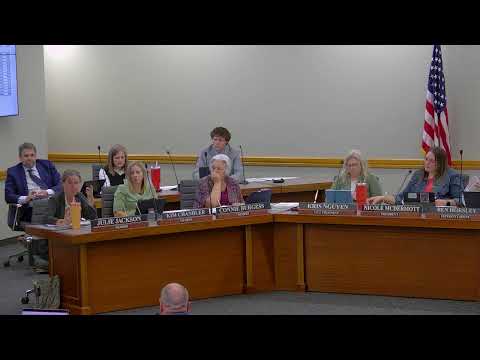
Granite School District staff on Sept. 2 updated the board on the district’s strategic plan, describing a new Boost initiative for the lowest-performing schools and a teacher-facing data tool designed to let classroom teachers track the same cohort of students over time.
Granite School District staff on Sept. 2 updated the board on the district’s strategic plan, describing a new Boost initiative for the lowest-performing schools and a teacher-facing data tool designed to let classroom teachers track the same cohort of students over time.
The district presented the report as “the first of some bimonthly strategic plan reports,” said Dr. Joan Bramble, a district presenter, and said the plan’s long-term goals are a 1% increase in proficiency and a 1% increase in graduation rate each year. The presentation tied three priorities — academics, social skills and dispositions, and talent development — to both leading and lagging indicators.
The Boost initiative identifies schools using three years of state accountability data and targets supports at a limited number of campuses so the district can provide sustained assistance, Dr. Bramble said. For the current year the district identified six elementary schools, two junior highs and one high school as Boost schools. Supports already provided include full-time assistant principals at some elementary sites, placement of instructional coaches at each Boost school, summer planning for teachers and leadership training; district learning and improvement directors (SLIDs) are making regular site visits.
“Our plan has been to rank‑order schools and select the number we can realistically support,” Dr. Bramble said. “We’ve provided summer planning for 82 teachers total, added instructional coaches and provided administrative support at the elementary level.”
District staff emphasized the supports are tailored. The presentation and follow-up answers from staff made clear coaching varies by school and by teacher — from PLC coaching and curriculum specialist visits to individual coaching cycles addressing teacher clarity, behavior supports and lesson planning. “It’s a variety. It’s very targeted,” a presenter said.
Mitch, a district staff member who has visited Boost sites, said he plans brief individual meetings with every teacher at elementary schools to ask what additional supports they need. “The whole intent here is that they feel like it isn’t just me, a teacher, left to my own devices,” Mitch said. “We’re all in this together. We’re we’re supporting the heck out of them.”
The Student Achievement Leadership Team (SALT) is the district body coordinating the work, staff said. Tyler, described in the presentation as the leader of the SLIDs, said the teacher report is one of the most accessible data tools he has seen and that SLIDs have begun taking the tool to principals for site-level work. “Of all my years as a principal, this is one of the most accessible data points I’ve ever gotten to unpack,” Tyler said.
The teacher report shows cohort proficiency for the same group of students year to year, converts scaled test scores to decimal scores within proficiency bands (allowing scores up to 4.9 to show distance within a level) and lets teachers filter by current roster and class period. The report also exposes patterns such as students who decline and later rebound, and allows teachers and principals to download the data for collaborative planning. Staff said the report updates nightly.
Staff and board members discussed how teachers could use the report to set concrete goals (for example, moving “medium high twos” into threes or raising the number of proficient students in a current class). Presenters said the tool is available to all schools; SLIDs prioritized showing it to Boost schools first but all schools have access.
Staff cautioned some official measures will be delayed this year. The district will not have final English language arts proficiency figures on the usual timeline because of new ELA standards and required standard‑setting; student growth percentiles are expected to be delayed until December or January. “We usually see those about October; this year we won’t see them until December or January,” Dr. Bramble said.
The district said future bimonthly reports will include other strategic-plan measures, such as attendance monitoring, completion of required employee training and the percentage of contractual positions filled at the start of the year. Staff said SALT subcommittees are discussing whether goals and metrics should be adjusted as the work proceeds.
Board members asked about teacher awareness of Boost supports and whether teachers identify as “Boost” teachers; presenters said elementary schools are farther along in implementation and staff had seen positive energy in summer training and follow‑up. Presenters also noted some numeric differences in the briefing: one slide cited “82 teachers” who participated in summer planning while another speaker noted “80 different teachers” — staff acknowledged the slight discrepancy and indicated the count came from different data pulls.
There were no formal board actions or votes tied to the strategic-plan update during this meeting. Staff said they will return in November with additional reporting on social skills, dispositions and talent development metrics.
Speakers quoted and cited in this article are those who spoke during the strategic-plan segment of the Sept. 2 board meeting and are listed in the record provided to the board.