Get Full Government Meeting Transcripts, Videos, & Alerts Forever!
Get email alerts on the Student Travel Policy topic
No spam. Unsubscribe anytime.
Board approves first reading of revised student‑travel policy; district to permit trips based on cost rather than geography
Summary
The board approved a first reading of a revised student‑travel policy that removes geographic caps and instead limits school‑sponsored travel based on cost, clarifies chaperone rules, and allows use of third‑party travel agents to reduce teacher burden.
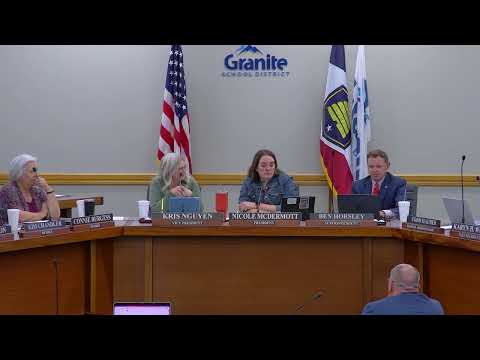
The Granite School District board approved a first reading of a revised student‑travel policy Sept. 2 that changes the way district‑sponsored student travel is authorized and administered.
Under the update presented by Doug (district counsel/administrator), the district will stop using fixed geographic regions as a travel cap and will instead limit school‑sponsored trips based on cost thresholds and administrative approval. The policy clarifies allowable fundraising, sets consistent chaperone expectations and indicates an administrative memorandum (Memorandum 151) will provide procedural details and best practices.
District staff said the change aims to reduce barriers for teacher‑led opportunities and to standardize practices across schools. Doug said the district will continue to use the district travel coordinator as the administrative point of contact but is exploring use of third‑party travel agents to ease teachers’ planning burden and possibly obtain lower prices. The board approved the item as a first reading.
Foreign travel and third‑party trips: The district clarified it will not sponsor foreign travel; teacher‑organized, vendor‑run trips to other countries are allowed at arm’s length and are not district‑sponsored. “We’re not in the business of sponsoring those kinds of trips,” Doug said, adding those arrangements must be separate from district‑sponsored activities and cannot be recruited in class.
Next steps: An administrative memorandum will be published with procedural guidance and best practices; staff said they will continue teacher focus groups and streamline approval timelines to reduce last‑minute problems for performing arts and other programs.
Ending: The board’s approval of the first reading means the policy will return for a second reading or final action after the administrative procedures are in place.