
Board discusses local historic-district options and moves to develop a design guidebook
Get AI-powered insights, summaries, and transcripts
Subscribe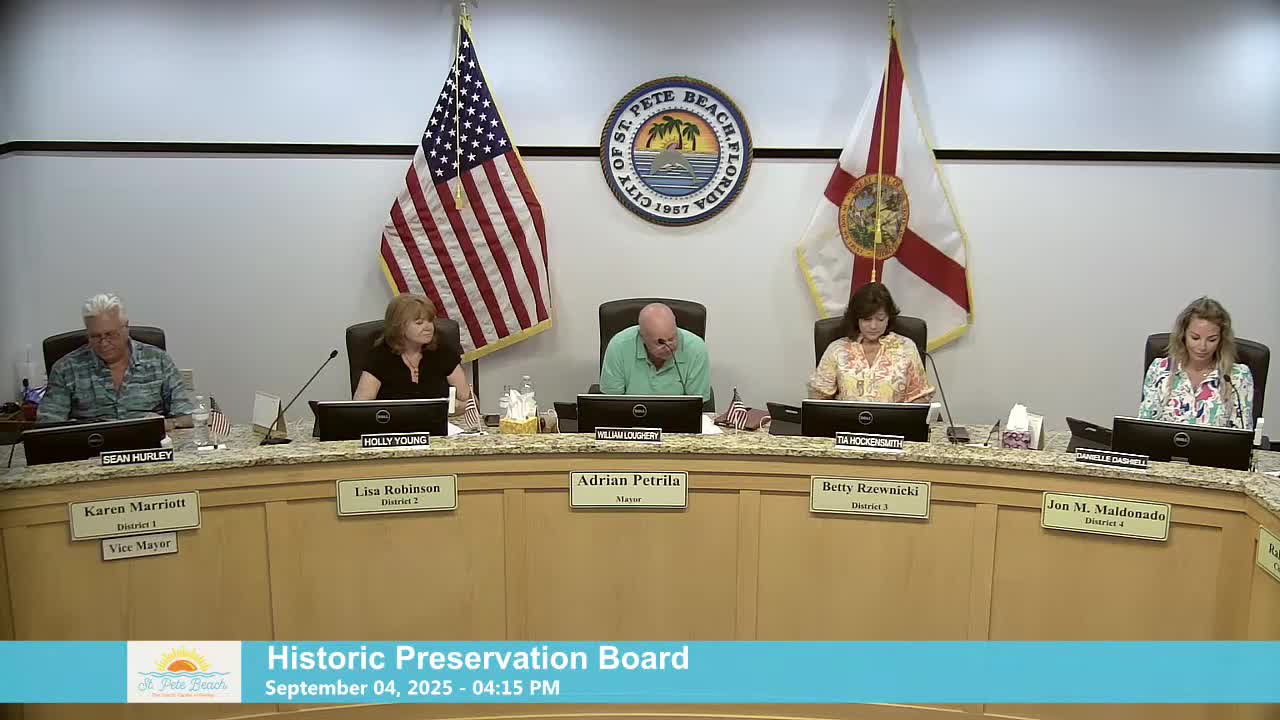
Summary
Staff briefed the board on inventory and survey efforts for North Beach and the potential for local historic districts; members discussed owner opt-in rules and asked staff to prepare timelines and outreach plans while continuing work on a design-guidebook for preferred architectural styles.
At the Sept. 4 meeting the Historic Preservation Board received an update on surveys and next steps for possible local historic districts and discussed a draft design guidebook that would illustrate preferred architectural styles and inform future reviews.
Lynn Rossetti, contract historic preservation planner, said the city has received a state grant to survey North Beach and that staff is compiling inventories that could support future local districts or thematic designations. Rossetti reviewed the process used in other Florida cities: a survey inventory is the first step; if a jurisdiction seeks a local historic district, in the city’s current code property owners within a proposed local district must opt in (more than 50% under the city’s past practice), and an approved district imposes local review standards beyond the national register listing.
Board members noted the community outreach needed before district work proceeds and requested a timeline, stakeholder-engagement plan and early workshops so property owners understand ramifications. Several members recalled previous examples where opt-in requirements and signature-collection complications affected proposed district outcomes and urged caution to avoid unnecessary expense if owner buy-in is low.
On the design guidebook, staff said the document will be primarily visual and descriptive—examples of compatible new construction and additions, preferred materials and architectural features—rather than a line-by-line codified regulation. Members asked staff to collect exemplar photographs of preferred builds (Spanish/Mediterranean, bungalow/craftsman, coastal vernacular) and to return with a draft guidebook and an implementation timeline. Staff indicated some zoning-related overlay amendments are ready to move forward to second reading and proposed separating zoning changes from the design-guidebook adoption to speed regulatory clarity while continuing work on the guidebook.
Board members asked staff to return with a proposed outreach schedule and recommended starting with community associations and neighborhood meetings to assess interest before advancing district proposals to the commission.