Get Full Government Meeting Transcripts, Videos, & Alerts Forever!
Get email alerts on the Special Education Funding topic
No spam. Unsubscribe anytime.
Lee County Board urges state to fund all exceptional children after district cites $1.87 million shortfall
Summary
The board unanimously approved a resolution asking the North Carolina General Assembly and state education leaders to end a 13% funding cap for exceptional children that leaves 348 Lee County students unfunded and creates an estimated $1,867,051.32 shortfall for the 2024–25 school year under PRC 0032.
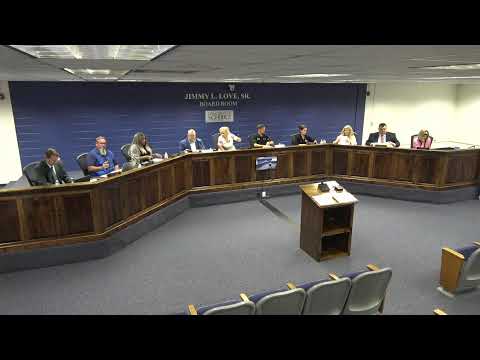
The Lee County Board of Education approved a resolution formally urging state leaders to change the funding formula for exceptional children after district staff said the state’s PRC 0032 funding cap leaves hundreds of local students without state-funded services.
Miss Ortiz presented the resolution and told the board the district has 1,538 identified exceptional children, which is 16.8% of the district’s average daily membership of 9,154. Under the funding rules cited in the resolution, state funding is calculated either from the December 1 EC child count or a cap of 13% of the district’s ADM, whichever is lesser. Because Lee County’s EC percentage exceeds 13%, the district reported 348 students as not funded by the state under PRC 0032.
The resolution states the resulting shortfall for the 2024–25 school year is $1,867,051.32. It calls on the North Carolina General Assembly to revise PRC 0032 to reflect actual EC enrollment rather than a percentage cap, asks the North Carolina Department of Public Instruction to provide supplemental funding or relief to affected districts, and urges state leaders to acknowledge the fiscal impact on growing districts.
Board members moved and seconded the resolution; the board voted to approve it and members requested district staff forward the resolution to the county commissioners and state officials listed in the document. District staff said the resolution will be posted online and shared with other districts undertaking similar advocacy.
At the meeting, the presenter emphasized the local budgetary impact and asked state leaders to pursue a needs-based funding model so districts are not required to cover mandated services from local resources.