Get Full Government Meeting Transcripts, Videos, & Alerts Forever!
Get email alerts on the Historic Preservation Demolition topic
No spam. Unsubscribe anytime.
Commissioners criticize rapid demolition of 1857 Hiller Building after city issues hazard certificate
Summary
At the Sept. 9 Davenport Historic Preservation Commission meeting, members and residents raised concerns after the Hiller Building, an 1857 structure, was declared a public hazard and demolished shortly after an August inspection; commissioners called for a fuller review of options to prevent similar losses.
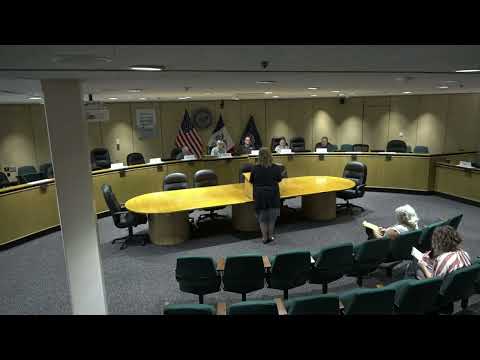
Davenport’s Historic Preservation Commission on Sept. 9 heard sustained criticism from commissioners and the public after the Hiller Building, one of the city’s earliest apartment buildings built in 1857, was declared a certificate of public hazard and torn down soon afterward. Commission members said they learned of the demolition through news and social media rather than the city’s standard notifications. The commission discussion centered on how a landmark property reached immediate demolition following a certificate that the chief building official and the fire marshal issued on Aug. 19. “This is a travesty. This is an absolute serious mistake on the part of the city,” a commissioner said at the meeting, adding that the pace between the hazard finding and demolition suggested the outcome was planned. The concern matters to commissioners because the ordinance that governs historic preservation in Davenport allows the chief building official and the fire marshal to remove a structure that poses a public hazard without formal commission review. Commission members and members of the public said that leaves limited options when an owner allows deterioration to progress to the point of immediate hazard. Staff told the commission the intent of a certificate of public hazard is to remove an imminent risk “in a timely manner,” and noted the Hiller Building was very near an occupied adjacent building and had ongoing issues with people entering and living inside the vacant structure. A commissioner asked about recovery of historic materials; staff replied, “Yes. They were disposed of,” referring to the building’s brick and stone elements. Commissioners urged the Historic Preservation Commission to convene a workshop to examine how to better protect vulnerable historic properties, to review enforcement and notification procedures, and to identify whether additional local tools or incentives could be used to prevent neglect-driven loss. A commissioner suggested the commission has a duty to “come together and discuss how we move forward when it comes to historic structures in the city.” The commission did not take formal action during the meeting on the Hiller Building; staff said the demolition had already occurred and there was no pending application related to that structure before the commission. The discussion also included questions from the public about whether grants or “DEMO” funds had been attempted, and one speaker referenced a prior restoration effort that failed to reach completion after financing constraints. Staff confirmed the property had applied for grant funds through the State Historic Preservation Office at one point but that the restoration effort stalled. No reconstruction or redevelopment plan was presented at the Sept. 9 meeting.