
Lengthy public comments and commissioner questions follow proposed commercial solar zoning changes; commissioners consider sending revisions back to planning
Get AI-powered insights, summaries, and transcripts
Subscribe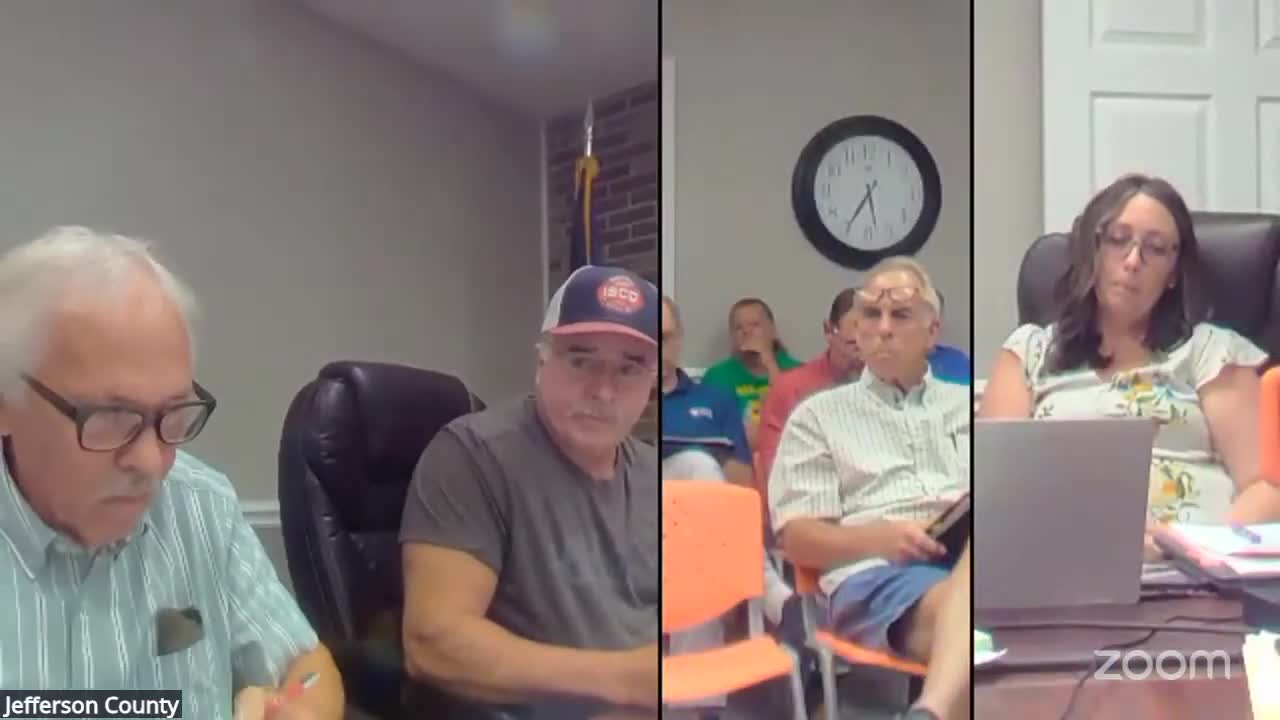
Summary
The Board of Commissioners heard extensive discussion and public comment on a proposed commercial solar energy system amendment to the county's unified development ordinance on Aug. 31, including technical corrections, setback proposals, screening rules, decommissioning language and a countywide acreage cap.
The Board of Commissioners heard extensive discussion and public comment on a proposed commercial solar energy system amendment to the county's unified development ordinance (UDO) during the Aug. 31 meeting. Commissioners and planning staff debated scrivener corrections, setback distances, screening requirements, decommissioning standards, and whether to include pasture acreage in the calculation of a countywide cap on land removed from production.
Planning commission leadership explained two corrections made to the draft: (1) the countywide cap for acreage taken out of crop production had been intended to count all acreage removed from production (not only fenced-in panel area) and was set at 4,000 acres; and (2) material safety data sheets (MSDS) for solar panels should be submitted with building-permit applications rather than with the initial solar-field application. Warren, identified as president of the planning commission, described those as scrivener errors corrected after internal review.
Commissioners and attendees debated setbacks. Some commissioners and residents proposed increasing a default setback from roughly 500 feet to 650 feet or 1,000 feet to protect nonparticipating neighbors; other planning participants warned that very large setbacks could eliminate viable parcels by removing too much land from potential solar development. The draft requires parcel-level screening plans to be submitted as part of site-development plans and treats large projects as conditional uses subject to Board of Zoning Appeals (BZA) review.
Chelsea Stanley, who identified herself as legal counsel for southern Jefferson County landowners interested in leasing for solar development, urged changes that would protect project viability while addressing landowner concerns; she asked the board to revisit decommissioning language that she said currently shifts undue liability to landowners and to clarify soil-restoration requirements that, as written, could require returning soil nutrients to narrow preconstruction bands. "The requirement that landowners be personally liable for all aspects of decommissioning, even though the county would be holding the financial assurance bonds, is fundamentally flawed," Stanley said.
Public comment was lengthy and strongly mixed. Many residents asked for larger setbacks (some asked for 1,000 feet), property-value guarantees for nonparticipating neighbors, separate handling of battery-energy-storage systems (BESS) because of fire and safety concerns, and removal of industrial-scale solar from agricultural land to industrial zones. Other speakers — including representatives of landowners interested in leases — warned that overly burdensome decommissioning, excessive setbacks, or screening rules could render projects infeasible and thereby deprive landowners of potential income.
Commissioners discussed procedure. One commissioner moved to send the solar amendment back to the planning commission for the two suggested corrections and any additional recommended amendments; staff explained that sending it back would require the planning commission to hold limited public hearings on the proposed amendments and then re-submit recommendations. Commissioners also discussed extending the county's existing moratorium on new solar applications to prevent projects from filing under an old UDO while the amendment process continued; staff confirmed the board could extend the moratorium.
Ending: The meeting did not record a final adoption of the commercial solar amendment; the board indicated it would permit additional public comment and that amendments could be forwarded to the planning commission for further public hearings before final action. Several technical and policy issues remain pending, including setback distance, pasture-acreage inclusion in the 4,000-acre cap, MSDS submission timing, decommissioning standards and separate treatment of battery energy storage.