Get Full Government Meeting Transcripts, Videos, & Alerts Forever!
Get email alerts on the Public Engagement topic
No spam. Unsubscribe anytime.
Resident urges board to open large agenda items to public comment; board discusses public-hearing distinctions
Summary
A resident asked trustees to allow community members to comment before deliberations on major agenda items; staff and trustees discussed the distinction between open public meetings and formal public hearings under state law.
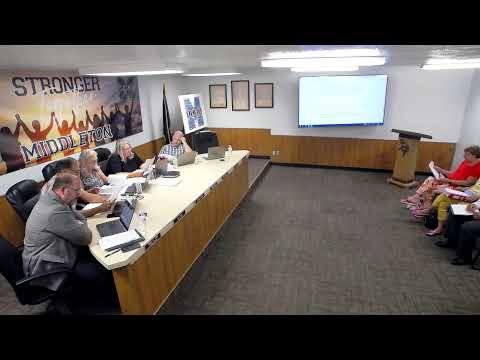
During public comment, resident Patricia Crawford asked the Middleton School District Board to consider opening major agenda items to public comment earlier in the meeting or treating them as public hearings so community voices can inform deliberations.
Crawford said she had requested a pre-meeting sign-in and the opportunity to make comments that officials would consider in deliberations; she described prior experiences in which she could not make comments until after a vote and asked the board to consider allowing more input on large or high-profile items. She told trustees that for some past meetings dozens of people had signed in and she wanted community questions to be considered during board discussion.
Superintendent Dr. Eric Gee and board members responded that there is a legal distinction between an open public meeting and a formal public hearing under state law, and that posting and notice requirements apply to hearings. Dr. Gee said the district can examine options for public engagement and explore whether some agenda items could be presented as public hearings, but cautioned that state open-meeting statutes prescribe notice requirements for hearings.
Trustees did not adopt an immediate procedural change. Staff said they would explore options and clarify how the district could structure additional public input consistent with state public-meeting rules.