
Commissioners continue second reading of solar zoning changes as residents press for larger setbacks
Get AI-powered insights, summaries, and transcripts
Subscribe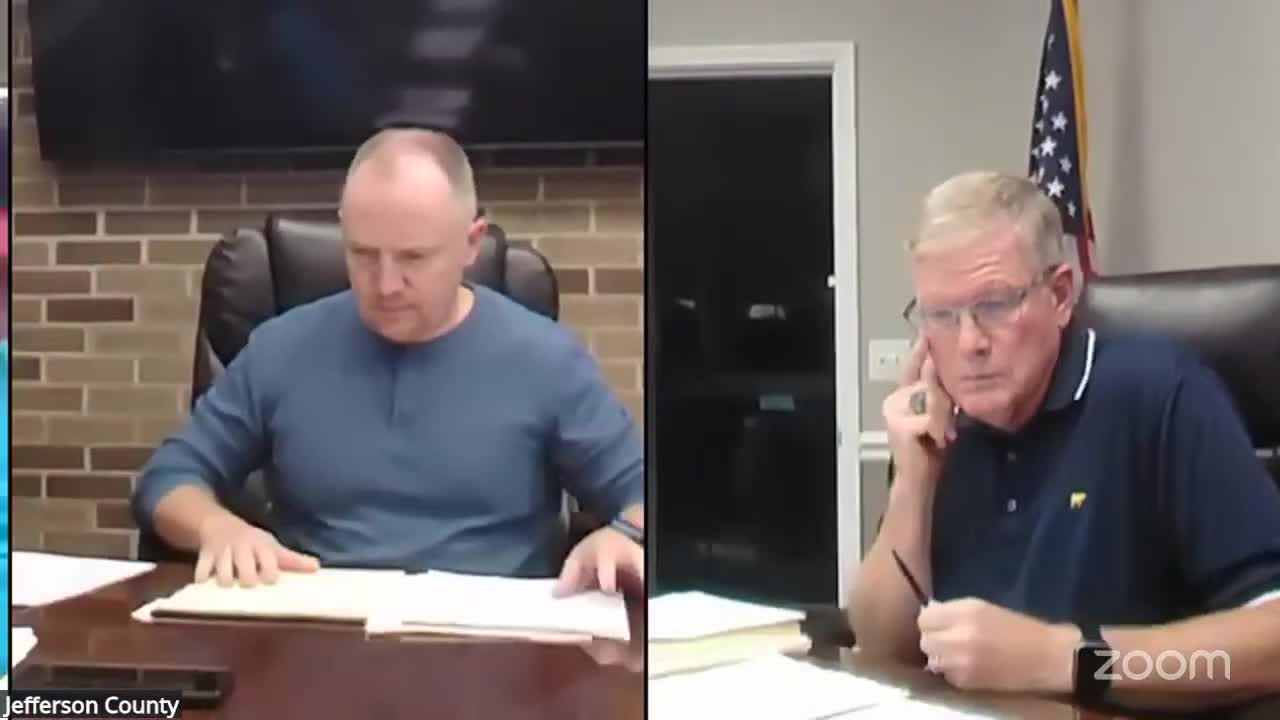
Summary
At the Sept. 4 meeting the Jefferson County Board of Commissioners conducted a second reading of a UDO amendment governing commercial solar energy systems, debating a proposed 650-foot setback, moratorium timing and decommissioning and emergency-response protections amid numerous public comments urging larger setbacks.
The Jefferson County Board of Commissioners on Sept. 4 held the second reading of an amendment to the county’s Unified Development Ordinance (UDO) addressing commercial solar energy systems, heard staff and commissioner discussion about possible amendments — including a proposed 650-foot setback for pasture land — and took extensive public comment urging larger setbacks, decommissioning protections and emergency-planning requirements.
County planning staff and the county attorney told the board that the Jefferson County Plan Commission had held the required public hearing and issued a favorable recommendation. The county attorney said a change in state law effective July 1, 2025 (Indiana Code 36-7-4-607.5, as cited in the meeting) means that the commissioners may adopt amendments at the county level without returning the measure to the plan commission.
Commissioners discussed two amendments the transcript identified: one adding pasture land as a protected category and another establishing a 650-foot setback. One commissioner said he preferred a 1,000-foot setback but proposed 650 feet as a compromise after pushback. Planner staff and other commissioners explained how the draft ordinance would apply setbacks in different zoning districts: in residential zoning (R-1, R-2, R-3) a nonparticipating parcel with no existing single-family dwelling would be subject to a 500-foot setback from the property line; in agricultural or selected nonresidential districts (labeled AG, MB, GB, I-1, I-2 in the draft) parcels without an existing structure would have a minimum 200-foot setback from the property line, but if a primary structure exists on a parcel the ordinance would require at least a 500-foot setback from the closest edge of that primary structure. The commissioners discussed how those layered rules could affect subdividing and future homebuilding on agricultural parcels.
Board members and staff discussed whether to extend a previously enacted moratorium on solar applications. One county official asked for a one-year extension because the office has a small staff and legal workload from multiple matters; another commissioner said the county’s current application fees and the planning commission’s fee-setting authority could support hiring outside consultants to process applications without extending the moratorium. At the meeting, one speaker said, "I think the last 1 was probably $1,617,000 dollar fee if I'm understanding off the top of my head," a figure reported in the transcript during discussion of fee levels and consultant support.
Public commenters focused on farmland protection, property rights and safety. A resident, Rhonda Bronner, said she had reviewed USDA soil classifications for the Saluda area and reported the acreage of prime and prime-if-drained soils there; she urged a 1,000-foot setback to protect prime farmland. Several commenters raised concerns about emergency response and battery-storage projects, asking whether evacuation or fire plans would be required and who would pay for increased fire or EMS resources. Staff and commissioners said emergency-management and fire-protection requirements would be part of project review and that decommissioning requirements and bonding language in the draft were intended to protect the county and require landowners to share responsibility if necessary. County counsel told the board the draft requires bond re-evaluations (the transcript records the board discussing periodic re-estimates) and said the county included “very strong language” in the bonding provisions to tie decommissioning responsibility to the site and to require landowner acknowledgement.
Residents also raised financial concerns. One commenter asked about economic-development payments the county or city might receive; staff said those payments are negotiated in economic-development agreements and may be contingent on projects becoming operational, and that counties had seen different results on promised payments. Another frequent public comment request was for a uniform, larger setback; several commenters urged 750 feet, 750–1,000 feet or a full 1,000-foot setback rather than the 500/200/500 structure in the draft.
The board did not adopt the ordinance at the Sept. 4 meeting. Commissioners said a third and final reading and possible vote are scheduled for Sept. 18 at 5 p.m.; staff said the commissioners remain open to public comment and to further amendments prior to that meeting. Planning staff said the final ordinance text would include any amendments adopted at the subsequent hearing and would be posted for public review prior to final action.
Ending: Commissioners pushed the UDO amendment to a final reading on Sept. 18 and asked staff to circulate any amendments for public review before that meeting.