
City of Baker discusses ordinance to restrict tractor-trailer parking in shopping centers
Get AI-powered insights, summaries, and transcripts
Subscribe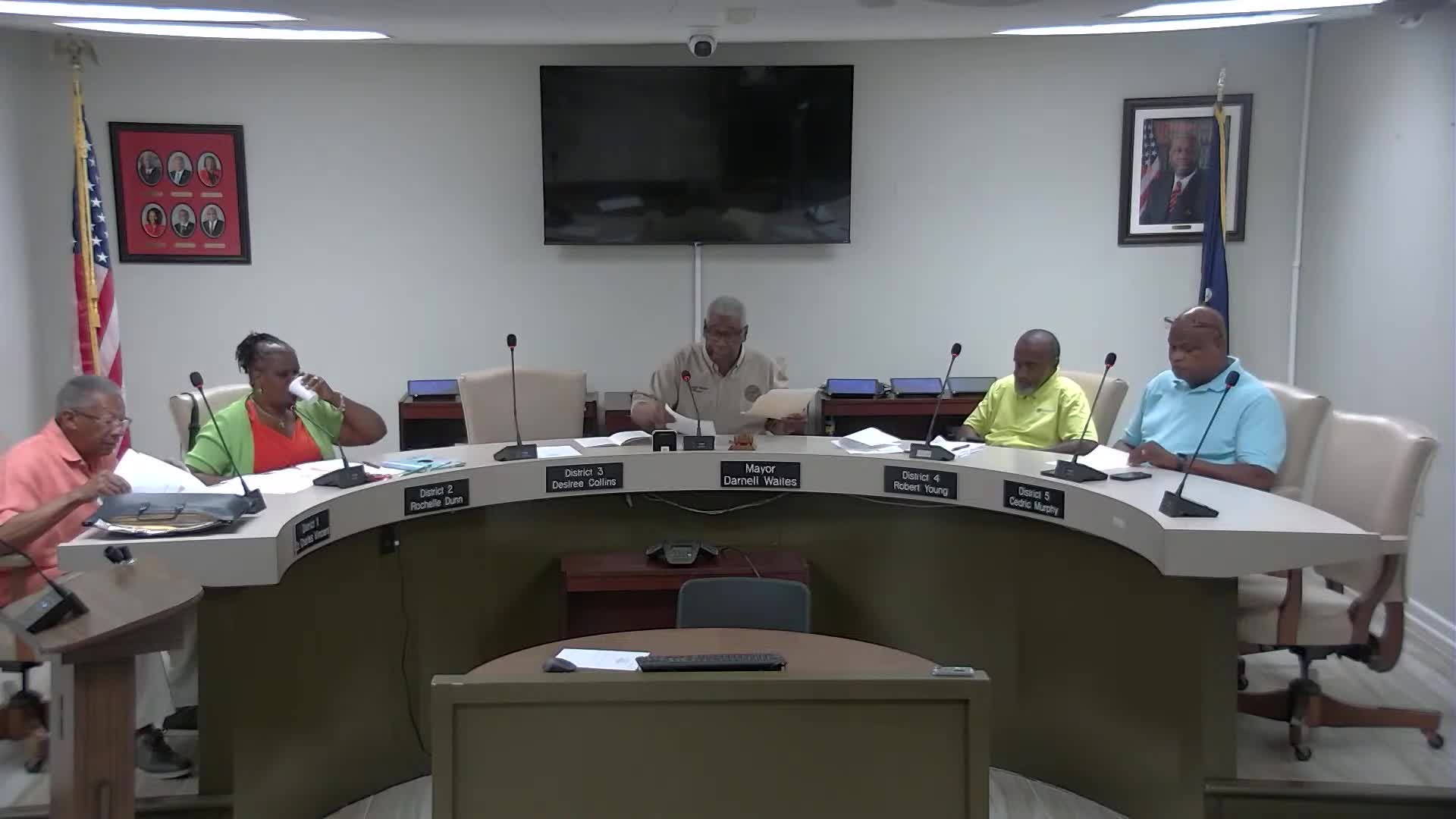
Summary
Councilmembers reviewed a draft ordinance that would limit where tractor-trailers with trailers may park on private property, designate two temporary parking locations, and exclude hazardous-material carriers; no formal vote was taken.
An unnamed councilmember opened discussion at a City of Baker work session about a draft ordinance intended to limit where tractor-trailers with attached trailers may park on private property, saying the proposal would designate two locations for legal parking and give police officers authority to issue tickets for violations.
The measure, presented as a narrow first step, is aimed at stopping tractor-trailers from parking overnight in shopping-center lots and other private commercial properties, the presenter said. "What we're trying to stop is those trucks with those trailers parking in the parking lot," the presenter said. The draft would list two primary locations for truck parking, the presenter said: a long-standing truck stop identified in the transcript as Valerio and a location described as Joseph's storehouse.
The draft, as described in the session, would be enforced by the city's police department through citations rather than only by written notices. "This ain't no good unless you're in force. And this 1, this is enforced by the police, which they can give them a ticket," the presenter said. The presenter and other speakers said property owners in shopping centers had complained about tractors and trailers parking overnight, creating safety and nuisance concerns.
Councilmember Collins and residents asked practical questions about available parking near Plank Road and whether hotels adjacent to truck stops could be used by drivers. One resident asked, "Can they park the 18 wheels there, or you're saying that they can't?" The presenter clarified that the draft would target tractors with trailers parked together (tractor-trailer combinations), and that situations where a driver unhooks a trailer and parks only the tractor or parks at a hotel lot were handled differently and not the primary focus of this ordinance.
Speakers discussed related issues the council plans to address in separate work: allowing truck parking behind fenced yards on private residential property if concealed from public view; clarifying whether box trucks and delivery vehicles should be treated the same as tractor-trailers; and special rules for buses and smaller commercial vehicles. The presenter said earlier ordinances compiled many restrictions into a single confusing code and proposed breaking them into separate, clearer rules.
Public-safety and nuisance topics surfaced during the discussion: residents described engines starting in the early morning hours and the noise impact, and one speaker raised concerns about potential chemical hazards from trailers. The presenter said hazardous-material carriers would be excluded: "No hazmat," and referenced two classification numbers discussed for inclusion in the draft (referred to in the discussion as "12:03" and "10 75").
Councilmembers and staff said the draft is not on a vote for the next formal meeting; rather, it was presented for review. The presenter said there was time before the end of the month to revise the draft and that the council would return to the matter at a future meeting. No ordinance was adopted or formally introduced during this work session. A final procedural item recorded was a motion to adjourn made by Pastor Murphy and seconded by Councilmember Dunn; the meeting was adjourned.
The discussion repeatedly stressed that the draft is intended to protect private-property owners and neighbors while recognizing truck drivers' livelihood and private-property rights. Councilmembers signaled plans for follow-up work to: refine permitted locations, add noise and nuisance enforcement clarity, separate bus and box-truck rules, and consider permitting conditions (for example, gravel surfacing for residential bus parking) before returning the ordinance for formal action.
For now, the working document remains under review, with police enforcement and code-enforcement letters described as the city’s primary compliance tools until any ordinance is formally adopted.