Get Full Government Meeting Transcripts, Videos, & Alerts Forever!
Get email alerts on the Property Tax Millage topic
No spam. Unsubscribe anytime.
Baker council introduces ordinance to set 2025 ad valorem millage at 5.76 mills; public hearing set
Summary
Council introduced Ordinance 2025-19 to fix the city’s ad valorem tax rate at the maximum 5.76 mills for fiscal 2025 and scheduled a public hearing in two weeks; staff said estimated household impact would be roughly $3–$7 annually for typical homes, depending on assessed value changes and homestead exemptions.
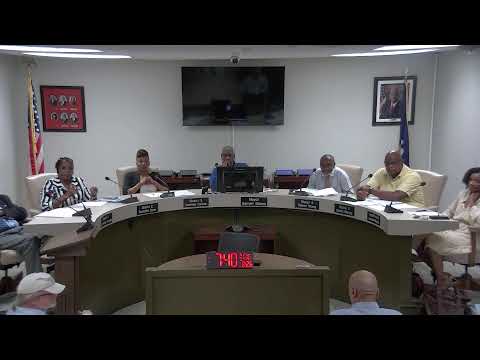
The Baker City Council introduced Ordinance 2025‑19 to fix the city’s ad valorem property tax rate at the voter‑authorized maximum of 5.76 mills for the 2025 tax year and set a public hearing for two weeks later. The attorney read the ordinance’s text into the record and cited constitutional and statutory authority mentioned in the notice (the ordinance text references Article 6, Section 26(B) of the Louisiana Constitution of 1974).
City staff provided a summary and an illustrative “cheat sheet” explaining homestead exemptions and how millage translates to dollars: staff said a $110,000 taxable base at 5.76 mills would yield $63.36 in city property tax and that the typical effect on households would be in the range of about $3 to $7 per year depending on assessed value increases and exemptions. The mayor and staff emphasized that property valuation changes since the last reassessment are the main driver of revenue change, and that individual bills will vary by property value and exemptions. Staff stressed that the council had not yet held the public hearing or adopted the ordinance; introduction was the procedural step to set the hearing.
Councilmembers invited residents to the two‑week public hearing to ask questions and examine the full assessment details. The council then voted to introduce the ordinance on first reading and scheduled the public hearing.