
Utilities tell PURA PBR won’t work unless cost of capital on new plant is recoverable
Get AI-powered insights, summaries, and transcripts
Subscribe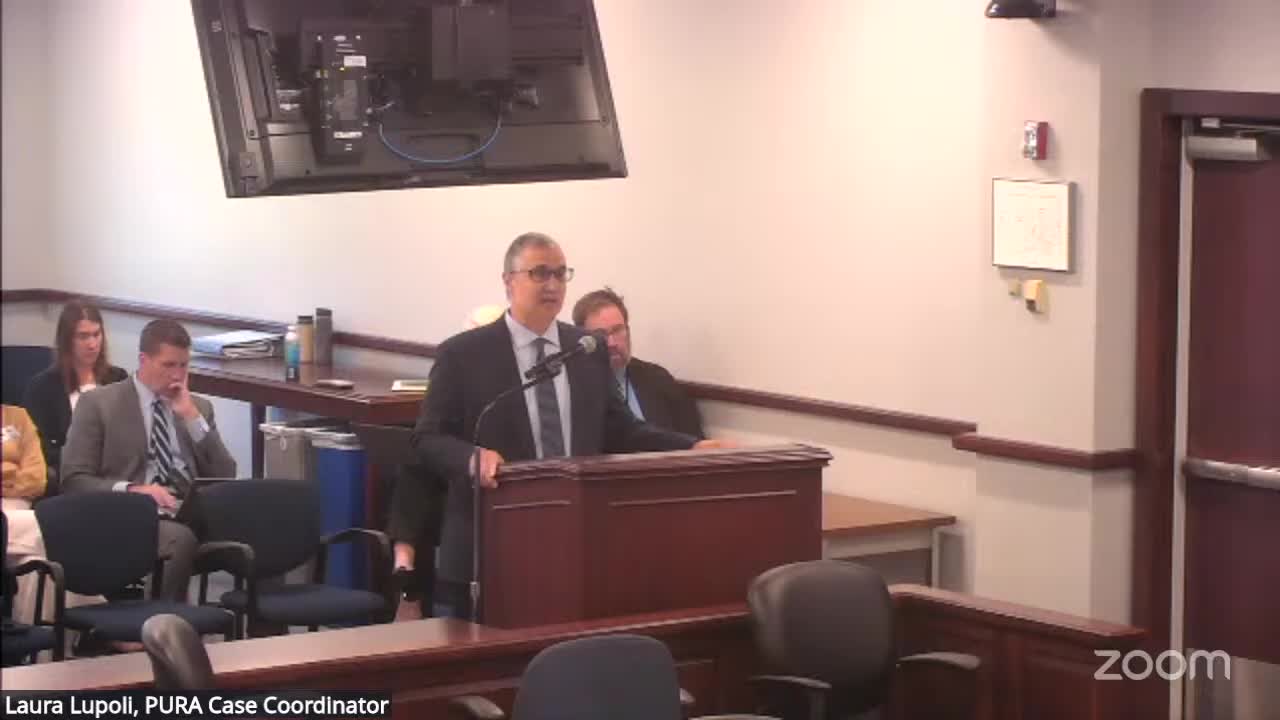
Summary
Attorneys for Connecticut’s investor-owned electric companies told the Public Utilities Regulatory Authority (PURA) on Aug. 15 that the proposed Performance-Based Ratemaking framework will not induce utilities to waive their statutory right to file rate cases unless PURA allows recovery of the utilities’ cost of capital on incremental plant additions.
Attorneys for Connecticut’s investor-owned electric companies told the Public Utilities Regulatory Authority (PURA) on Aug. 15 that the proposed Performance-Based Ratemaking framework will not induce utilities to waive their statutory right to file rate cases unless PURA allows recovery of the utilities’ cost of capital on incremental plant additions.
Eversource attorney Vincent Pace said the draft REO 1 decision’s treatment of the CT BAR mechanism — which, as drafted, permits recovery of depreciation, property tax and gross earnings tax on incremental plant additions but not the utility’s financing return — would “not be workable” for the companies and would drive more frequent rate cases rather than the four-year stability PBR intends to create. “Right now, the draft decision says for incremental plant additions, we're not allowed to recover a return,” Pace said. “We incur that real cost to finance those investments, and without that return, we can't commit to a 4 year stay out.”
Nut graf: The companies presented numeric and legal arguments aimed at persuading PURA to restore a return-on-capital component to the CT BAR mechanism. Eversource and United Illuminating (UI) argued that denying recovery of carrying charges would materially reduce their earned return and undercut the core PBR aim of a multiyear stay-out from frequent rate cases; intervenors including the Office of Consumer Counsel (OCC) and several environmental and ratepayer groups urged caution and emphasized consumer protections.
The utilities displayed an exhibit (figure 1 from their written exceptions) showing an illustrative $60 million of incremental plant additions and a corresponding 155-basis-point decline in earned return over a four-year multiyear rate plan (from an 8.63% ROE in year 1 to about 7.08% in year 4) if carrying charges for financing are excluded. Eversource and UI cited prior PURA practice and argued the statute does not bar PURA from authorizing return-on-capital recovery subject to prudence review and refunds if imprudence is found. Pace referenced a prior PURA contested-case decision (docket O91205) and a Supreme Court filing by PURA in Aquarian Water Company v. PURA to support the proposition that PURA has flexibility in structuring prospective rates.
OCC attorney Tom Wheel acknowledged that neither statute nor case law categorically forbids forward-looking inclusion of a return on projected plant, but he and other intervenors emphasized PURA’s discretion to balance investor and ratepayer interests and questioned whether the CT BAR — with a return — is necessary to achieve PBR objectives. Wheel asked whether the draft’s stay-out waiver framework would give undue leverage to utilities in the settlement context.
Save the Sound and other consumer and clean-energy intervenors told the authority they would accept return-on-capital recovery only if it were subject to strict safeguards: timely prudence review and restitution (with carrying charges) to ratepayers if investments were found imprudent. Pace said the utilities accept those guardrails.
Legal and process points raised during argument: PURA’s general-rate statute, General Statute 16-19, requires PURA to act within 350 days on an application to amend rates; the utilities argued that this statutory right is a key reason they will decline a multiyear plan if the plan yields materially less revenue than a traditional rate case. The utilities urged PURA to view REO 1 alongside REO 3 (integrated distribution system planning) and the non-wire solutions framework as companion safeguards that provide transparency and oversight of capital planning.
Ending: PURA commissioners asked clarifying questions and heard cross-arguments from intervenors. PURA said it would take oral arguments and written exceptions under advisement and issue decisions in the coming weeks. The utilities said they will not accept a four-year PBR stay-out unless the revenue design provides a reasonable opportunity to earn the authorized return on investment, subject to prudence review and refunds for imprudence.