Get Full Government Meeting Transcripts, Videos, & Alerts Forever!
Get email alerts on the Capital Grants topic
No spam. Unsubscribe anytime.
Draft budget grows on large grants and ARPA transfer; council discusses new city hall funding options
Summary
Councilors reviewed a draft FY2026 budget that shows multimillion‑dollar increases driven by DEP wetlands grants, airport FAA/FDOT grants and an ARPA transfer. Council debated options for spending $1.6–1.9 million in sales‑tax bond funds toward a new city hall or other eligible capital projects.
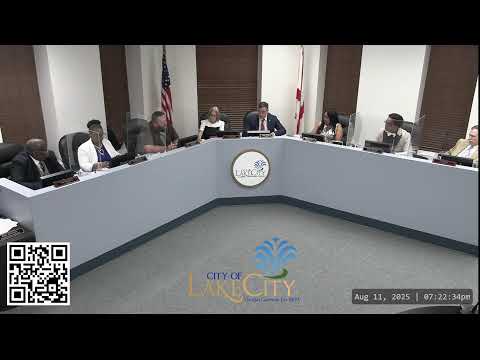
City staff walked the Lake City Council through the proposed fiscal 2026 budget on Aug. 11, highlighting a roughly $11 million increase year‑over‑year driven largely by grant awards and one‑time capital funds rather than recurring operating growth.
Finance staff said the headline increases included: about $5.8 million from a Department of Environmental Protection (DEP) wetlands project (described at the meeting as “seedly wet grant”), $1.5 million from an ongoing DEP water‑quality/quantity grant, and roughly $1.3 million in FAA/FDOT grants for airport construction and hangar work. Those grant dollars, staff said, were responsible for the bulk of year‑over‑year revenue growth and were included in the appropriate restricted funds.
Separately, staff proposed transferring about $1.9 million of remaining ARPA funds into a sales‑tax bond fund intended to help pay for a new city hall. Councilors discussed the statutory and bond‑counsel constraints around the 2019 sales‑tax bond proceeds (originally issued for a fire station and city hall). Staff said a remaining $1.6 million in that sales‑tax bond account had to be spent on a new city hall per the intended use of bond proceeds, but noted bond counsel had been asked about permissible alternatives (including selling properties purchased with bond proceeds and returning proceeds to the bond fund for a new city hall).
Councilors pressed staff for more options and cautioned that state policy proposals limiting property tax revenue could reduce the city’s future revenue base, making reliance on recurring property tax increases uncertain. One council member advised that staff identify grants and non‑property‑tax funding sources as contingency plans.
Staff said they would include the grant awards and ARPA transfer in the draft budget and return with legal counsel’s guidance on allowable uses of sales‑tax bond funds and options if the council chose to renovate existing buildings rather than build a new city hall.