Get Full Government Meeting Transcripts, Videos, & Alerts Forever!
Get email alerts on the Accessibility Documents topic
No spam. Unsubscribe anytime.
Council workshop backs creation of ADA document‑remediation specialist after debate over placement
Summary
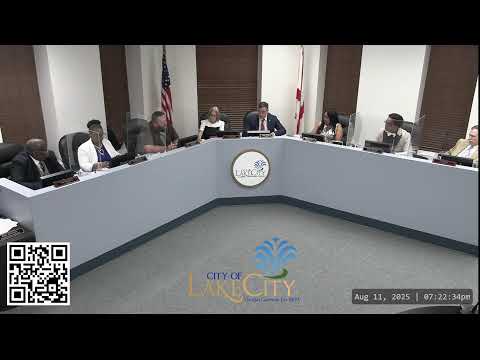
At an Aug. 11 Lake City Council budget workshop, council members and staff endorsed creating a single ADA document‑remediation position to meet new U.S. Department of Justice web‑accessibility rules, but disagreed on which department should house the role.
Council members at a Lake City Council budget workshop on Aug. 11 agreed in principle to add a full‑time ADA document‑remediation specialist to the proposed fiscal 2026 budget to meet new federal website accessibility requirements, but debated where that position should sit in city administration.
The position was pitched as a centralized, technical role to bring city agendas, website materials and other digital documents into compliance with guidance from the U.S. Department of Justice adopting Web Content Accessibility Guidelines (WCAG) 2.1 Level AA, with an agency compliance deadline cited in the meeting as April 26, 2027.
City Manager Don Rosenthal framed the issue as one of scale and efficiency: departments have varying workloads and “each independent department does not want to ADA‑compliance their own documents, so someone has to do it,” he said. The clerk’s office presented a proposal to locate the specialist there; several council members and department heads said the work is highly technical and time‑consuming and argued instead for placing the position under the city manager or splitting duties across multiple staff as a backup strategy.
Chief Butler and other department heads told council that their existing staff were operating at capacity and lacked the time and technical training to remediate long document packets. “When they were done with the training, I was more confused than when I walked in,” Chief Butler said about earlier ADA training, adding his records unit did not have the bandwidth to absorb the work.
Council members exchanged options: cross‑training existing staff, splitting responsibility among two or three positions, or creating a single centralized specialist. City staff said remediation of a typical large agenda packet — sometimes hundreds of pages with charts and graphs — can take many hours per packet.
Several council members expressed concern about the proposed pay grade and cost (a midrange salary shown in the budget at about $61,313). Councilman Jernigan said he supported creating the position but preferred it be budgeted under the city manager. Councilwoman Young and others pushed back on adding a new position without first trying cross‑training or reallocating responsibilities among existing employees.
By the end of the workshop staff reported a majority consensus to create the position; council members left open exactly where it would be administratively housed and asked staff to follow up on backup and cross‑training plans.
The meeting included repeated reminders from clerk’s‑office staff that existing agenda packets and many documents on the city website were not yet fully compliant and that remediation work would also include historic documents currently posted online. Council members requested additional detail and asked staff to return with clarifications on placement, backup coverage and cost before finalizing the budget ordinance.
The discussion was framed as compliance with federal rulemaking, not an optional policy choice: staff repeatedly referenced the DOJ adoption of WCAG 2.1 Level AA and the compliance deadline cited at the meeting.
Looking ahead, staff said they would return with implementation details, proposed reporting and backup coverage if the position were created. If council directs the hire, the position would be a technical, citywide role responsible for remediating web content, agenda packets and legacy posted documents for accessibility.