Get Full Government Meeting Transcripts, Videos, & Alerts Forever!
Get email alerts on the Affordable Housing topic
No spam. Unsubscribe anytime.
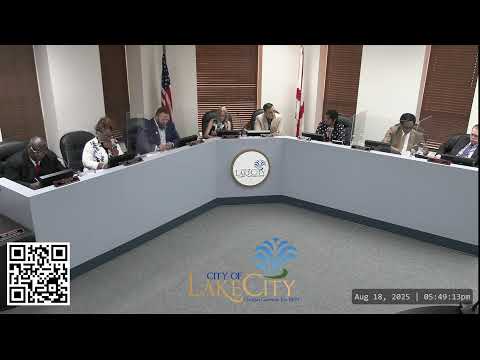
Lake City Council workshop advances plan for city-led affordable housing program; staff to refine proposal
Summary
Councilmembers voiced broad support but raised financial and procurement concerns after staff outlined a multi-part affordable-housing initiative that could use bonds, local lenders and developers. Staff will refine the plan and return in follow-up workshops, with a final vote likely several months away.
Lake City officials on Aug. 18 discussed a proposed city-led affordable housing initiative that would create a municipal housing program, pursue bond financing and offer a mix of projects including senior apartments, below-market loans, rehabilitation of abandoned homes and optional container housing.
The proposal, presented by financial consultant Nick Narducci and supported by City Manager Don Rosenthal and housing-authority attorney Rick Gilmore, aims to move city-owned or vacant properties back into private ownership over time while using public tools — advertising and realtor outreach, local-lender partnerships and bond financing — to lower development costs and support first-time buyers.
Why it matters: City leaders said affordable housing is a top local priority and described the proposal as a multi-step effort to expand housing options for seniors, veterans and first-time buyers while involving local banks and builders. Council members voiced support for further study but raised questions about the financial risk, procurement rules and whether the government should act as developer.
Rosenthal introduced the plan and identified the team working on it, saying the presentation would be refined and returned for additional workshops and a final council vote. “We—re probably a couple of months out from that final vote,” Rosenthal said, describing the next steps as additional internal analysis, outreach to builders and public workshops.
Public comment: Philip Mobley, who said he served eight years on a municipal housing commission in Jacksonville, praised the concept and urged that the program include education and counseling to prepare first-time homeowners. “I think this, the concept is is a great concept,” Mobley said.
Key program elements discussed included: advertising and realtor outreach to solicit private developers; optional container-home and condominium concepts; senior and veteran housing; below-market-rate loan programs for home repair and down-payment assistance; a homeowner education component to prepare first-time buyers; and targeted rehabilitation of abandoned properties to lower land costs for developers.
Financing and partners: The presentation included a sketch-level financing estimate that combined two large projects at about $36,000,000 (roughly $18,000,000 each). Council members asked where that money would come from and what would back any municipal bonds. Staff named First Federal as the primary local lender working with the program and said the city is working with national bond and counsel firms: PFM as bond financial advisor and Jolinda Herring of Miller, Bryant & Olive as bond counsel.
Concerns and cautions: Several council members voiced caution about direct municipal development and the risk of taxpayer exposure if a project falters. Councilmember Carter said the presentation——————————————————————————————————————————— said that the presentation "starts out with a no cost to the taxpayer" but that the $36,000,000 estimate made him uncomfortable. He added, "That makes me nervous. Just the concept of us getting into what could eventually be, the eviction business makes me nervous." Other councilmembers suggested pursuing partnerships and incentives for private developers as an alternative to the city acting as developer.
Procurement and local hiring: Council members asked whether the program could prioritize local builders and whether doing so would create procurement challenges. Staff and presenters said the intent is to use local builders "as much as possible" but acknowledged procurement rules can constrain the city—s ability to exclude bidders. Councilmembers suggested holding a builder/developer outreach event with the Chamber of Commerce and the local builders association.
Regulatory compliance and expertise: Council members asked whether consultants were familiar with Florida building and planning regulations. Rosenthal said the project team includes state-experienced partners: housing-authority attorney Rick Gilmore, who has worked in the field for decades, a Florida-based presence from PFM, and bond counsel Herring. Rosenthal emphasized the city will rely on state and local legal and financial experts for state-specific rules.
Next steps and council direction: There was no formal motion or vote at the workshop. The council agreed to direct staff to refine the plan, meet with builders and stakeholders, hold additional workshops and return with a more detailed proposal for a vote. Rosenthal said staff would continue outreach and refine financing options before a final ask to the council.
Ending: Councilmembers and staff framed the workshop as an early-stage step in a multi-meeting process. Several members said they support further study and outreach; others stressed caution on financial exposure and procurement requirements. Staff plans follow-up workshops and public engagement before presenting a final proposal to the City Council.