Get Full Government Meeting Transcripts, Videos, & Alerts Forever!
Get email alerts on the City Budget And Pay topic
No spam. Unsubscribe anytime.
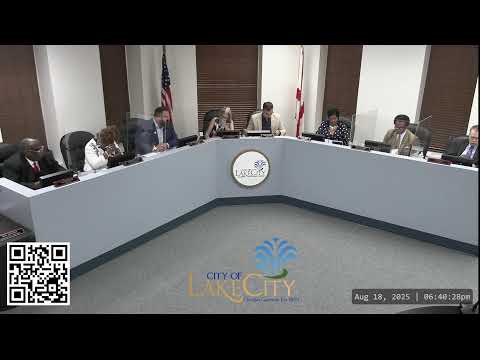
City manager defends 3% pay proposal; council members express split views on raises and staffing
Summary
City Manager Don Rosenthal defended a proposed 3% pay increase for nonunion employees, citing strong reserves and pension funding; council members voiced divergent views on the size and structure of raises and on proposed ADA staffing.
City Manager Don Rosenthal used his allotted time during council comments to respond to criticism of a proposed 3% salary increase for city employees, saying the raise is modest, fiscally responsible and backed by the city’s reserve position.
“This is not mismanagement,” Rosenthal said in prepared remarks. He told the council the city maintains “a clean annual financial report with no negative management letter, comments, and no internal control issues,” and said the general fund balance stands at about $29,000,000 versus a proposed budget near $28,000,000. Rosenthal also said pension funding is healthy: the police pension at about 118%, the fire pension at about 94% and a jail employee plan at about 106%.
Rosenthal sought to correct what he described as an earlier off-the-cuff estimate of $660,000 to cover raises for all employees: the proposed 3% increase applies only to nonunion employees and, he said, costs “just over $300,000,” because union-covered units (police and fire) are subject to separate contracts.
Council responses showed a mix of views. Mayor Walker said he voted against the 3% raises because they were presented as a $666,000 increase on top of an already larger city budget. “The reason I voted against the 3% raises is that they were proposed, and it was brought to us as a $666,000 increase on an already increased budget of close to $85,000,000,” Walker said, adding he had supported other budget increases earlier in the process and concluded the health-insurance adjustment was sufficient.
Council member Carter said he is not opposed in principle to occasional cost-of-living adjustments but argued for merit-based raises that tie pay increases to individual performance. “In my opinion, I think that every department should be bringing people . . . suggested raises based specifically on merit,” Carter said.
Vice Mayor Young and Council member Harris raised separate staffing and equity concerns. Young questioned the city’s calculation to hire a single ADA compliance position at roughly $61,000 and said other cities spread ADA responsibilities across departments; she urged careful review of that expenditure. Harris pressed for immediate city action on visible blight at a junkyard on Marion Street in her district and said she opposed a broad “merit spending” approach that could concentrate discretion with managers without clear checks.
Discussion vs. formal action: Rosenthal’s remarks were a staff explanation (discussion/direction). The meeting record shows prior council votes on related budget items; however, no new formal vote on the 3% across-the-board raise occurred at this meeting. Council members expressed direction and policy preferences (request for clearer merit criteria; review of ADA staffing), but no formal new ordinance or resolution was adopted on these staffing items at this session.
Clarifying figures presented at the meeting: a published estimate of $660,000 cited earlier in discussions was corrected by Rosenthal to “just over $300,000” for nonunion employees only; Rosenthal also cited the city’s $29,000,000 fund balance and pension funding ratios (police 118%, fire 94%, jail employees 106%). The council did not adopt new salary policy at the meeting; several members asked staff to return with additional documentation and to consider targeted merit processes before implementing broad increases.
Ending: Council members agreed to continue scrutiny of budget items and suggested additional staff-provided detail on costs, merit criteria and ADA staffing before pursuing further pay or personnel commitments.