
Nampa council presses CWI, Oak View Group options as Ford Idaho Center budget shortfall grows
Get AI-powered insights, summaries, and transcripts
Sign Up Free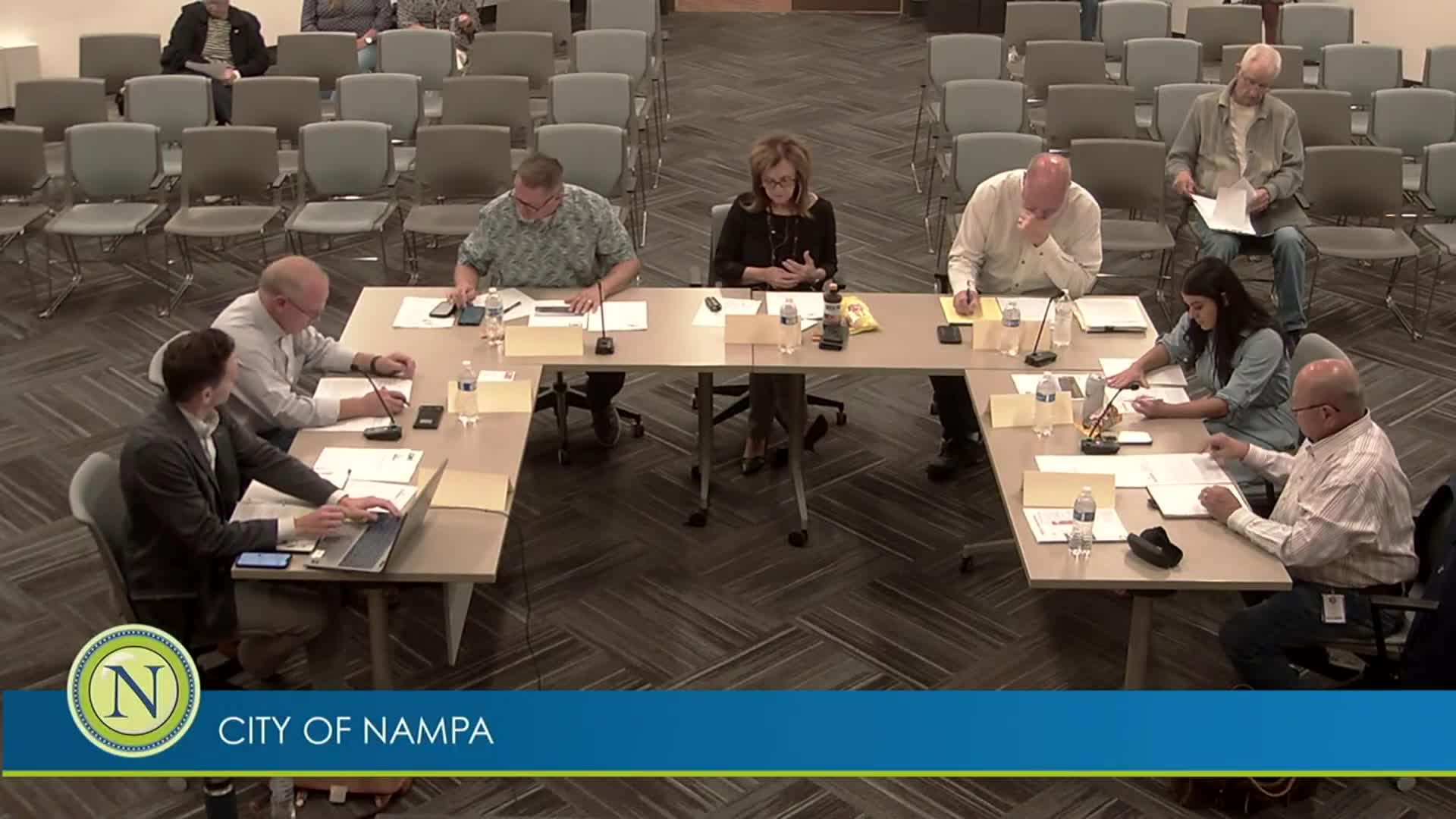
Summary
At a special Nampa City Council workshop, members discussed the Ford Idaho Center’s operating losses, deferred-maintenance estimates, possible conveyance to the College of Western Idaho and a proposed Oak View Group/Live Nation amphitheater deal. Council directed further financial review and paused final decisions amid legal and financial risk.
The Nampa City Council spent a special public workshop weighing how to address mounting operating losses and deferred-maintenance needs at the Ford Idaho Center, and discussed options that range from a formal sale or lease to a conveyance to the College of Western Idaho (CWI) paired with private investment in the amphitheater.
Council members met in a workshop setting and focused on three linked areas: the center’s recent operating results and capital spending, the financial capacity and audited statements of a potential public transferee (CWI), and the terms of a proposed Oak View Group (OVG)/Live Nation investment and operating agreement for the amphitheater. City staff and outside partners also outlined use, revenue and cost drivers at the horse park, RV park and arena.
The discussion matters because Nampa has absorbed more than $20 million in city-funded subsidies to the center over roughly two decades and faces multi‑million-dollar deferred‑maintenance needs. Those costs, and recent state budget actions, have sharpened the council’s choices about whether to keep operating the facility, pursue private partnership terms, or convey the property with deed restrictions.
City finance staff and operators told the council the center has historically run at a loss after city support. “For the last 4 years, they’ve lost money each year, but the amount of money they lost has decreased each year,” a city finance staff member said, describing the operating picture after subtracting city capital and operating support. Council members and staff cited a figure of roughly $22 million in city funding (capital plus operating subsidies) over about 20 years and a total capital cost figure shown in staff materials of about $35 million. Deferred‑maintenance estimates were described during the meeting as “substantial”; one councilor said a previously cited deferred‑maintenance number was about $28 million.
Council members pressed whether CWI could absorb the asset and cover needed capital. Councilman David Bills asked Doug, a city finance staff member, whether he had reviewed a recent CWI audit; Doug replied, “No. I have not reviewed their financials.” That exchange prompted a direction from the council to have staff perform an initial review of the Eide Bailly audit for CWI and report back, so the council understands the financial capacity of any prospective transferee and the city’s potential liability if ownership reverted in the future.
Councilors also raised a separate budget concern: Governor Brad Little ordered a 3% holdback that affects state institutions, including CWI. Council members asked staff to factor the holdback and any donor‑funding uncertainties into the assessment of CWI’s ability to accept long‑term responsibility for the center.
Separately, Andrew, a facility operations staff member who produced scenario worksheets for council review, described a modeled “what if” applying proposed OVG/Live Nation contract terms to the last three fiscal years. He called those figures “very high level estimates” that require further refinement. Under the model presented, the hypothetical contract terms would have produced modest net gains in some years and modest losses in others; the proposed OVG capital investment discussed verbally by council members was $10 million for amphitheater improvements, with OVG and Live Nation taking operating upside and downside on amphitheater events and related ticket revenue streams under the preliminary terms.
Council members asked how much of current revenue comes from facility add‑ons such as RV park stalls and horse‑park activity. Staff said the horse‑park revenues in the sheets ranged roughly from about $600,000 to $800,000 in recent years, and that the RV nightly rate being charged is $60; staff offered to pull precise RV‑park revenue figures for follow‑up.
Legal counsel briefed the council on the statutory differences among selling, leasing and conveying public property. “For a sale, Idaho law is clear on this: it goes to the highest bidder,” the city attorney said, summarizing Title 50 guidance for disposing of municipal property. Counsel also noted the different legal standards for a lease and for a conveyance to another public entity, and said deed restrictions can be placed on sales but typically reduce the pool of potential buyers and therefore may lower sale proceeds.
Council members debated whether a sale with deed restrictions, a lease with strict performance terms, or a conveyance to CWI (or other public transferee) best protects community use — such as the Snake River Stampede rodeo, equine events, graduations and other recurring community events — while removing long‑term capital burden from the city’s general fund. Several councilors said maintenance and operating funding constraints produced the present urgency: recent state tax and budget shifts have reduced city revenue flexibility compared with prior years.
No final decision was made. The council voted to adjourn into executive session to discuss legal and risk matters, and directed staff to return with additional financial analysis, including review of the Eide Bailly audit for CWI and clearer operating‑and‑capital splits for the amphitheater, horse park and RV area.
Ending: Council members said they would continue discussions with CWI and with OVG representatives, refine the financial scenarios, and return to public council sessions with follow‑up information and options for next steps.