
Nampa staff, consultants outline draft form‑based code for downtown; timeline set for Dec. 1 adoption
Get AI-powered insights, summaries, and transcripts
Subscribe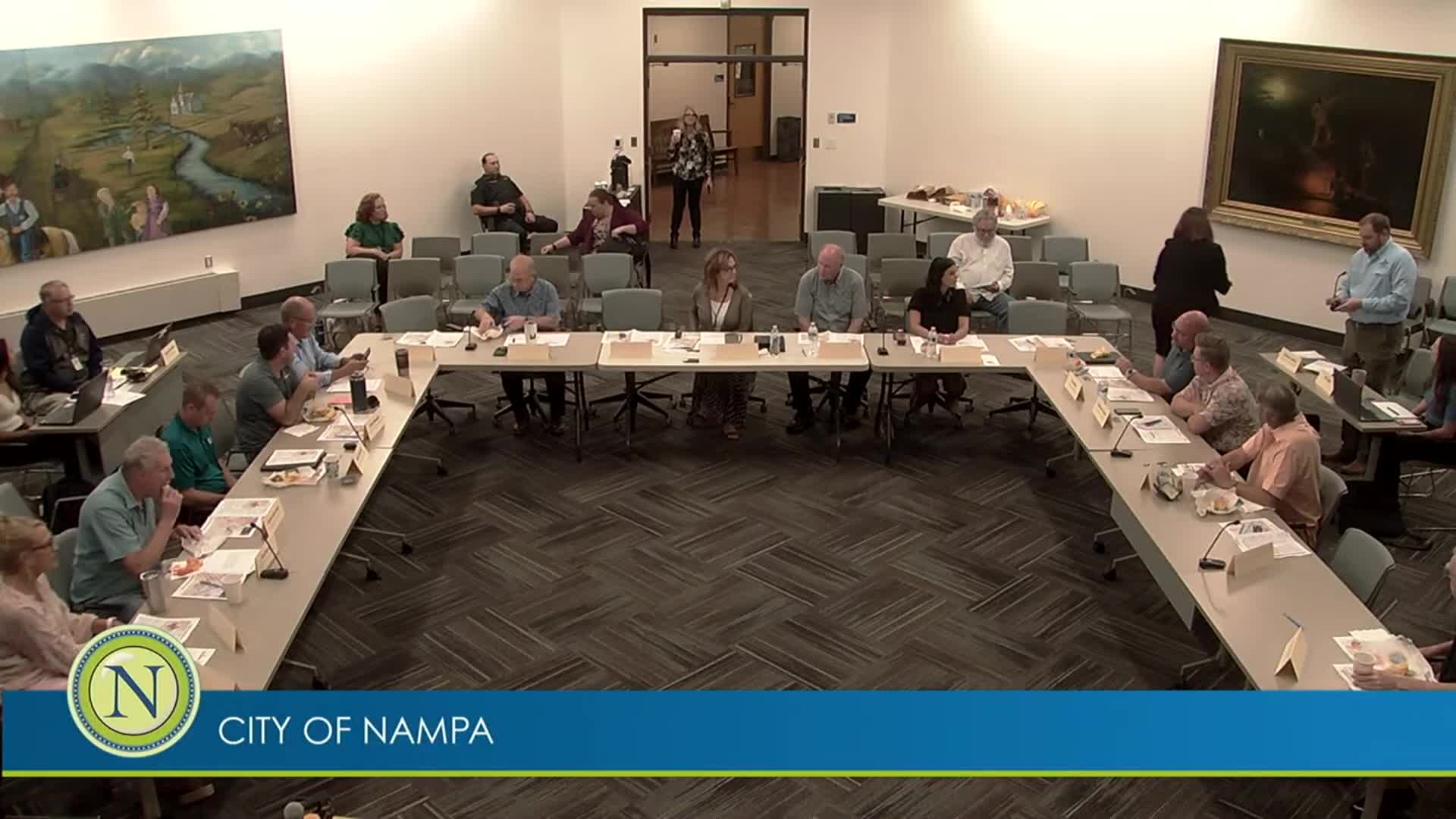
Summary
City staff and consulting team presented a draft form‑based zoning code for downtown Nampa at a workshop, describing five form districts, frontage types, building types and proposed height ranges; commissioners and residents pressed for clearer boundaries and protections for historic buildings along Twelfth Avenue and near the train depot.
Nampa city staff and a consultant team presented a draft form‑based code for the downtown at a community workshop, outlining rules for building form, frontage types and permitted uses and setting a target adoption date of Dec. 1.
The draft, presented by Nathan Davis of the consultant team, lays out five downtown form districts, three “gateway” transition districts and two core districts (Central Downtown and Central Historic). The code leads with physical form—height, setbacks, frontage and building placement—rather than use, and then ties allowed uses to those forms. Davis said the intent is to “codify the goals of the downtown plan and the feasibility study” and to provide clearer standards so redevelopment is not handled on a case‑by‑case basis.
Why it matters: The code would replace the existing downtown zoning chapter (chapter 15), standardize expectations for developers and city reviewers, and aim to shape future downtown investment so the area develops with a coherent pedestrian scale and active frontages. City staff said they expect the draft to streamline approvals, reduce staff negotiation with individual property owners and support mixed uses, structured parking where appropriate and public‑realm improvements tied to an upcoming transportation plan.
What the draft contains: The consultant summarized the draft’s main elements—form districts and three street frontage types (primary, secondary, tertiary); five building types (general, limited bay, row, yard and civic); four entrance types and three roof types; and street classifications including major and minor arterials, collectors, local roads and pedestrian passages. The draft specifies differing height ranges by district: Central Historic minimum 2 stories, maximum 4; Central Downtown minimum 2, maximum 7 (with stepbacks along street frontages); Central Eleventh minimum 3, maximum 5; Central Sixteenth roughly 2–4 stories; Central Residential roughly 3–5 stories with a 150‑foot transitional buffer to protect adjacent single‑family lots. The presentation also flagged design elements such as transparency at ground floors, landscaping, signage, alleys and potential structured parking in higher‑density zones.
Boundary and historic‑protection debate: Workshop discussion focused heavily on where to draw the Central Historic boundary and how to protect view corridors to the train depot. Several commissioners and the mayor urged extending the Central Historic standards across Twelfth Avenue (the blocks between Front and First) to avoid future loopholes that could allow incompatible redevelopment. City staff acknowledged the Union Pacific railroad right‑of‑way around the depot is unlikely to be redeveloped and said the draft focused regulation on parcels at risk of change, but staff agreed to revise boundaries to reduce confusion and better protect historic character along Twelfth Avenue. As city staff summarized, they will “make sure that whatever we call it … the standards are maintained across Twelfth Avenue and that we still have that tie back to that historic look.”
Design guidance vs. flexibility: Commissioners and advisory members pressed for clearer architectural guidance—material quality, floor‑height standards and whether distinct architectural styles should be codified per district. Some warned against over‑prescription that would stifle design variety; others urged clear, durable standards so decisions are not driven by changing personal opinions on review bodies. Nathan Davis and staff said the draft includes guidance on materials and that the code is intended to allow variation while protecting “the worst of it,” and that the steering committee will refine architectural guidance and floor‑height rules during the drafting phase.
Process and timeline: Staff described a fast schedule. Consultant edits were due Oct. 1; legal review and steering‑committee review are scheduled that month. The draft will go to Arts & Historic Preservation Commission (Oct. 13), Design Review (Oct. 20), Planning & Zoning Commission (Nov. 12) and back to City Council for adoption on Dec. 1. Staff asked for feedback within about a week from workshop participants and said they will schedule an additional meeting if needed.
Developer reaction and next steps: Economic development staff said developers generally welcome clearer, form‑based standards because they reduce ambiguity and financial risk when evaluating projects. City staff said uses that the council does not want downtown (for example, nuisance uses) can still be restricted geographically or by frequency. Next steps include incorporating stakeholder feedback, legal review and steering‑committee input before formal public hearings.
Ending: City staff said the draft remains open for public and commission feedback and promised to return refined materials to the advisory bodies and council per the schedule. No formal vote or ordinance was taken at the workshop; the session was for input and refinement.