Get Full Government Meeting Transcripts, Videos, & Alerts Forever!
Get email alerts on the Education Policy topic
No spam. Unsubscribe anytime.
Governor says Education Freedom law, special‑needs expansion and DEI ban will give parents more choices
Summary
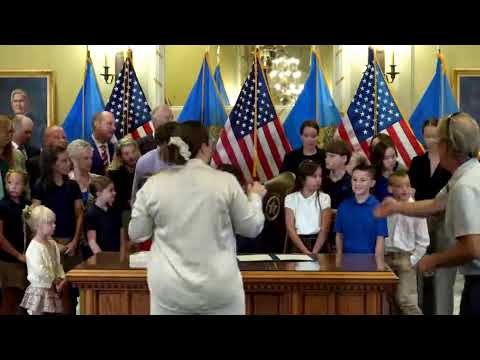
At a Capitol event, Governor said, "One of my proudest moments as governor was passing the Education Freedom Bill," and outlined measures he said give parents more control over schooling, expand programs for students with special needs, and prohibit diversity, equity and inclusion (DEI) programs in higher education.
At a Capitol event, Governor said, "One of my proudest moments as governor was passing the Education Freedom Bill," and outlined measures he said give parents more control over schooling, expand programs for students with special needs, and prohibit diversity, equity and inclusion (DEI) programs in higher education.
The governor said the Education Freedom Bill allows parents to transfer their children to other public schools and provides a refundable tax credit to help families pursue private schooling. He said an expansion of what he referred to as the "Lindsay Nicole Henry expansion" will let parents of students with special needs enroll directly in programs that meet those needs "without having to first go to a school that maybe doesn't have the right program." He also said the state has "signed a ban on DEI in higher ed."
Why this matters: the changes the governor described affect school choice and college and career access for families, particularly parents of children with special needs. The governor framed the measures as removing barriers to schooling options and increasing competition in education.
The governor emphasized workforce and apprenticeship initiatives alongside the education measures. "Let's 250 more apprenticeships in Oklahoma," he said, urging businesses to adopt models used in Germany and Switzerland. He said the state signed three workforce bills to expand partnerships with career and technical education.
On the state's fiscal picture, the governor said Oklahoma's revenue for the fiscal year finished "up another 250,000,000 over estimates" and that capital expenditures in the region had varied by state: "Oklahoma was up 50%. Texas was up 9. Kansas was up 4. Arkansas was down 58." He attributed the economic gains to what he described as "free market pro business policies" and the education reforms.
Quotes are from the governor's remarks at the Capitol event. The governor referred to the expansion of a program he tied to a prior administration and to private‑sector apprenticeship examples to illustrate workforce pathways. He repeatedly framed the measures as returning authority to parents: "When you put the parents in charge, the parents can decide what's best for their kids. And then guess what? Free markets and competition work."
The governor also stressed local implementation and growth: "Our economy is booming. We have largest savings account we've ever had." He described the education changes as a lasting legacy and said they should improve options for families across the state.
The speech did not include details on administrative rules, effective dates, budgetary line items for the programs described, or the statutory citations for the laws he referenced. The transcript did not specify whether the refundable tax credit includes income limits, the exact title or statutory citation for the "Lindsay Nicole Henry expansion," or the statutory language of the DEI ban. Those details were not specified during the remarks.
For now, the governor's comments summarize enacted and proposed changes as presented at the event; implementation details and administrative guidance were not provided in the speech.