Get Full Government Meeting Transcripts, Videos, & Alerts Forever!
Get email alerts on the Land Use Zoning topic
No spam. Unsubscribe anytime.
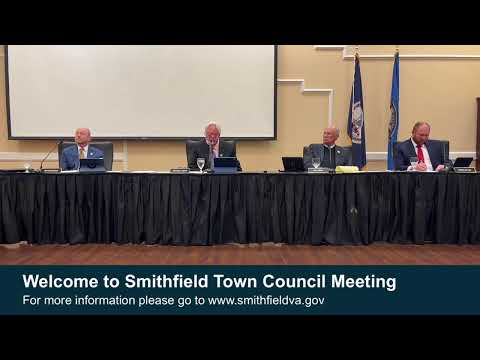
Smithfield council denies proposed downtown zoning text amendment after public hearing
Summary
The Smithfield Town Council voted on March 4, 2025, to deny a proposed text amendment to the downtown neighborhood residential (DNR) zoning ordinance that would have allowed developers to seek waivers of the 5-units-per-acre density limit through a special-use permit.
SMITHFIELD — The Smithfield Town Council voted on March 4, 2025, to deny a proposed text amendment to the downtown neighborhood residential (DNR) zoning ordinance that would have added a waiver of the ordinance’s 5-units-per-acre maximum density as a condition eligible for a special-use permit.
Supporters of the amendment said it would allow infill residential development that better matches existing neighborhood scale and would not automatically change base zoning; opponents said the change risks setting a precedent that could accelerate higher-density development across the historic district.
The amendment was introduced by an applicant who presented a conceptual infill project bounded by Clay, James and Washington streets, calling the proposal “James Street Park” and saying the requested text change was needed to reach the “starting line” for the project. John Hopke of Hopke Associates and the project proponent explained the concept and argued the current 5-units-per-acre limit prevents replicating the neighborhood’s existing fabric. The applicant said exact unit square footage remained a range; during the hearing the proponent said unit sizes were not yet finalized and gave an approximate range of about 1,500 to 2,400 square feet per unit.
Tammy Clary, planning staff, clarified to the council that the item before them was a text amendment only; approval of the amendment would allow any future applicant to request a density waiver via a special-use permit but would not itself approve the project shown in the applicant’s concept plans.
Council debate split along concerns about precedent and preserving the historic district’s character. Councilwoman Mary Ellen Butler urged caution and argued that changing zoning for a single project would be a poor legislative approach; Butler said it would be better to undertake a district-wide rezoning if the council wished to change the base density. Vice Mayor Bill Harris and several council members said approving a text amendment would simply allow an application to be filed and subjected to planning commission review and public hearings; they stressed that council would retain final approval authority on any future special-use permit.
After a substitute motion to approve the text amendment failed, the council returned to the original motion to deny. The final roll call produced a tally of three yes votes in favor of denying the amendment, two no votes, and one abstention; the council therefore denied the amendment. (See “Votes at a glance” below for other council actions from the same meeting.)
Why it matters: The council’s decision preserves the current 5-units-per-acre default in the DNR zoning ordinance and maintains council control over any density increases through case-by-case special-use permit reviews rather than changing the base zoning for the district.
What’s next: Planning staff and the applicant may revisit project design or pursue a rezoning; if the applicant seeks a density waiver in the future, it will still require a public application, a planning commission recommendation and a separate council vote.
Votes at a glance - Substitute motion to approve text amendment — failed (substitute motion failed on roll call; motion recorded as failed). - Final motion to deny the text amendment — passed (tally: yes 3, no 2, abstain 1).