Get Full Government Meeting Transcripts, Videos, & Alerts Forever!
Get email alerts on the School Libraries topic
No spam. Unsubscribe anytime.
District librarian: elementary students check out far more books than older students; collections and budgets lag national averages
Summary
The district lead librarian presented 10 years of checkout and collection data showing strong elementary circulation, declining secondary print use and aging collections. She urged more staffing, training, and study of links between circulation and literacy outcomes.
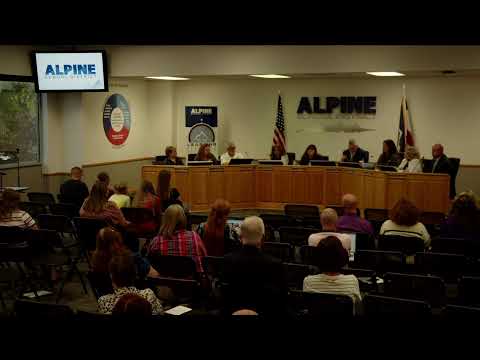
Joy Newkirk, the district lead librarian, told the board Tuesday that elementary students in Alpine read substantially more library books than secondary students but that many school collections are aging and budgets are below national averages.
Newkirk reported that elementary students checked out an average of about 31 books per student last year and that the district’s elementary collections average about 14 books owned per student; she noted a national-comparison figure of 20 books per student. Newkirk said the average age of school collections is older than recommended: she reported an average collection age tied to a 2009 benchmark (roughly 16 years old) and said her goal is to reduce collection age to about 10 years.
Budget data Newkirk presented showed an average elementary library budget near $7,000 per school — about $9 per student — compared with a nationwide figure she cited of $16 per student (the national figure is based on older federal data, Newkirk said). At the secondary level, she reported average checkouts of about 13 books per junior-high student and four books per high-school student; over a 10-year trend the high-school print checkout number has declined while ebook (Sora) usage has increased.
Newkirk described operational challenges: elementary librarians are often paraprofessionals with limited prep time and cataloging support, secondary librarians sometimes lose regular open hours to testing and other duties, and smaller school budgets limit collection refresh. She said many secondary libraries are closed to students approximately 12 weeks per year for testing, meetings and other obligations.
She also described district supports: the district uses Alexandria for circulation tracking and Sora for ebooks, has a district media center that circulates learning kits and shared assets, and maintains a professional-development program for librarians. Newkirk asked the board to consider further study on whether stronger library funding and fresher collections correlate with literacy outcomes and suggested the district analyze whether ebook readers and print readers are the same students or separate groups requiring different outreach.
Newkirk said book-challenge incidents have been rare in the district over recent years and that librarians generally support an age-appropriateness approach in collection decisions.
No board action was required. Newkirk said she will pursue additional analyses comparing circulation with literacy measures and statewide district data.