Get Full Government Meeting Transcripts, Videos, & Alerts Forever!
Get email alerts on the Property Cleanup topic
No spam. Unsubscribe anytime.
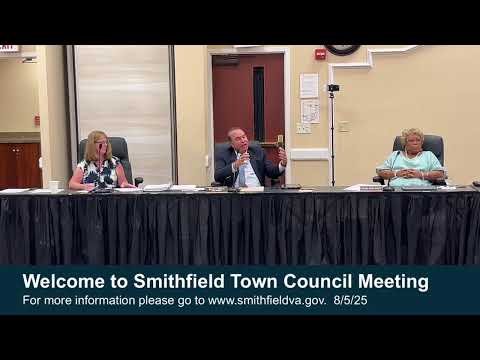
Smithfield council accepts privately funded cleanup plan for blighted site; injunction set to expire Aug. 27
Summary
Town council voted to accept a cleanup plan funded by the property owners' insurance for the blighted Harrises property and to monitor progress; an existing circuit court injunction expires Aug. 27.
Smithfield Town Council voted unanimously to accept a contractor-backed cleanup plan submitted on behalf of the property owners known as the Harrises, allowing the owners to complete demolition and debris removal using funds their insurer has released.
The decision matters because it shifts responsibility and cost for the cleanup from the town back to the property owners after months of legal and administrative oversight. The site is subject to a court injunction that expires Aug. 27; council members and town staff emphasized administrative approvals that must be completed before work begins in the site's environmentally sensitive areas.
Attorney Robert Small, representing the property owners, told the council he had obtained insurer funds and signed a contract with a remediation firm, Davis & Associates, and provided a $5,000 good-faith payment. "The insurance company has released enough funds for us to meet those costs," Small said, and he asked the council to accept the submitted plan so the contractor could proceed.
Town Attorney Bill Riddick and Zoning Administrator Tammy Clary advised the council that the materials the owners submitted were sufficient for the town's standards and that the contractor may not begin work in the Resource Protection Area (RPA) until Davis & Associates completes required surveys and an RPA mitigation plan and receives administrative approval. Riddick noted the injunction "prohibits the town from taking any action to remove anything," but said the injunction likely will dissolve on its stated date and not block the administrative process.
Council members asked for monthly status updates. The council's motion accepted the cleanup plan as presented and included a standing requirement that the property owners notify the council and the zoning administrator if delays or unplanned issues arise. The motion passed with all council members voting in the affirmative.
Council and staff outlined other administrative steps that remain: a Board of Zoning Appeals (BZA) application may be needed if the owners seek to retain foundation elements (for example, a swimming pool or foundation) and the zoning administrator must approve any mitigation work in the RPA. Small said the owners intend to leave a security fence in place during cleanup and to maintain the pool (and mosquito treatment) until any final decisions are made.
The council did not adopt a hard demolition deadline tied to the vote; instead members agreed to periodic review once the administrative approvals are finalized. Small estimated demolition and debris removal could occur about 30–45 days after approvals are completed but cautioned contractor schedules are outside his direct control.
The council's acceptance returns responsibility for the cleanup to the property owners and establishes monthly check-ins to protect neighbors and ensure administrative and environmental safeguards are followed.