Get Full Government Meeting Transcripts, Videos, & Alerts Forever!
Get email alerts on the Municipal Budget topic
No spam. Unsubscribe anytime.
City Council reviews proposed 2026 budget, staff recommends conservative plan
Summary
City staff introduced a proposed $53.2 million 2026 budget that emphasizes modest overall growth, targeted employee raises, and shifting some expenses into redevelopment and debt funds; no formal votes were taken.
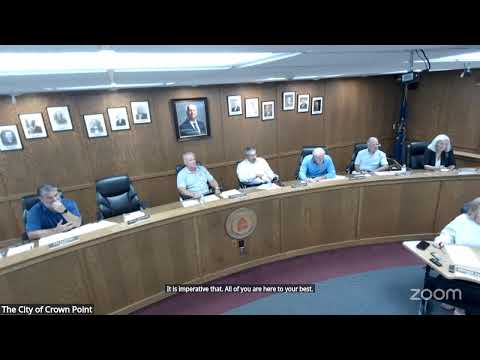
Sherry, a city staff member, told the City Council that “the only thing on tonight’s agenda is just the introduction of the proposed 2026 budget.” The proposed total is just over $53.2 million, a 2.25% increase overall from 2025 and a 4.7% increase in the general fund driven largely by employee compensation and health-insurance costs.
The proposal matters because it sets spending priorities for city operations and reserves while the council and staff continue to respond to state-level changes and other uncertainties. Staff and the council emphasized a conservative approach to hiring and spending for 2026 while monitoring possible larger impacts in 2027–28.
City staff summarized the main elements of the draft budget and department requests. The plan recommends across-the-board salary changes keyed to job classes: a proposed 5% raise for public-works, police, fire and utilities employees; a 3% raise for full-time salaried employees outside public works; and a 2% increase proposed for department heads, superintendents and the chief-of-staff. Staff said the mayor and elected officials proposed those increases.
Staff outlined department-level line-item adjustments: the mayor’s office requested increasing “promotion of city business” from $15,000 to $20,000; engineering requested raising a closing allowance from $2,400 to $2,650; the Board of Works budget moves certain advertising and tree-removal costs between line items and increases street-light repairs from $6,000 to $20,000; and multiple departments requested modest increases in training, travel and postage to reflect current costs.
Public-safety funding and equipment were a focus. Staff reported the city’s police pension contribution is expected to rise from 20.3% to 23.3%. The budget notes roughly $100,000 set aside in 2025 for police vehicle purchases and recommends keeping a $100,000 vehicle-purchase allocation in 2026. Staff said the redevelopment (RDC) fund is being used to absorb larger recurring subscription or lease-style costs—staff described police body cameras and the department’s Lexipol subscription as examples of programs with significant subscription and sustainment costs—and recommended funding some of those costs through RDC rather than the general fund.
On larger capital and debt items, staff said the SRF leverage program debt was proposed to increase from roughly $1.6 million to $3.0 million for 2026. Staff also proposed an RDC appropriation of $285,000 for planned fire vehicle purchases and asked to keep a $100,000 police vehicle appropriation in place.
Staff and council members discussed the city’s refuse/recycling contract and the carbon-recycle fund, noting a small contractual increase to reflect the final year of a multi‑year contract; staff said the contract includes per-resident charges calculated from the number of customers the city reports monthly. Staff described that line as one of the more variable items in non-general-fund budgets.
Council members requested more accessible reporting. One council member asked for a clear, simple summary showing prior-year budgeted amounts versus actual expenditures and a year-to-date revenue and expense summary so constituents can see the city’s financial position. Staff agreed to provide budget-performance reports and to run and distribute trial-balance and revenue reports on request.
Council and staff emphasized uncertainty from state policy and pending legislation. A council member asked whether the proposed budget was reasonable given changes connected with “SB 1”; staff said the draft is more conservative than an earlier FSG (financial consulting) recommendation and that larger impacts are still expected in 2027–28, so the council should plan accordingly.
No formal motions or votes on the 2026 budget were taken at the meeting; the presentation was introductory. Staff noted the budget calendar: a first reading was scheduled for Sept. 2 and the final adoption must occur by Oct. 31 to avoid reverting to the current year’s budget. Staff reminded council members that the final public hearing and vote must be conducted in person and cannot be completed via Zoom.
The meeting record shows repeated council support for a cautious approach to staffing: staff said no additional full‑time positions were being added in the draft and department heads were alerted that hiring requests may be delayed pending the 2027–28 outlook. Several council members commended the conservative fiscal stance and asked staff and the mayor’s office for follow-up details on department-level uses of any accumulated funds.
Next steps: staff will finalize presentation materials for the Sept. 2 first reading, produce the requested comparative budget-versus-actual and revenue reports for council review, and continue departmental meetings with the mayor’s office and FSG to refine the draft before public hearings and final adoption.