Get Full Government Meeting Transcripts, Videos, & Alerts Forever!
Get email alerts on the Annexation Prezone topic
No spam. Unsubscribe anytime.
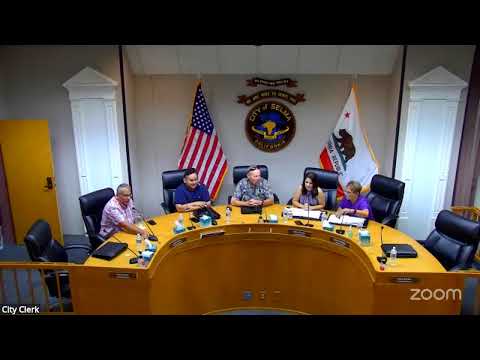
Selma planning commission votes to recommend 150-acre ‘Selma North’ annexation and prezoning to council
Summary
The Selma Planning Commission on Tuesday voted to recommend that the City Council approve the Selma North annexation and prezoning, a proposal to bring roughly 20 parcels totalling about 150 acres north of Dinuba Avenue into the city and to assign zoning consistent with the city's general plan.
The Selma Planning Commission on Tuesday voted to recommend that the City Council approve the Selma North annexation and prezoning, a proposal to bring roughly 20 parcels totalling about 150 acres north of Dinuba Avenue into the city and to assign zoning consistent with the city's general plan.
The action, approved by a 5-0 vote, forwards the commission's resolution and recommended conditions of approval to the City Council and — if the council approves — to the Fresno County Local Agency Formation Commission (LAFCO) for final order. The proposal does not include any development entitlements; staff and the applicant said future projects would require separate approvals and environmental review where appropriate.
The commission’s recommendation matters because it determines which jurisdiction will provide services and which development standards will apply if property owners later submit proposals. City staff said the annexation is eligible for an exemption under California Environmental Quality Act (CEQA) Guideline 15183 because the prezoning is consistent with densities in the certified general plan EIR, and no new or unidentified impacts are anticipated at this step.
City planning staff described the proposal as a straight prezone-and-annexation request that assigns five proposed zone districts to match existing general plan land-use designations for the area north of Dinuba Avenue, west of South Delray Avenue and east of South Thompson Avenue. Associate Planner Lupe Macias read the oath earlier in the meeting and participated in the presentation; planning staff explained that no development project is included with the application and that future entitlements — such as tract maps, conditional-use permits or site-plan reviews — would be processed by the city after annexation.
Jeff Roberts, the applicant's designated representative, told the commission the applicants concurred with staff’s recommendation and the 37 conditions in Exhibit C of the staff report and thanked staff for their work. "We do concur with the staff recommendation for approval," Roberts said during public comment.
Members of the public who own parcels in or adjacent to the proposed annexation urged inclusion of additional property and asked about the practical effects of prezoning. Lisonbee Ying Bauer, a property owner who submitted a written request to be included, read her letter asking that her three-acre parcel at 9791 South McCall Avenue (APN 358-120-35) be added to the application and said two acres contain a house where her sister lives. She asked about fees and timing; staff said the commission could recommend adding her parcel to the application and that staff would update CEQA documentation if it were added.
Planning staff explained specific limits and consequences of prezoning: the action sets zoning consistent with the existing general plan but does not itself authorize construction. Staff warned that where an existing residence sits on land that becomes nonconforming under the new zoning, owners generally may maintain and repair the structure; however, if the house is substantially destroyed (staff cited commonly used thresholds such as 50% or more), city rules may prevent rebuilding the same residential structure if the property’s prevailing land-use designation is commercial. Jerome (staff member) explained this point during public comment: "If the home was destroyed ... if so much being destroyed, 50% or more, they're not allowed to rebuild it," he said, adding that this is a common outcome when city policy designates property for commercial use.
Staff also reminded the commission of a statutory restriction: under the Cortese-Knox-Hertzberg Local Government Reorganization Act of 2000, the city may not rezone annexed property for two years after annexation to prevent abrupt post-annexation rezoning. Staff said that restriction helps ensure the prezoning reflects the general plan and prevents immediate “bait and switch” rezoning.
Several residents raised infrastructure concerns. Staff and commissioners repeatedly said the annexation itself does not instantly change who pays for improvements; private development typically must pay for frontage improvements (curb, gutter, sidewalks, street widening) and utility extensions to meet city standards. Staff said the Dinuba–McCall traffic signal project is proceeding with Caltrans grant funding regardless of annexation and that annexation would simplify right-of-way control because the whole intersection would be inside city limits rather than split with the county.
On financing and fees, staff said property owners who join an annexation are generally subject to transition fees under the city's tax-sharing agreement with the Central Fire Protection District. Staff described the transition fee as equivalent to roughly 10 years of the assessment that would have gone to the district; as an example, at a $500,000 assessed value the transition fee works out to about $486 per year (about $5,000 over a ten-year schedule with a 2% annual increase), although staff said the exact invoice depends on each property's assessed value and that staff would provide an estimate on request.
The commission voted to recommend approval to the City Council and approved an amendment to include an adjacent parcel proposed by a speaker, with staff to update the CEQA documentation and to notify affected parties and agencies as required. Staff said the next steps after council action would be LAFCO review and recordation of annexation if LAFCO approves; LAFCO timelines can take several months.
The commission's action does not approve any specific development or change the general plan; it assigns implementing zone districts consistent with the general plan and places conditions on the annexation as recommended by staff. Future projects within the annexed area will be subject to separate planning review, applicable fees, and environmental review when and if they are proposed.