
Eagle Mountain-Saginaw ISD adopts 2025–26 budget, sets tax rate at $1.2457 per $100
Get AI-powered insights, summaries, and transcripts
Sign Up Free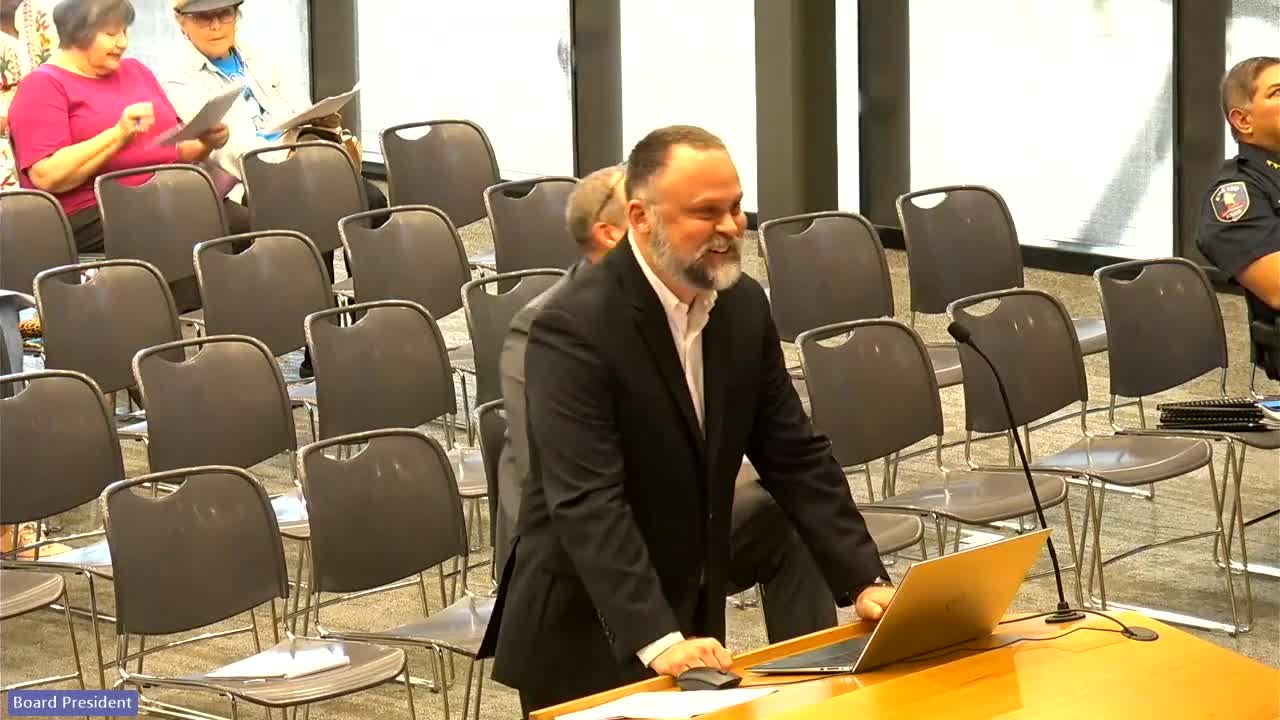
Summary
The district approved its 2025–26 general fund and debt budgets, authorized accelerated instruction funding, accepted 2024–25 amendments and set the tax rate at 1.2457 per $100 valuation; board also approved property and casualty insurance and change-order credits.
The Eagle Mountain-Saginaw Independent School District on Aug. 25 adopted a $286.5 million general fund budget for the 2025–26 school year and set the combined property tax rate at $1.2457 per $100 of assessed value, the same overall rate the district levied in 2024.
Board members said the budget includes targeted compensation changes, allocations for accelerated instruction and a projected net use of fund balance of about $16 million for the general fund. The board also approved the district’s property and casualty insurance renewal and several construction change-order credits.
The budget matters because it determines classroom staffing, campus operations and how the district will attempt to close a multi‑million‑dollar shortfall. “We’re going to ask you to adopt a budget tonight with a $16,000,000 deficit,” Superintendent Hollingsworth told the board, and the district outlined a multi‑year plan to reduce that gap.
CFO Robert (Bob) Welch presented the financial details. He said the district’s proposed operating budget totals $286,543,646 and estimated revenues of $270,586,874, producing the projected net use of fund balance the board approved. The child nutrition fund was balanced in the proposal at $15,161,091. The board separately approved an accelerated instruction functional budget of $10,325,252, which Welch said is funded principally with state compensatory and related state allocations and is intended to support at‑risk students.
On taxes, Welch explained state rules that determine the maximum maintenance-and-operations (M&O) compressed rate; the district will keep M&O at 0.7469 and its interest-and-sinking (debt) rate at 0.4988, for a total of 1.2457. The board read and adopted the statutorily required language about comparisons to prior year collections and voted to adopt the rate. The motion to set the tax rate passed on a roll call voice vote with no opposition (motion carried 7–0).
The board also approved a property and casualty insurance package brokered by Brown & Brown, maintaining broad coverage for the district’s portfolio. Welch said the district’s total insured value (TIV) has risen with new construction; the board exercised an option to raise the policy aggregate limit from $600 million to $700 million for an incremental premium of $78,668, producing a total annual premium of $5,600,744.35. Welch said the renewal as presented represented a roughly $423,000 savings compared with the prior year.
In other finance actions the board approved the 2024–25 budget amendment, accepted savings totaling roughly $314,489.16 and $203,442.43 from two construction change-order credits, and approved a small credit on RTU work at a middle school. The board also acknowledged the recent sale of the district’s 2025 bond series, which Welch said totaled approximately $275 million and is reflected in the district’s interest-and-sinking projections.
Board members and administration noted the budget includes teacher and staff compensation items tied to the state’s teacher retention allotment (House Bill 2) and locally funded equity adjustments for groups the state did not cover. Welch and Human Resources staff described $160,000 of local funding to fill gaps for employees who did not meet the state allotment’s technical definition but whom the district wants to hold at competitive pay levels. The board voted to approve the budget and related items (motions passed 7–0).
The district will present routine monthly financial reports to the board throughout the school year and return to the board with ongoing updates on deficit reduction planning and budget implementation.