Get Full Government Meeting Transcripts, Videos, & Alerts Forever!
Get email alerts on the Pnd Budget Fees Staffing topic
No spam. Unsubscribe anytime.
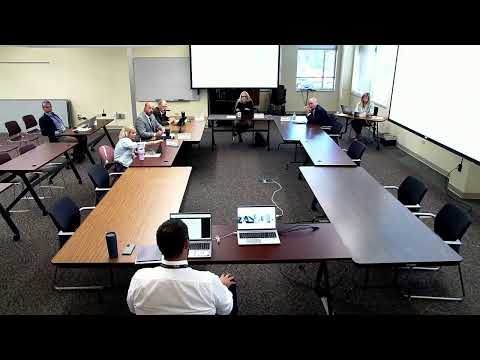
Planning & Development presents FY26 budget, seeks fee updates and staff reclassifications
Summary
Department staff outlined a proposed FY26 budget with staffing changes, permit-volume data and three fee-update models. Committee members signaled support to pursue a baseline fee update and asked staff to return with cost and implementation details.
McHenry County Planning & Development presented its FY26 budget review, highlighted reorganization savings and rising permit volume, and proposed three models to update user fees and reduce the department subsidy from the county general fund.
Adam, Planning & Development director, told the committee the department now has 29 full-time positions after restructuring and staff conversions and that permit reviews are performing near target. “We are currently at 90.03% of our permit reviews are getting out within 2 weeks,” he said. He noted that permit and review volumes through three quarters were on track to match or exceed recent high years and that zoning petitions had risen to 85 for the year.
Budget highlights included internal reorganizations that reduced personnel costs by converting some temporary roles and re-grading a senior position to community development specialist, producing roughly $135,000 in savings on the community-development side and additional savings by reassigning a zoning enforcement position to planning duties.
Staff proposed three fee-update models to bring fees current (the department’s fee ordinance has not had a comprehensive update since 2015):
- Model 1: A baseline update to align fees with current permit workloads and costs (department recommendation). - Model 2: Model 1 plus hard software and recurring costs (Cartograph/OpenGov, SmartGov) built into the fee structure. - Model 3: Model 1 and 2 plus maximized billable hours and additional charges to better recover department time (most aggressive, consultative approach).
Adam said Model 1 would be the minimum needed to modernize fees and projected it could reduce the county subsidy; he presented an illustrative 36% aggregate increase in projected revenue over the out-of-date rate schedule (roughly a 3% annual adjustment compounded over ten years). The committee discussed equity and practicality of increases, with members noting some application categories (temporary events, small commercial reviews) are currently underpriced.
Personnel and supplemental budget items were also reviewed. Staff proposed two permit-technical reclassifications tied to the department’s transition from an older permitting system (DevNet) to SmartGov; those permit-technician roles are now more management- and communications-focused and Adam described a roughly $7,000 combined cost for the regrades. The committee also reviewed a request related to the Zoning Board of Appeals per-diem: the ZBA’s last pay restructure was in 2015, when “they went from 85 for the chair and 75 for a member to 120 and 110 respectively,” Adam said. Staff proposed a modest per-meeting increase to offset high hearing volumes; that change would be introduced as a resolution through the county board if supported.
Committee members expressed concern about adding obligations for the ZBA (which is already busy) and asked for clarity on the ZBA’s written-finding workload if approvals were shifted. Members also discussed whether fee updates should be phased or implemented immediately and asked staff to provide comparative data, implementation timing and the specific impacts to revenue and general-fund subsidy.
By the end of the discussion the committee signaled support to move forward with Model 1 (the baseline fee update) and asked staff to prepare details for the county board cycle. There was no formal roll-call vote recorded; staff will bring reclassification paperwork and fee-update proposals to the board following internal review and County HR processes.
Other budget items reviewed included contracting for groundwater monitoring (USGS), wetland consultant renewals, an asset-management (OpenGov/Cartograph) pilot to meet new MS4 reporting requirements and participation in a construction-management internship program. Adam emphasized that the department’s revenue growth has not fully covered personnel costs and that fee modernization is intended to reduce the county subsidy over time.