
Animal control faces high intake and limited adoptability; department largely self-funded
Get AI-powered insights, summaries, and transcripts
Subscribe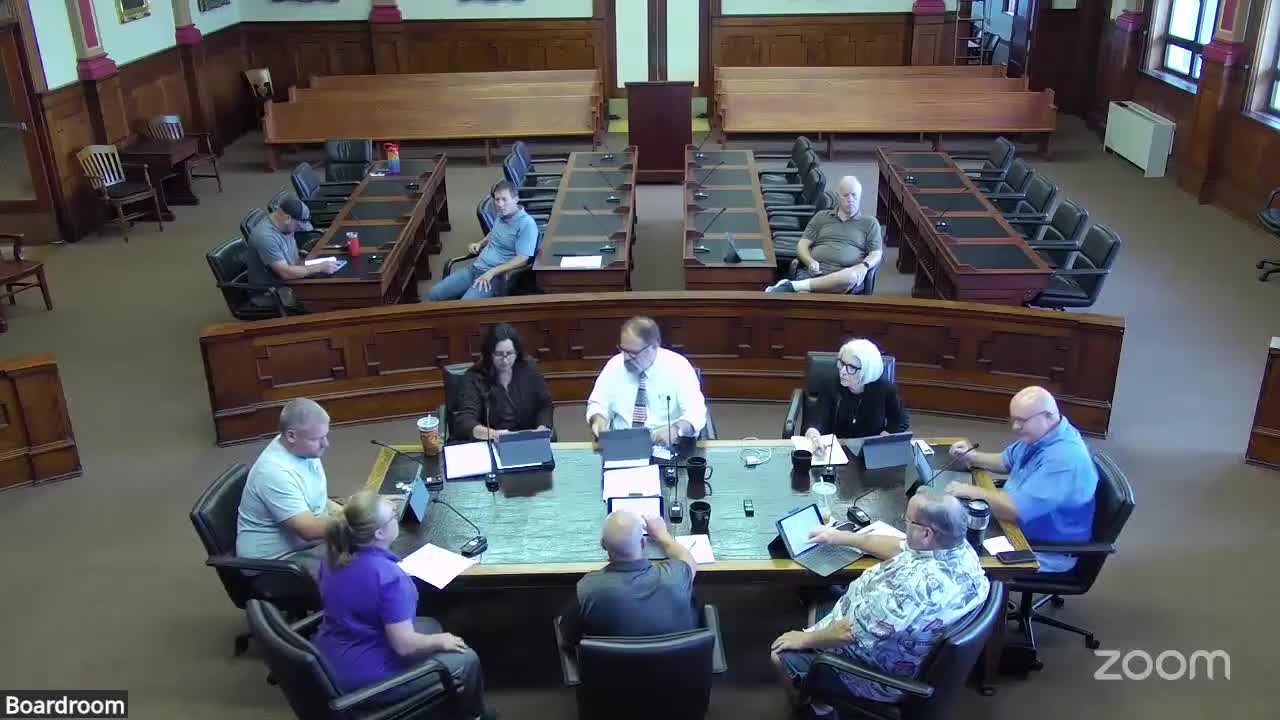
Summary
Animal control staff told the finance committee the shelter is busy, that some animals will be euthanized due to condition or lack of reclaiming, and that the animal-control fund and registration fees make the unit largely self-sustaining.
Terry (last name not provided), the county's animal control representative, told the finance committee on Aug. 12 that the department is handling a high intake of animals and that some animals will be euthanized because they are not adoptable or are in poor condition. “Terry” described responsibilities including enforcement of rabies vaccination and registration compliance, bite response and welfare calls. He said the shelter has been busy and that intake patterns have changed since the COVID-19 pandemic, with more relinquishments and fewer reclaimings. “I am to that point right now where there's going to be some that are gonna be euthanized,” Terry said, explaining that animals with medical or severe behavioral conditions that make them unadoptable are scheduled for humane euthanasia. Committee members asked about volumes and turnaround. Terry said counts vary widely by day and week—some days the shelter might receive one animal, other times five in a week—and said at the time of the meeting he had 17 animals in care. The animal control budget presentation noted that the department is funded primarily through fees allowed by statute and local ordinances; the department's fund balance has grown and the unit is structured to be self-sufficient, not a draw on the county general fund. The 2025 budget included a vehicle purchase for animal control; staff said the purchase was transferred into the capital fund to simplify fixed-asset accounting. Terry also said the department has stepped up community outreach—attending PrideFest, PetuniaFest and parades to boost adoption and public perception—and that they have started a cat-tag program that is still ramping up; barn cats are frequently exempted depending on location. Committee members asked clarifying questions about off-hours response; Terry said deputies or township officers can be contacted to pick up strays when animal control staff are unavailable. No formal vote or policy change was recorded at the meeting; finance staff noted that animal control fees and the animal-control fund policy allow the department to be largely fee-supported and that funding was included in the draft budget.