
Board recommends special use for self-storage at Dolder site after owners, neighbors discuss wells and driveway easement
Get AI-powered insights, summaries, and transcripts
Subscribe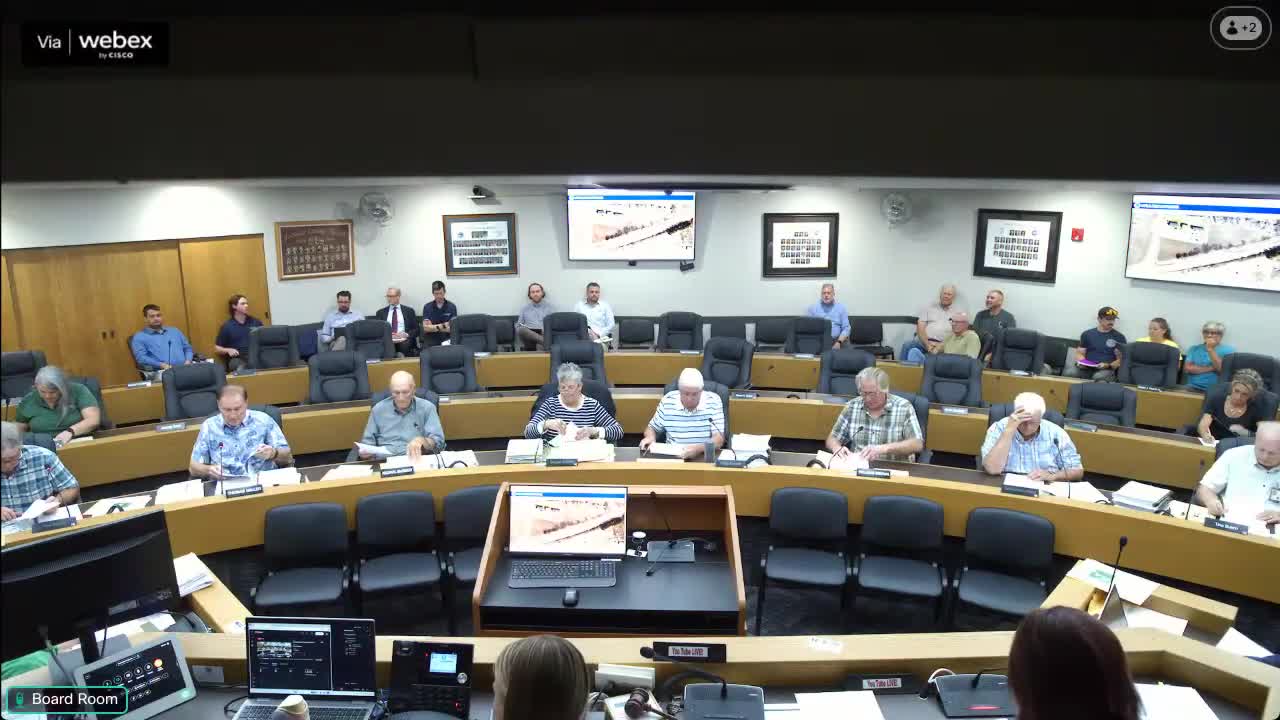
Summary
The LaSalle County Zoning Board of Appeals on Aug. 20 recommended that the County Board approve a special-use permit to allow a mini-warehouse (self-storage) facility on land owned by Nicholas Dolder in Earl Township, and attached a condition limiting the permit to buildings within the currently-noticed parcel.
The LaSalle County Zoning Board of Appeals on Aug. 20 recommended that the County Board approve a special-use permit to allow a mini-warehouse (self-storage) facility at the northeast corner of County Road 1250 First Road and Illinois Route 34 (Earl Township), proposed by Triple Z LLC on property owned by Nicholas Dolder. The board attached a written condition clarifying the permit applies only to buildings situated within the currently-noticed parcel.
Why it matters: Board members and staff pressed the petitioner on a title and utility question: two wells and a driveway that physically sit on the Dolder parcel currently supply water and access to a nearby apartment complex owned by the Schultz family. The applicant and the property owner described a proposed land swap (referred to in the record as a “10 31 exchange”) and a letter of intent from the apartment owners’ attorney, but there was no recorded easement at the time of the hearing. Several board members said they would prefer any well/easement agreement to be finalized before construction but the board nonetheless moved to recommend approval subject to the parcel-limitation condition.
Most important facts - The petitioner, Jared Michael Zelleher, represented Triple Z LLC and described a plan for modular self-storage buildings with exterior-access roll-up doors and primarily unheated units; he said the project was intended to serve local customers and that most buildings would not include climate control or water. - The proposed layout showed space for multiple buildings, a blade/laydown area during construction, a crane pad and an underground electrical trench to connect to Ameren distribution lines. Permanent agricultural land loss after construction was estimated at roughly four acres across the site. - LaSalle County Soil and Water performed a site assessment (LISA) for the parcel and raised concerns about the entrance and the presence of wells serving upstream residents; the staffer said the report scored the site and recommended a survey and proper handling of drain tile and well locations. - A matter of record: two wells that serve three apartment buildings are physically located on Mr. Dolder’s parcel. Mr. Dolder told the board he owns the wells but historically allowed the apartment complex to use them; there was no recorded easement the county could find in a title search. The apartment owners’ attorney provided a letter of intent that the applicant included in the meeting packet.
Discussion and board direction Board members focused most of their questions on the wells, the driveway ownership and a possible land swap. Several board members — notably Member Tim Awesome — said they would be more comfortable if a documented shared-well agreement or easement were in place before construction. The petitioner described discussions and a letter of intent from the apartment owner’s attorney and told the board he would proceed with purchase only if the zoning change were approved. The land use director recommended a clarifying condition limiting the special use to buildings wholly within the currently-noticed parcel; the board added that condition before voting.
What participants said Petitioner Jared Michael Zelleher explained the design approach and property negotiations and told the board he had contacted the mayor of Earlville about the project. He also said he had been in contact with the apartment owners and received a letter of intent from the owners’ attorney regarding a possible land swap and easement. Nicholas Robert Dolder, the landowner, said he purchased the field years earlier and observed that the driveway and the wells are on his property: “So, technically, I own the wells, but I let them use the wells and the driveway.” Zelleher clarified his position on purchase contingencies: “That part’s incorrect. I’m still planning on purchasing Mister Dolder’s as long as the special use goes through.”
Outcome and next steps The Zoning Board voted to recommend approval of the special-use permit with the condition that the permit applies only to buildings located within the current parcel as noticed. The petition was scheduled to be presented to the County Board on Sept. 8, 2025. The board did not impose a formal requirement that a recorded well easement or land-swap agreement be recorded prior to the recommendation, though several members asked that applicants resolve the matter before building permits are sought.
Remaining uncertainties The record shows no recorded easement at the time of the hearing; the apartment owners were not present and the parties have only a letter of intent and informal discussions reflected in the packet. If the apartment owners and the property owner do not finalize an easement or formal shared-well agreement, the parties would need to resolve access and water-service issues privately or through civil processes before long-term utility reliability is assured.