Get Full Government Meeting Transcripts, Videos, & Alerts Forever!
Get email alerts on the Labor Negotiations topic
No spam. Unsubscribe anytime.
County negotiator proposes small bargaining panel, remote talks to speed labor deals
Summary
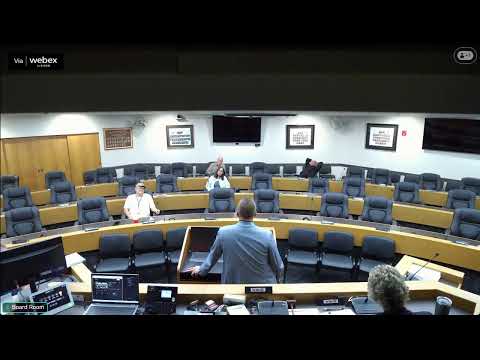
A county staff member told the Salary and Labor Committee that he will act as chief negotiator and wants a small, empowered panel (including HR, the sheriff and a chairman designee) to meet remotely and negotiate contracts such as the MAP patrol agreement, rather than using full-committee sessions.
A county staff member who said he is taking over chief negotiator duties told the Salary and Labor Committee that he wants the committee to empower a smaller group to negotiate future labor contracts and meet remotely when needed. “My number 1 concern going forward … is trying to make sure that we're more nimble and able to get our negotiations done in a more timely fashion,” the staff member said.
The staff member told the committee that, rather than bringing every contract to full committee meetings, he proposes a standing bargaining panel led by himself and including HR, “the sheriff” and the chairman or a chairman designee, plus another conduit identified as Steve for communications. He said the panel would be authorized to meet more frequently by phone or Zoom, work from a set of preapproved goals, and then bring proposals back to the full committee. “What I'd like you all to do … is review [the MAP contract], put together any ideas … and put together a set of targeted goals,” he said, referring to a patrol contract the staff member said is expiring at the end of the year.
The staff member said he already has a copy of the MAP contract and that MAP has indicated it will send a letter of intent to renegotiate. He described the proposed ad hoc bargaining group as “4 or 5 people” who could act faster than convening the entire committee. He emphasized that he would solicit input from committee members and accept criticism if the approach did not work.
A committee member noted there is a statute on the Open Meetings Act and the staff member acknowledged that, while the Open Meetings Act generally does not apply to collective bargaining, he preferred to avoid any perceived exclusion. “There there is a statute on the Open Meetings Act as applies to collective bargaining,” he said, and added that committee members could still be consulted by email or phone.
No formal change to committee rules or delegation was adopted at the meeting. The committee did agree that executive sessions for collective bargaining matters would remain an agenda item, preserving the full committee’s ability to discuss labor strategy in public meeting formats when necessary. The staff member said he would circulate the MAP contract and invited committee members to provide goals and language priorities before he met with bargaining counterparts.
Procedural motions handled around the discussion included a motion to come out of executive session, approval of payment of bills and a motion to adjourn; all three motions passed during the same meeting.
The proposal affects upcoming negotiations on the sheriff’s contract and the MAP patrol contract, and the staff member framed the plan as an efficiency measure intended to reduce the number of full committee meetings required to complete bargaining by establishing a small, focused negotiating panel.